"A bogeyman for software developers: analyst considers sell-off in software stocks excessive
Software companies for 2025 and early 2026 have fallen significantly in price amid fears that AI will undermine their business models

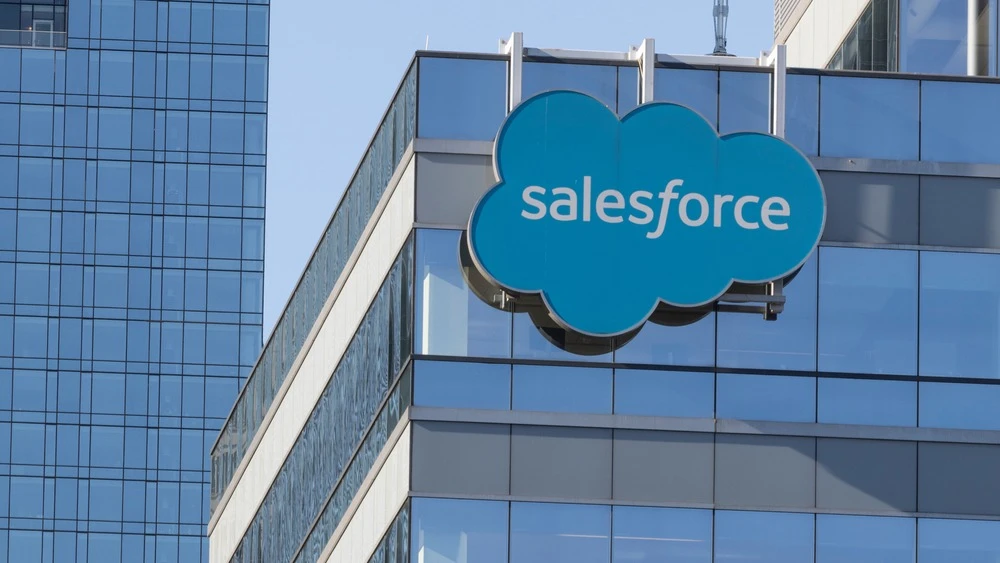
Since the beginning of the year, Salesforce securities have lost about 10%, but not all analysts consider the sell-off in the sector of software manufacturers justified / Photo: Shutterstock / Jonathan Weiss
Investors' fears that artificial intelligence can undermine the business models of software developers are exaggerated, says William Blair analyst Arjun Bhatia. According to his assessment, the sector has several scenarios for recovery and return to growth, writes Barron's. Over the past 12 months, Salesforce securities have fallen in price by 26%, ServiceNow - by 37%, Adobe - by 29%, and Monday.com - by 43%.
Details
Shares of software developers have come under pressure amid fears that artificial intelligence could replace some functions of traditional software, Barron's reports. The sector was particularly hard hit on Tuesday, January 13, when startup Anthropic announced the launch of its new Cowork AI agent, which can organize files on a computer at the user's command, Barron's said. Salesforce shares fell 7% on the day, posting their steepest one-day decline since Ma 2024 and becoming one of the main drivers of the Dow Jones' decline. Adobe shares, meanwhile, were down 5.7% at the moment.
The Cowork announcement is "another bogeyman for software developers," Arjun Bhatia reacted to the situation, noting that he believes the sell-off in the sector was "excessive." "In our view, Claude Cowork creates another negative factor for investor sentiment toward publicly traded software company stocks, but is not a fundamental headwind," Bhatia wrote. While AI labs like Anthropic and OpenAI will indeed play an important role in the adoption of AI in enterprise environments, fears of a large-scale displacement of existing software developers are largely exaggerated, the analyst said.
Tools like Cowork and ChatGPT are good for research, personal productivity and information retrieval, but they are unlikely to replace enterprise software systems that are already deeply integrated into companies' business processes, Bhatia explained.
The path to sector recovery
According to analyst William Blair's assessment, software stocks have several recovery scenarios. One of the key ones is active development of proprietary AI products, improvement of the value proposition for customers and revenue growth due to this area.
He adds that the current flow of investor capital into companies benefiting from the boom in AI data center investments - primarily chip makers, but also energy companies - is not necessarily long-term.
A slowdown in investment in AI infrastructure or a peak in this segment could bring back investor interest in software developer stocks, Bhatia said. According to him, even lower-than-expected growth may be sufficient for this.
Salesforce securities were up 0.2% in the Jan. 16 premarket, ServiceNow was up 0.5%, Adobe was up 0.3%, and Monday.com was up 1.5%.
What other analysts are saying
"Inflated fears around AI" have created attractive opportunities to buy shares of software companies, says Mizuho analyst Siti Panigrahi. Among the securities to pay attention to, the analyst named Intuit shares. Since the beginning of the week, Intuit's securities have fallen by 13% amid concerns that the AI-agent Cowork in the future will be able to help users with filing tax returns. However, according to Panigrahi, tax reporting is too complex and high-risk area to be handled by a universal AI tool, MarketWatch specifies.
But there are also less optimistic assessments on the market. JPMorgan analyst Mark Murphy notes that one of the mentioned software giants - Salesforce - is going through a difficult "transition" period, and the company's shares, in his opinion, are unlikely to start recovering before the second half of the year. Salesforce's securities have already fallen in price by about 10% in 2026. According to data from early January, it is the worst performing stock in the Dow Jones Industrial Average index, Yahoo Finance writes.
"We continue to emphasize that Salesforce is in a challenging 12-18 month transition period: internal metrics appear to be stabilizing and improving, but this may not translate into tangible improvements in all the metrics investors are used to looking at - revenue, cRPO (volume of revenue already contracted but not yet recognized) and others," cautioned Murphy.
Adobe shares also became one of the participants of the sale. Negativity around the securities of this company intensified after Oppenheimer analyst Brian Schwartz downgraded Adobe's shares from "Outperform" ("outperform the market") to "Perform" ("meet market performance") on January 13. He noted that Adobe's AI initiatives in 2025 have not produced the expected acceleration in growth in the Digital Media segment, and increased competition from platforms such as Canva, Figma and Google's Gemini solutions is complicating the operating environment and holding back the company's revenue growth, MarketWatch wrote.
David Wagner, head of equities and portfolio manager at Aptus Capital Advisors, agrees with these assessments of the software vendor segment. He characterized the current market situation as part of a "paired deal" in which investors withdraw capital from software companies and redistribute it to the now more popular semiconductor segment, MarketWatch summarizes.
This article was AI-translated and verified by a human editor