A naked king in an AI world: why Michael Burry doesn't believe in Palantir
The iconic shortstop examined Palantir's business model and concluded that the $375 billion market valuation was out of step with financial and technological realities

Burry does not bode well for Palantir's cloudless long-distance future / Photo: Shutterstock.com
Investor Michael Burry published a detailed post criticizing the financial and technological soundness of the company. Burry proves that Palantir's $375 billion capitalization is not the result of technical superiority, but a consequence of investors' failure of rationality and faith in the concept of data fusion that Palantir sells. In Burry's view, behind the mask of innovative AI lurks a run-of-the-mill consulting firm whose valuation may not survive the first major correction in expectations.
The text was a new chapter in the long-running standoff between Burry and Palantir CEO Alex Karp. The public conflict began when an investor disclosed large bets against Palantir and Nvidia, and Karp responded by calling the idea of shorting "chips and ontology" crazy. Now Burry has moved on from online bickering to analytical parsing.
Consulting in the guise of technology
Palantir's main problem is that the image of a cutting-edge IT giant hides a business model that is fundamentally different from scalable software-as-a-service (SaaS), Burry writes. He believes that many investors don't even understand what Palantir does.
"A couple months ago I was talking to a former Speaker of the House of Representatives who said he knew the Palantir guys well. At the same time, he asked if I could tell him what they were doing
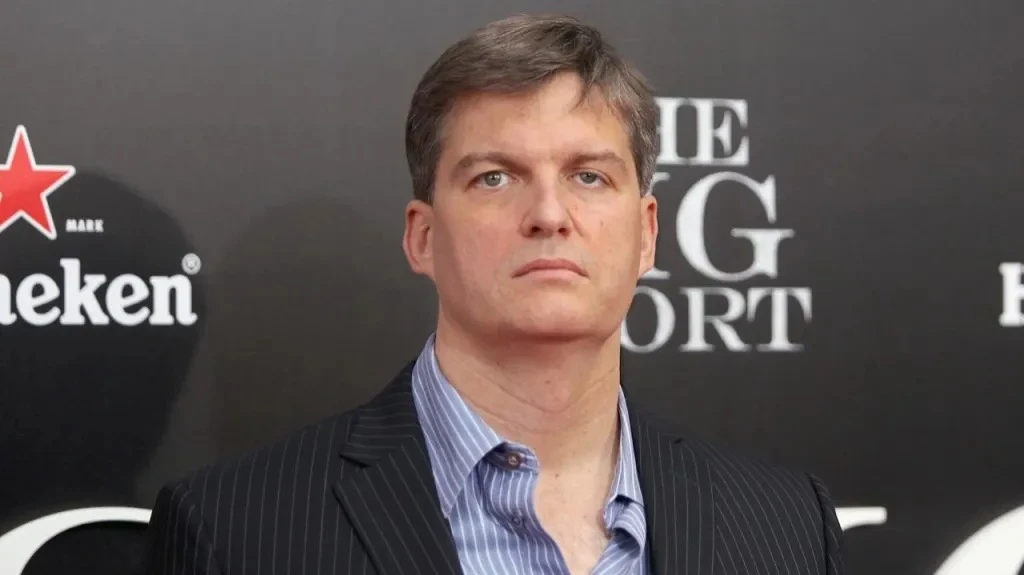
Burry emphasizes that Palantir does not sell true off-the-shelf software. Their engineers spend months manually customizing systems for each client. This makes the company's growth dependent on hiring rather than code quality. According to the investor, the high cost of customization was the main reason Palantir remained unprofitable for the first 20 years of its existence. And Burry's main complaint is that this model is not a technological breakthrough, but a form of IT consulting similar to SAP or Oracle services.
AI hype and marketing gimmicks
Investors' current optimism holds solely on AI hype. Burry notes that the AIP information platform that Palantir sells to clients was assembled in a matter of weeks as a "wrapper" for someone else's technology (OpenAI, Google). Burry points to systemic risks: third-party AI models are prone to "hallucinations," which is fatal in the military or medical fields. The use of third-party neural networks in critical areas, according to Burry, creates systemic risks that the company cannot eliminate.
In addition, Burry criticizes Palantir's change in sales strategy: he is concerned about the shift from long engineering sessions to "bootcamps" - short demonstration sessions. He sees this as a marketing ploy that aims to build customer confidence in the system based on pre-prepared scenarios. "A polished and curated bootcamp breeds trust - that's the whole point of the sales process," the investor writes. In his view, this approach effectively shifts the responsibility for future artificial intelligence bugs from Palantir to the customers themselves.
Dilution of capital
Burry sees Palantir's main financial anomaly as the gap between management enrichment and business revenue. To describe it, he introduces the Billionaire:Sales or B/S ratio: for every $4.5 billion in revenue in 2025, Palantir has five billionaires who owe their fortune to the company: Peter Thiel, Alex Karp, Joe Lonsdale, Steven Cohen and Shyam Sankar. The company hands out giant stakes to management, the scale of which is completely unjustified by current revenue. In essence, it is an "advance expectations ratio": investors have given Palantir a credit of confidence that is almost impossible to justify with actual financial results, the short-seller is convinced.
Burry writes that the tool of this process is the constant issue of new securities, which erodes the share of investors at a rate of 6.5% per year. Buybacks do not help: in five years, the number of shares outstanding rose from 1.74 billion to 2.39 billion. New issues for management completely nullify the effect of buying back securities from the market. This system is perpetuated by the governance structure: thanks to class F shares, the founders retain control over 49.99% of votes, which allows them to turn other shareholders into passive observers.
International market and competition
Burry is skeptical of Palantir's global expansion prospects, pointing to a significant gap in the company's growth rates inside and outside the U.S.. While Palantir's U.S. revenue is growing at double-digit rates, international commercial revenue is up just 2% in 2025. According to the investor, this proves that the company's product does not sell itself, and its success in the States is largely based on personal connections of the management team and "political tailwinds."
A key moment for Burry was Karp's admission at a conference call with investors: "Palantir is in a unique position where we really don't have the bandwidth to do anything sophisticated outside of America."
"SaaS companies don't have that. Karp just admitted that Palantir is not a SaaS company. "Not enough bandwidth? That sounds exactly like the description of a consulting firm," Burry argues.
The investor cites as an additional risk factor the activity of large market players such as Salesforce (Missionforce project) and Microsoft (Fabric platform), which are developing their own data integration tools. According to Burry, this jeopardizes the uniqueness of "ontology," the central concept of data aggregation that Palantir sells. He notes that competitors such as Databricks, with a base of 17,000 customers versus Palantir's 1,500, can implement similar solutions more quickly and efficiently, leaving the company vulnerable to being squeezed out of IT budgets by large corporations.
Burry verdict.
Summarizing, Burry writes that Palantir's current market capitalization of $375 billion has no fundamental basis. According to his discounted cash flow (DCF) model calculations, the fair value of the stock is only $46 (the stock was trading at $128 on Feb. 13).
The investor emphasizes that Palantir's current quotes are based on excessive market expectations, which pledge tenfold revenue growth in the next 10 years. Burry considers this unrealistic: after the dot-com bubble, Cisco has only quadrupled in 15 years.
The market is extrapolating the results of the past two years, and the only reason for that is the hype around AI, the investor concludes. When Karp says Palantir wants to "just take over the whole market", he says, he is promising to scale a technology that is not owned by the company and whose underlying logical abilities "have proven to be systematically unreliable". "Their ontology is just an integration layer that may be redundant or can be replicated in-house by the customer over time," Burry states.
"My predictions do not bode well for Palantir's cloudless future over the long haul"
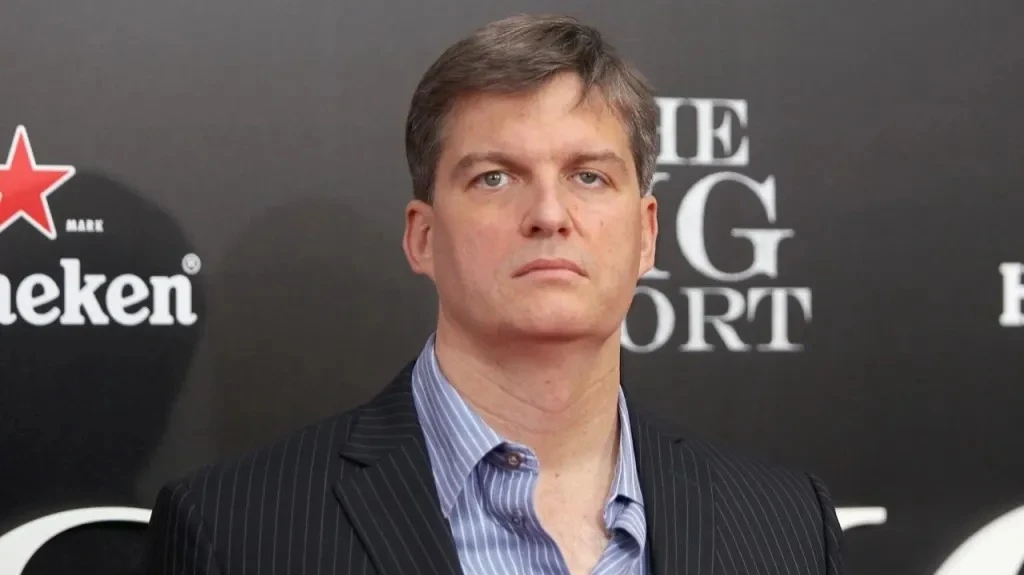
Burry wrote that he's holding a position in put options (allow you to profit if the stock price declines) on Palantir shares: he's confident when the "AI fog" clears, investors will see an overvalued business that has lived off shareholder subsidies for too long.
This article was AI-translated and verified by a human editor