'A sense of risk that wasn't there': oil guru on 'a different world' after war with Iran
A return to pre-war oil supplies may take less than a year, but the world will never be the same, says Daniel Yergin, vice chairman of S&P Global

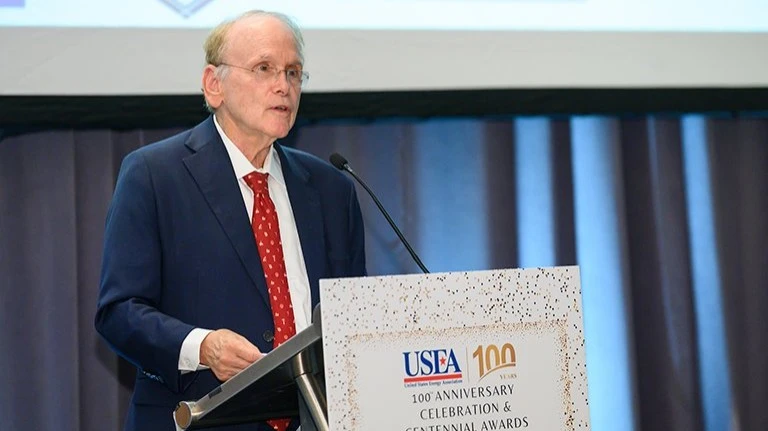
Daniel Yergin's book "Extraction: A Global History of the Struggle for Oil, Money and Power" won the Pulitzer Prize in 1992 / Photo: X / DanielYergin
The blockade of the Strait of Hormuz, considered geopolitically impossible for decades, has created "a sense of risk that didn't exist" before the Iranian crisis, Daniel Yergin, Pulitzer Prize-winning author of a book on the history of the oil industry and vice chairman of S&P Global, said in an interview on a Bloomberg podcast. After the Strait blockade, according to Yergin, came an era of higher inflation, huge defense spending, localized production and a constant sense of vulnerability embedded in the price of any commodity. We collected the main theses from the story of the oil market guru Bloomberg:
The end of the era of global optimism
- The period of rapid development and ambitious projects in the Persian Gulf, such as " Vision 2030" (Saudi Vision 2030 - a large-scale program launched in 2016 to diversify the economy and reduce dependence on oil. - Oninvest), is being replaced by a harsh reality where issues of survival and defense come to the fore, Yergin stated. "That period seemed very optimistic ... Well, now there will be less optimism. There is a time for deeper thinking about energy security, diversification and the risk premium," the economist said. - We know for a fact that the world will be a different place than it was before the war [in the Middle East].
- The closure of the Strait of Hormuz is no longer a theoretical threat, revealing dependence not only on oil, but also on critical raw materials for high technology. As Yergin points out, of all the scenarios, one of the most "nightmarish" was realized. "People allowed for such a scenario, but assumed it would never materialize. But it happened, and it changes the world," he said. Ma called the situation around Iran "the mother of all supply chain shocks," recalling that people have not had to think about fertilizer, which comes from natural gas, and helium, a byproduct of the oil and gas industry that chip makers "desperately need," for years.
Shifting priorities
- According to Yergin, the world is abandoning complex logistics with minimal costs in favor of security of supply, which inevitably leads to global price increases. Whereas before "everything was built on efficiency," "now security, predictability, sustainability have come to the forefront." This reversal forces to spend more money on defense and localize production, which "adds costs that were not there before," the economist stated.
- The institutions of international cooperation are weakening and interstate ties are becoming more pragmatic, Yergin said. "One thing you don't think about until it's gone is trust. And trust has been undermined. Relationships have become more transactional," he noted. "The beta test for World War II was the Spanish Civil War, and . the beta test for the new era of warfare is Ukraine," Yergin opined. Now the same thing is playing out in the Persian Gulf, bringing "a sense of risk that wasn't there before," the expert said.
Energy market
- Yergin pointed out a unique situation: stock traders and oil traders had completely different risk assessments. The oil futures market remained calm, expecting a quick resolution to the crisis, while panic reigned in the physical market: "There was Brent, the futures price, which kept saying: "Well, this is going to end and prices are going to go down". And there was Dated Brent (physical market. - Oninvest), which was screaming: "We have a major disruption and prices are going up.""". The economist pointed out the unprecedented scale of dissonance and named the reason for it: investors in futures "do not have to worry about the delivery of jet fuel", while "there is a real shortage in Asia".
- The oil blockade in the Persian Gulf hit the countries unevenly: the main shortage of energy resources fell on Asia: "Asia suffered the most, Europe felt it, and the U.S. felt the consequences mainly through rising prices at gas stations, but there were no supply problems. Yergin noted that the key difference in the current crisis for the United States has been energy independence. The fact that the country has transformed from a net energy importer to the largest producer of oil and gas has become "a huge buffer for consumers and for the economy," he emphasized.
- Yergin warned that even after the Strait is unblocked, the oil market will not be able to stabilize instantly. The long recovery of logistics and infrastructure will continue to keep prices high. "Even if peace comes, it will take a couple of months for oil markets to return to normal," the expert said. Stocks are depleted, and given the damage to refineries, it could take up to eight months to return to previous volumes, Yergin said: "It's not a switch that can just be turned on. And it will have an impact on prices".
- Despite talk of shale depletion, Yergin believes new technology will allow the U.S. to maintain its status as the largest oil producer for a long time to come. "Some people say production has reached a plateau. But this plateau is at a very high level - almost 14 million barrels per day," the expert noted. "There is an opinion that no technology will be able to increase the recovery ratio (the ratio of recoverable oil reserves to geological reserves. - Oninvest), which is now about 7%. But if this figure can still be brought up to 10-12%, the cycle will last longer. So the US will remain a major producer for a couple of decades," summarized the Pulitzer Prize winner.
This article was AI-translated and verified by a human editor