AI triggered the "nuclear" rally: which companies investors should pay attention to

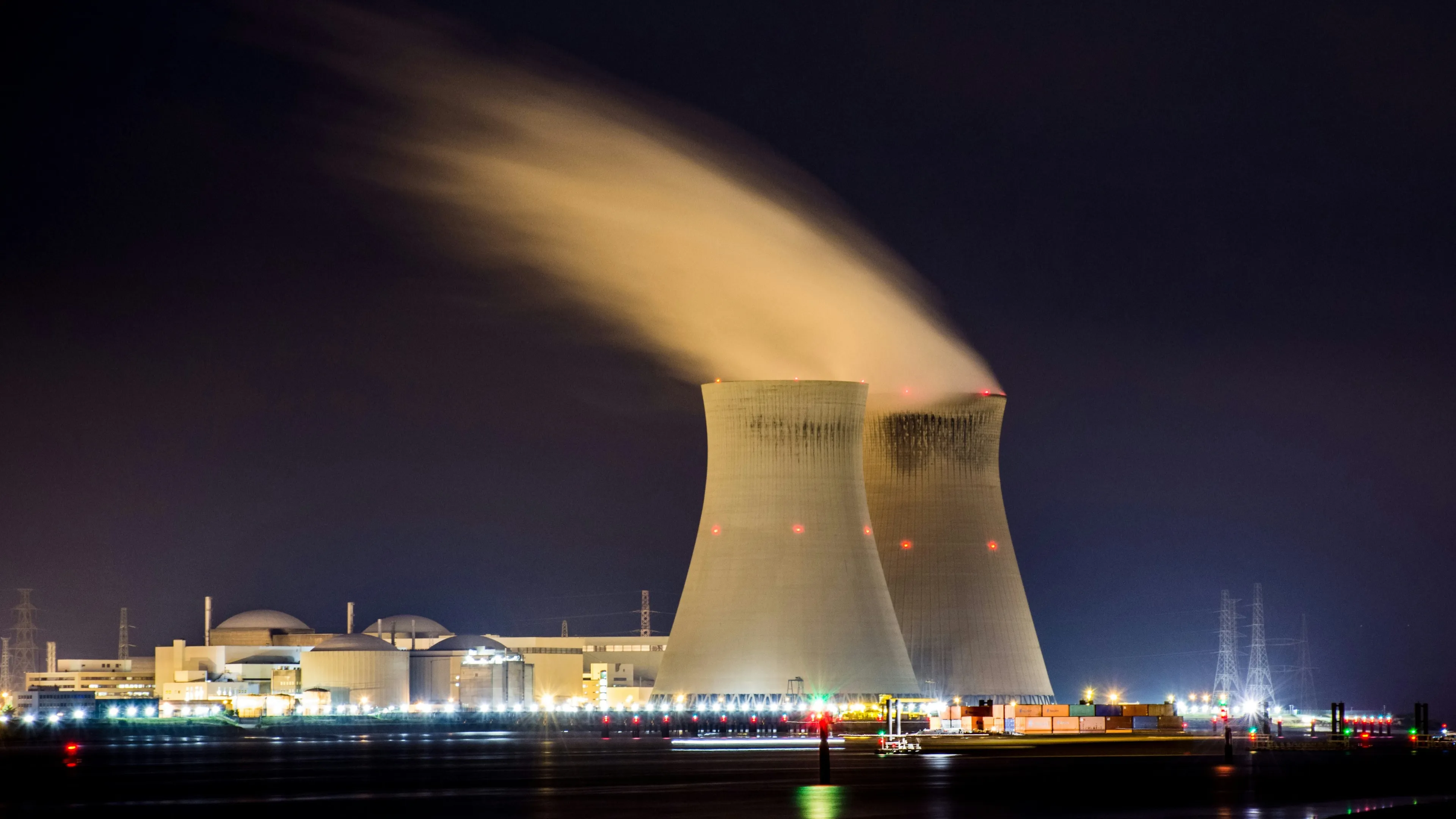
AI development requires more and more energy, and tech giants are contracting for its supply from nuclear power plants. Photo: Nicolas HIPPERT / Unsplash
In the U.S., power consumption by data centers will grow to 82.3 gigawatts this year, which is needed to power IT equipment, cooling systems, lighting, etc. This is a 28% increase over 2025 and double the level of three years ago. That's a 28% increase from 2025 and more than double the level of three years ago. This is the latest data from S&P Global Market Intelligence 451 Research.
AI needs more and more power to develop, and investors expecting to make money on it now favor companies in the energy and infrastructure sectors over tech giants, Reuters wrote, citing a survey conducted by BlackRock. Which companies have become the focus of the market's attention?
Growing appetites
Thanks to the growing appetite for AI, there is a renaissance in nuclear power around the world. Now, says The Wall Street Journal, Japan is restarting its reactors, including the Kashiwazaki-Kariwa nuclear power plant, the world's largest. Across Europe, about two dozen new nuclear power plants are planned or already under construction. The same is happening in the United States.
Back in 2024, MarketWatch wrote that IT companies are favoring this sector - renewables can't provide continuous supply, and besides, most tech giants have carbon reduction targets.
Almost all major companies actively developing the AI field have already secured nuclear power supplies.
At the end of January, it became known that China's Alibaba established a joint venture with China National Nuclear Power Co. and other partners - with a registered capital of 250 million yuan ($35.9 million). In the same month, Meta announced a partnership with three companies from the nuclear power sector - Vistra Corp., Oklo and TerraPower. The technocompany intends to become one of the world's largest corporate buyers of nuclear power.
Microsoft, for its part, has entered into an energy supply agreement with Constellation Energy to restart the Three Mile Island nuclear power plant, which was mothballed after the 1979 accident. Last November, Constellation Energy, as operator of the facility, received a $1 billion federal loan for that restart.
Google has an agreement with Kairos Power to build several small nuclear power plants from scratch starting in the fall of 2024. In 2025, the company announced that it had reached an agreement with energy giant NextEra to unfreeze the nuclear power plant in Iowa, which closed in 2020.
Amazon has also entered into agreements with several manufacturers. Energy Northwest will build small nuclear power plants (four in the first phase) in Washington State, and Talen Energy will build several small reactor nuclear power plants, in addition to providing Amazon with the capacity of an existing plant in Pennsylvania. Dominion Energy will build several more small NPPs in Virginia for Amazon.
What investors should choose
Investment portal Insider Monkeys at the end of January collected shares of 10 energy companies that will benefit from the rapid development of AI. Of those, seven companies have businesses related to nuclear power. They include energy producers NextEra Energy, Talen Energy Corporation, Vistra Corp. and Constellation Energy, nuclear power plant feedstock supplier Cameco Corporation (it also mines uranium), and Quanta Services, which provides design, procurement and construction services for nuclear power facilities. Also on the list is GE Vernova, which, in cooperation with Japan's Hitachi, develops technologies, supplies fuel and provides services for nuclear power plants. By the way, according to Bloomberg, it is also involved in a $12 billion project to create a stockpile of minerals to counter China. It was announced by US President Donald Trump.
The Motley Fool previously highlighted Duke Energy as well. It has no major contracts with tech giants, but most of its assets are located in North and South Carolina, between Virginia and Georgia, where the big players are locating data centers. Energy demand in Virginia is projected to grow 153% through 2040. Over the past three years, Duke Energy Corporation's revenue has grown at an average rate of 5.3%, gross margin at 52.4% and net margin at nearly 16%.
Quotes are also growing for uranium mining companies. Shares of Cameco Corporation have increased in price by almost 126% over the last year. Shares of Kazakhstan's Kazatomprom, which accounts for more than 40% of the world's uranium production, have increased in value by more than 100% over the past 12 months.
Vladimir Sveshnikov, founder of startups Stafory and Parodist AI, singles out builders and operators of nuclear power plants among the main beneficiaries of the AI boom. For global corporations in need of new energy sources, the benefit of cooperation with nuclear companies is greater independence from the market and easier load forecasting, he says.
"Companies that fail to ensure reliable power supply will face risks of operational continuity and potential failures in critical AI services. This is no longer just a question of competitive advantage, but of business survival in the face of growing dependence on AI technologies," says Sergey Kudryashov, a partner in Strategy Partners' Digital Transformation practice.
The current situation could exacerbate the digital divide, he adds. Some regions, most notably Southeast Asia and Africa, face the fact that about two-thirds of the population has access to only 10% of data center capacity. Without addressing the energy issue, these parts of the planet will continue to lag behind the developed world, further hampering their economic development.
This article was AI-translated and verified by a human editor