All for AI: SoftBank rushes to close $22.5 billion deal with OpenAI
SoftBank sold off its stakes in Nvidia and T-Mobile for the sake of it, Reuters has found out

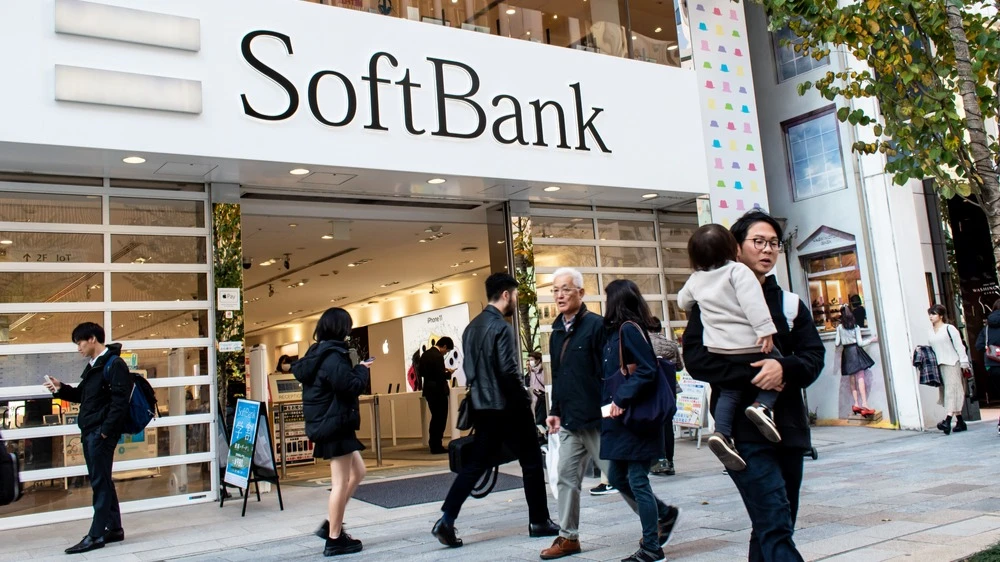
SoftBank Group is in a hurry to close its obligations on financing OpenAI for $22.5 billion by the end of the year. For this purpose, the company sold off its stakes in Nvidia and T-Mobile, Reuters writes with reference to sources. This situation clearly shows the difficulties faced even by the largest players in the market, trying to invest money in ambitious projects to build AI-data centers, the agency notes.
Details
Japan's SoftBank Group is seeking to close a $22.5 billion OpenAI financing commitment by the end of the year using multiple sources of fundraising, Reuters' interlocutors said.
The bet "va-bank" on OpenAI is one of the biggest for SoftBank head Masayoshi Son, the agency points out. The Japanese billionaire expects to strengthen the group's position in the global race for leadership in the field of artificial intelligence. To raise funds, Son has already sold SoftBank's entire stake in chipmaker Nvidia for $5.8 billion, reduced its stake in mobile operator T-Mobile US by $4.8 billion and made staff cuts.
Masayoshi Son has also effectively frozen the investment activity of the group's Vision Fund. Transactions worth more than $50 million now require his personal approval, sources told Reuters. According to them, the fund's managers are now being largely refocused on the OpenAI deal.
OpenAI has not yet received the full amount of investments agreed under the deal with SoftBank, but under the terms of the contract expects to receive funds by the end of 2025, the sources added. SoftBank declined to comment.
Context
Son has good reasons to use various financing mechanisms to fulfill its obligations to OpenAI, Reuters points out. SoftBank has several sources of capital that it can use for this purpose, the agency continues. Among these sources, Reuters' interlocutors name SoftBank's margin loans, cash on its balance sheet, stakes in public companies, and the possibility of issuing bonds or raising bridge loans.
Now the main source of capital for SoftBank, Reuters points out, is the unused margin loans received under the pledge of shares of British company Arm Holdings (engaged in the development of semiconductors and software). SoftBank recently increased the limit of such loans by $6.5 billion, bringing the total amount of unused funds to $11.5 billion. Since its IPO, Arm's shares have tripled, giving SoftBank an additional supply of collateral, Reuters points out.
OpenAI deal
In April 2025, SoftBank agreed to invest in OpenAI at a company valuation of $300 billion. At the same time, the Japanese group promised to invest up to $30 billion in the AI company, of which the startup received $10 billion immediately. The rest of the amount depended on OpenAI's transition to a commercial form, which the company managed to complete in October. Since April, OpenAI's valuation has skyrocketed: the company is in talks with investors, including Amazon, and could increase its capitalization to nearly $900 billion. After the deal closes, Reuters' source points out , it could bring SoftBank a significant paper profit.
In addition, both OpenAI and SoftBank are involved in the Stargate project, Reuters recalls, a $500 billion initiative to build AI data centers for model training. Executives see this project as critical to the U.S. ability to maintain its technological leadership over China, the agency specifies, citing it among the reasons why OpenAI now needs the money.
The new funding is also critically needed by the AI company to cover OpenAI's rising costs of training and operating models amid increasing competition from Google, Reuters notes. OpenAI CEO Sam Altman recently told employees that the company is entering "code red" mode and delaying other product launches to accelerate ChatGPT's development and curb the growth of Google's AI chatbot Gemini.
What else SoftBank is working on
In parallel, SoftBank is preparing an IPO of the payment service PayPay, notes Reuters. The placement, which was initially expected in December, was postponed due to the 43-day shutdown of the U.S. government. Now PayPay is expected to go public in the first quarter of next year, which could raise more than $20 billion, the agency's sources say.
This article was AI-translated and verified by a human editor