April was the best month for Intel stock in 55 years. Is it too late to buy them?

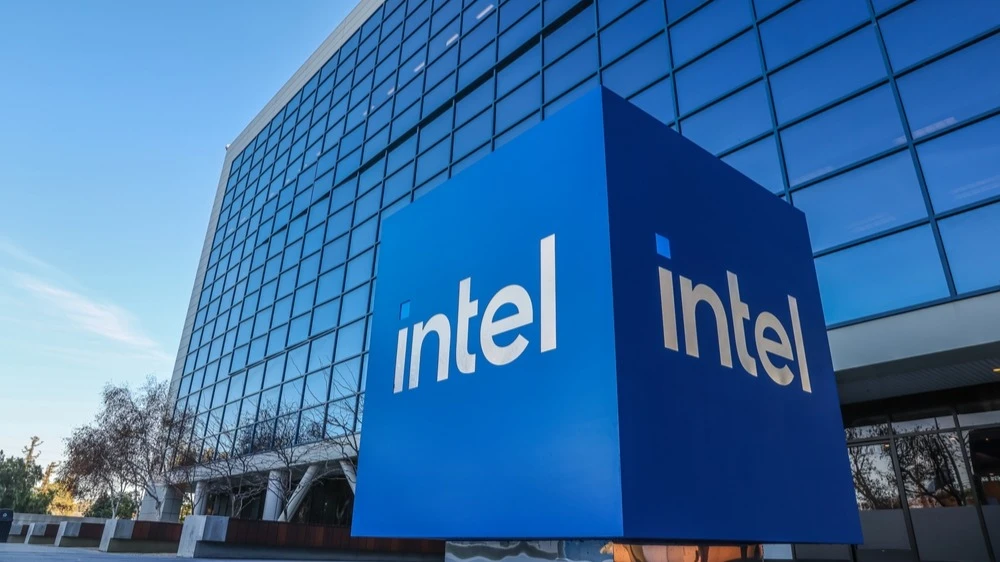
Intel shares soared more than 100% in April / Photo: Brookgardener / Shutterstock
Shares of chip maker Intel soared 114% in April, marking the best monthly result since the company went public on Nasdaq almost 55 years ago, CNBC reported. Moreover, the rally has been going on for weeks: over the past seven months, Intel securities have experienced two of their best trading days, including a 24% jump on April 24 after a strong report. On that day, the company's quotations for the first time since 2000 updated the historical maximum, jumping to $85.22 per unit, and continued to grow. April 30, Intel securities closed at $94.48. In trading on May 1, they added another 5%. Since the beginning of the year, Intel shares have gained almost 170%.
What helped the company's securities grow
Intel is now going through a recovery phase after several years of delayed new processor launches and disappointing production figures that left it lagging far behind market-leading chip makers TSMC and Nvidia, CNBC writes. However, Wall Street now believes this is changing, with Intel's new chips designed using the 18A process (which increases chip efficiency) showing promising results as production ramps up at the company's Arizona plant, analysts said.
An additional factor of the stock growth was the increase in demand for Intel's key product amid the development of agent-based AI - central processing units (CPUs). Bank of America predicts that the CPU market could more than double by 2030. "CPUs are once again becoming the indispensable backbone of the AI era," Intel CEO Lip-Bu Tan said at the company's reporting conference call on April 23. He added that demand for Intel's server CPUs is outstripping supply. "CPUs are back in vogue and Intel is running out of time to produce them," Patrick Moorhead, head of analyst firm Moor Insights, remarked in an interview with CNBC. Intel's CPUs have sold out, he said, allowing the company to raise prices.
However, the Intel stock rally did not start in recent months, CNBC notes. The chipmaker's stock began to rise last year - after the U.S. government in August supported the struggling Intel, receiving about 10% in the company and becoming the largest shareholder of the company. The government's stake in the chipmaker is now valued at more than $40 billion, CNBC points out.
In addition, analyst Patrick Moorhead estimates that about 75% of Intel's current valuation is due to expectations around the development of contract chip manufacturing - a business in which the company expects to produce chips for third-party customers - although this area has not yet yielded any announced results. So far, Elon Musk remains the only major outside partner in Intel's contract chip manufacturing business. In early April, Intel announced that the billionaire's Terafab project in Austin, Texas, where he will participate in the design, production and packaging of high-performance chips for SpaceX, xAI and Tesla.
Elon Musk also said on April 23 that Tesla plans to use Intel's future advanced 14A chip manufacturing process to produce chips at the Terafab plant. Chips made using Intel's process will be used in Tesla's cars and robots, as well as in SpaceX's yet-to-be-built orbital data centers.
According to analyst Patrick Moorhead, it was this statement - albeit without specifics - that was the factor that caused Intel's stock to "go sharply upward" in late April.
Another signal of Intel's contract manufacturing business strength was the company's decision to buy a 49% stake in its Irish Fab 34 plant for $14.2 billion. This is the company's main production site in Europe: the plant produces processors for personal computers and servers. Earlier, in 2024, the company sold this stake to Apollo Global Management for $11.2 billion.
In addition, the growth driver for Intel has been advanced packaging technology, CNBC points out, a stage in which multiple chips are combined into a single module. EMIB (embedded multiple-chip interconnect bridge) technology competes with TSMC's CoWoS solution. It was expectations from this area that supported Intel's stock gains after its first-quarter reporting, CNBC notes. Intel CFO David Zinsner expects advanced packaging to generate billions of dollars a year for the company instead of the previously expected hundreds of millions. Intel's customers in this area include Amazon, Cisco, as well as SpaceX and Tesla.
Intel exceeded market expectations in the first quarter of 2026: the company's revenue grew by 7.2% to $13.58 billion against the forecast of $12.42 billion. Intel recorded the strongest growth in the data center segment, where it has finally started to benefit from AI amid a sharp increase in demand for central processing units (CPUs). Revenue in this area grew by 22% to $5.1 billion in the first three months of 2026.
What the analysts are saying
On April 28, analysts at Freedom Broker raised their recommendation on Intel shares to "buy" with a target price of $100. This target implies a 5.8% rise in the stock relative to the last closing price. Intel's first-quarter results were a turning point, analysts said: the company beat revenue, margin and earnings forecasts and gave a stronger outlook, which boosted market confidence. An additional factor was strong demand across all business lines, which is already exceeding the company's production capacity.
At the same time, the consensus on the market remains more restrained, according to MarketWatch data: the majority of Wall Street analysts, who monitor the company's securities, recommend to keep Intel shares in the portfolio: the chipmaker's securities have 30 such recommendations out of 50. Another 15 experts advise to buy Intel securities, five - to sell.
This article was AI-translated and verified by a human editor