At the center of the SaaS apocalypse: why did investors stage a sell-off in Microsoft stock?

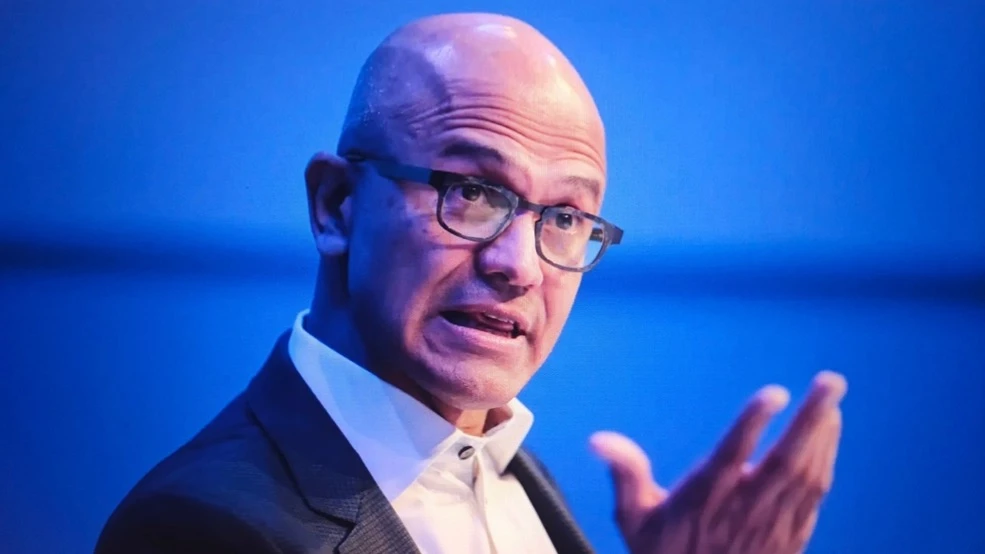
Microsoft CEO Satya Nadella said the company has already built an AI business that is bigger than some of its franchises. But investors aren't convinced. Photo: FotoField / Shutterstock.com
At the end of January, Microsoft and Meta synchronously reported their quarterly results. Both companies performed well, showing revenue and profit growth, but the market reacted in a radically opposite way: Meta's shares rose by about 10%, while Microsoft's securities, on the contrary, investors staged the largest sell-off since 2020, in which a record $357 billion of capitalization evaporated at once. Since the release of the reports, its quotations have lost almost 14%.
What's the big scary thing that happened to Microsoft?
Of course, there is no point in comparing the companies directly - they have fundamentally different businesses. Meta gets its main income from advertising in social networks, while Microsoft gets its main income from the sale of software and services of its Azure cloud service. What they have in common is that both companies are involved in the artificial intelligence race and are rapidly increasing the computing power required to create and operate advanced models.
"Common Fraud."
At first glance, Microsoft seems to be doing just fine - Q2 FY 2026 reported revenue up 17% year-over-year to $81.3 billion and net income up 23% to $30.9 billion (excluding investments in OpenAI). Everyone should have such indicators!
What didn't investors like? In particular, the sharp increase in capital expenditures for the creation of new data centers - up to $37.5 billion or 66% year-on-year. And about two-thirds of these colossal expenditures went to "short-lived assets" - central and graphic processors (CPUs and GPUs) for AI, as noted in the report.
There is a very lively debate on the subject of "short-lived" - how long is it? The point is that the cost of amortization (i.e. wear and tear and obsolescence) of these processors is "smeared" on the service life, but no one knows exactly what it will actually be. According to the Financial Times, in recent years, technology companies have quietly increased these forecasts from 3-4 to 6 years.
Depreciation is a non-cash expense because the money has already been spent, but any change in useful life assumptions has a significant impact on GAAP earnings, the FT writes. For example, Alphabet, Google's parent company, previously raised its 2023 earnings forecast by $3 billion by increasing the useful life of data center equipment by a year or two. "Alphabet's assumption of a six-year useful life for hardware may seem at odds with the fact that Nvidia releases a new chip architecture about every three years," the FT explains.
And renowned investor Michael Burry, famous for predicting the 2008 mortgage crisis, generally called such an increase in life expectancy "one of the most common types of fraud in the modern era."
But wait a minute! Other bigtechs are rapidly expanding their computing capacity, too. Meta is expected to nearly double its capital expenditures to $115-130 billion in 2026 from $72 billion in 2025. At the same time, its shares are growing, as well as Alphabet's securities. Apparently, the problem for Microsoft is something else.
Business in the Looking Glass
"Here, you know, you have to run with all your legs just to stay in the same place! If you want to get somewhere else, then you have to run at least twice as fast!" - said the Black Queen in Lewis Carroll's Alice in the Looking Glass.
These words are fully applicable to the AI race - Microsoft's Azure cloud service saw revenue grow 39% year-over-year in the second quarter. Does that seem great? No. According to CNBC, analysts were expecting 39.4% growth. And that minimal discrepancy, plus the fact that the first quarter of fiscal 2026 growth was 40%, caused a selloff. Saying that capex is skyrocketing and Azure's revenue momentum is stagnant, raising concerns about what the return on investment (ROI) will ultimately be. Morgan Stanley analyst Keith Weiss voiced just such a concern at the conference call.
Microsoft CFO Amy Hood responded that the company has to share cloud capacity between customers and its own developments, in particular AI agents Microsoft 365 Copilot and GitHub Copilot. As a result, there is not enough capacity, demand exceeds supply, which affects revenue.
In such circumstances, investing in the construction of new data centers seems like a logical step, but will it pay off?
Microsoft CEO Satya Nadella said that AI adoption is in the early stages, but nevertheless the company has already "built an AI business that's bigger than some of our biggest franchises that have taken decades to build".Still, according to data revealed on the same call, M365 Copilot now has about 15 million paid subscriptions, which seems like a lot. But with a total Microsoft 365 user base of about 450 million, AI penetration is just over 3%. "This single percentage figure undermines Copilot's carefully crafted success story," The Register opined.
And, finally, revenue for future periods (RPO), i.e. revenue already contracted but not yet received, rose 110% to $625 billion for Microsoft. It looks nice on paper, but 45% of this amount comes from the liabilities of OpenAI, a deeply unprofitable company, which also did not fail to draw the attention of analysts.
There's something else, too.
"Extremely radioactive."
With the recent successes of AI changing the technology landscape right before our eyes, investors' general sentiment towards companies that live off of developing and selling their software is becoming increasingly negative.
Advanced AI tools are coming to replace traditional software platforms. Anthropic, one of the leading developers of corporate AI, in early February launched plug-ins for its Claude Cowork agent that automate tasks in law, sales, marketing and data analysis. This fact alone blew about $300 billion of the respective software companies' capitalization off the market overnight. This sell-off in the market is called the SaaS apocalypse.
In addition, the improvement of AI-agents makes the so-called "web-coding", i.e. programming with the help of natural language, which the AI itself translates into working code, more and more popular. In the future, the development of these tools will allow small teams with minimal knowledge of programming to create the necessary programs themselves, abandoning the expensive services of software firms, with their thousands of highly paid employees. "The coolest new programming language is English," wrote Andrei Karpatiy, one of the leading scientists in the field of AI, who headed this direction at Tesla, in late January. His post on the X network garnered 10 million views.
Meta has an advantage over Microsoft - Mark Zuckerberg's company makes money from advertising, not selling software, Axios writes: "Investors are rewarding Meta for a business that will benefit from AI, or at least won't suffer if AI proves unprofitable."
But for software development, investment sentiment is so negative that the sector is "extremely radioactive," the portal quoted Anurag Rana, a senior analyst at Bloomberg Intelligence, as saying.
Don't be in a hurry to bury us
However, Alex Kantrowitz, author of the influential Big Technology podcast, urges us not to put too much weight on the current spikes in valuations.
"The sharp swings likely mean that the market has little or no idea who is winning the AI race and is looking for any signal, even the smallest, about where things might be heading... Until the AI market matures, volatility is likely to be the norm. We will see attempts to give big explanations for small things. A small slowdown in growth could be interpreted as a sign that a company is losing the AI race. And a small increase in capital expenditures could be interpreted as a signal that it is, on the contrary, doubling down," he writes.
Professional investment analysts from UBS, Wells Fargo and Deutsche Bank (reports are available to Oninvest) also maintain a "buy" recommendation for Microsoft.
At the same time, Deutsche Bank did not change its target price of $630 per share, while UBS and Wells Fargo lowered it - from $650 to $600 and from $665 to $630, respectively. UBS, having conducted a real in-depth study of the situation in the company (its report is 38 pages long), notes that the target price cut is not the result of any identified problems in Microsoft, but only "taking into account the obvious revision of assessments in the entire software sector".
This article was AI-translated and verified by a human editor