Boeing posted positive cash flow for the first time since 2023. Why did the stock fall?
Analysts had predicted that the company would not reach positive free cash flow until the fourth quarter

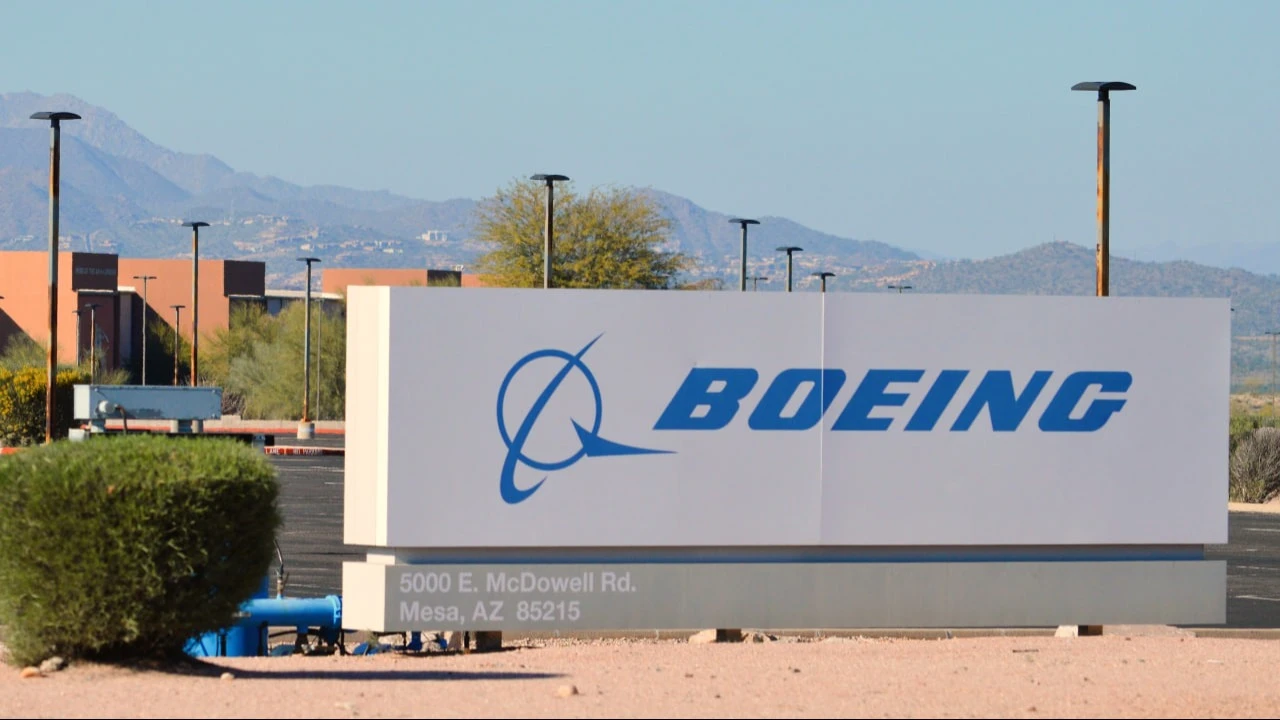
The American aircraft manufacturer Boeing showed positive free cash flow for the quarter for the first time since 2023. This was a surprise for the market: analysts expected that the company would be in the "plus" only by the end of the year. The growth in cash flow is due to increased deliveries and partial stabilization of production of 737 and 787 Dreamliner aircraft. However, serious challenges remain for the company - most notably the delay of the 777X program, which is seven years behind schedule due to heavy regulation. Boeing also announced a $4.9 billion write-down, exceeding analysts' expectations. These factors may have influenced investors' reaction: Boeing shares were down 3% in trading on October 29.
Details
Boeing recorded free cash flow of $238 million for the third quarter, a figure it hasn't reached since the end of 2023. Analysts had expected the aircraft maker to spend about $884 million before turning cash flow positive in the fourth quarter, Bloomberg reported. By comparison, Boeing reported negative free cash flow of $1.3 billion a year ago.
The turnaround to positive cash flow reflects a steady improvement in production of the 737 and 787 Dreamliner models this year, the agency said. This was a turning point after several years of delays and quality problems that had displeased customers and pressured the company's financial results.
"By focusing on safety and quality, we made important strides on the road to recovery, with the company achieving positive free cash flow in the quarter and working with the Federal Aviation Administration (FAA) to agree to increase 737 production to 42 airplanes per month in October," Boeing President and CEO Kelly Ortberg said in a press release.
What else the company said in its report
Boeing announced a $4.9 billion write-down and postponed the debut of its 777X jetliner, a strategically important project that is already seven years behind schedule due to heavy regulation, Bloomberg writes. That reminded investors of the company's long road to recovery, despite rising airplane deliveries supporting its cash flow, the agency said.
The size of the write-down on the 777X program was higher than Wall Street expected: Vertical Research Partners analyst Rob Stallard had forecast a loss in the range of $2.5 billion to $4 billion, Barron's writes.
Overall, the company has already recorded nearly $16 billion in write-downs on the 777X program. This airplane is an updated version of the popular 777 model, the largest Boeing passenger airliner in production, Bloomberg writes.
The 777X is now scheduled to enter service in 2027, although the timeline has been pushed back several times previously. Because of these delays, the company's customers, including Emirates, the model's largest customer, and Deutsche Lufthansa AG, the first customer to receive the aircraft, have been forced to revise their fleet renewal plans, the agency notes. The 777X's main competitor remains the Airbus A350, which is also expected to report on Oct. 29.
After the write-down, the company's loss amounted to $7.5 per share - much higher than analysts' forecast ($4.44). This, however, is better than last year's results, when the company made a loss of $5.8 bln. Revenues reached $23.3 bln against the forecasted $22.3 bln. It is 30% higher than a year earlier ($17.8 bln).
Boeing shares were down 3% in trading on Oct. 29.
Context
Earlier this month, Boeing said it delivered 160 airplanes in the third quarter, up from 150 in the second quarter and 116 a year ago. Of those, 121 were 737 Max (up from 92 a year earlier), 24 were 787 Dreamliner (up from 14 a year earlier), nine were 777s (up from four a year ago) and six were 767s (flat year-over-year).
As for the increased production of the best-selling 737 Max jetliner, the U.S. Federal Aviation Administration (FAA) recently approved for Boeing to increase the production rate from 38 to 42 airplanes per month after the company met established quality and safety requirements. The company had been under restrictions due to an incident involving a door panel tearing off into an Alaska Air airplane in mid-air in January 2024 that nearly ended in disaster and led to increased federal oversight, which slowed production.
Boeing said in its third-quarter report that production has stabilized at 38 machines so far, but the target 42 has yet to be reached. Ortberg's long-term goal is to reach production of 47 airplanes per month, Yahoo Finance noted.
This article was AI-translated and verified by a human editor