BofA has highlighted five risks that could bring down the S&P 500. What is his advice to investors?
The index is overheated, the reliance on private equity is growing, and market signals are close to the levels of past peaks

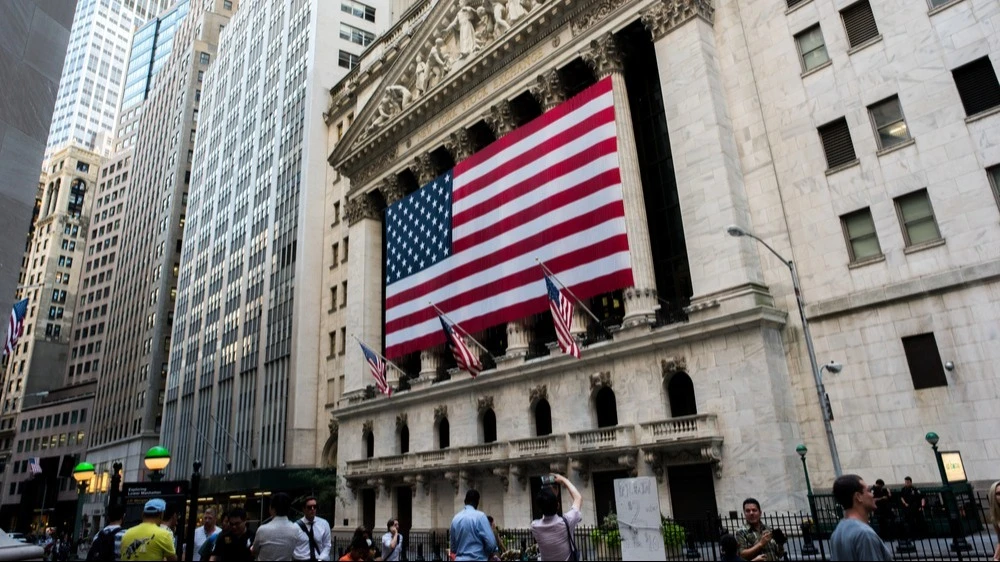
Bank of America has warned about five key risks for the main American index S&P 500, writes MarketWatch. Savita Subramanian, the bank's strategist, advised investors to be selective and favor individual stocks instead of index funds. In her opinion, the current composition of portfolios of the majority of U.S. investors today creates the risk of mass sales when the economic situation worsens. Current market signals are already close to those that preceded past peaks in the S&P 500, BofA warned.
What are the five warning signs Bank of America has seen?
The S&P 500 is already very expensive
Subramanian's team tracks 20 valuation metrics for the S&P 500 - from the recent price-to-earnings ratio (Trailing P/E) to forward PEG (P/E to earnings growth rate ratio) to forward P/E for the S&P 500 and the Russell 2000 index of small-cap companies.
On nine metrics, the S&P 500 is already trading above its peak dot-com bubble level, BofA noted. Four of those metrics - market capitalization to GDP, price to book value, price to operating cash flow and EV/Sales (enterprise value to revenue multiple) - have never been higher.
That said, even though today's investors are paying a higher premium to own stocks, Subramanian and her team believe there are reasons why higher valuations can be justified.
"Historical comparisons are problematic because today's S&P 500 is of higher quality, with a lower debt load and less reliance on assets," the analyst notes. - But risks are accumulating, and the minimum fair valuation of the S&P 500 is probably lower than current levels."
Signs of an impending bear market
The BofA team tracks ten bear market indicators - signals that Subramanian says reliably predicted previous market peaks. Among them:
- Consumer confidence index according to the Conference Board, reflecting the level of confidence in the economy and personal income.
- Percentage of respondents expecting further growth in equities.
- BofA's Analyst Recommendation Indicator (sell-side), which tracks brokers' advice to buy, hold or sell stocks.
- A ten-year estimate of the number of M&A deals announced in the last six months, showing M&A activity relative to the historical average.
- The difference in returns between high and low P/E stocks, which measures how much "expensive" stocks outperform "cheap" stocks and whether there are signs of market overheating.
Taken together, these indicators suggest a need for caution, MarketWatch writes. 60% of the signals have already triggered - just slightly less than the 70% average prior to previous market peaks.
Lack of government data as a risk
Transparency in the U.S. economy has started to improve after a sell-off triggered by duties in April. President Donald Trump's budget bill was expected to accelerate new corporate investment.
However, October saw a government shutdown and an escalating trade dispute with China. In addition, corporations suddenly became less inclined to invest in business development and expansion of operations.
If the government shutdown drags on and the trade conflict with China remains unresolved, it could slow the economic activity seen in recent months, the BofA team warned.
Speculation and private lending
A number of high-profile bank failures recently have raised concerns about banks' lending standards while increasing fears about private lenders, so it's not surprising that investors are wary of the emergence of new problem loans, or "cockroaches," as JPMorgan CEO Jamie Dimon put it. Subramanian and her team expect that "cockroaches" are likely to be found among regulated banks as well.
At the same time, the BofA team warns that the market is increasingly dependent on speculative trading. Growth in investor margin debt, according to Finra, has returned to a 2021 peak, adjusted for the 12-month price change in the S&P 500.
The latest BofA Global Fund Manager Survey shows that investors believe private equity and credit are the most likely source of a systemic credit event. The survey also found that 54% of participants believe AI stocks are in a bubble.
What happens if everyone wants out
Regulated banks are better capitalized than many private lenders and are likely to be better protected from the credit cycle when it turns. However, the S&P 500 could be vulnerable because of liquidity. Subramanian said U.S. asset owners have largely abandoned actively managed equity funds in recent years and instead have built a "barbell" style portfolio.
This means that their investments are focused in two key areas: S&P 500 index funds, which replicate the composition of the market and provide passive income, and private equity, i.e. stakes in private companies with potentially high returns. This approach allows them to simultaneously have a stable base through index funds and a more active, income-producing portion through private equity.
If doubts about private creditors continue to accumulate, pension and other large institutional investors could become forced sellers of index funds to avoid realizing losses on private equity assets. This would create a flood of selling that could suppress even highly liquid large-cap stocks, BofA warned.
In this environment, Subramanian advised clients to move money out of funds that track S&P 500 movements and into individual specific stocks, MarketWatch writes. "Be selective," the BofA strategist summarized.
This article was AI-translated and verified by a human editor