Trump seeks way to rein in oil prices, investors fear stagflation: online



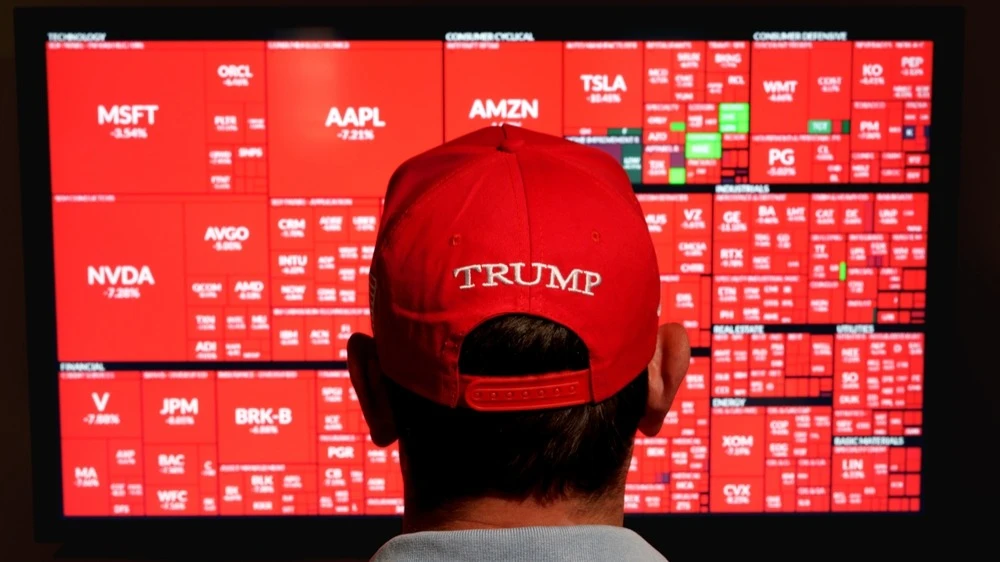
The new working week started with a sharp rise in oil prices and a sell-off in stocks and bonds. Brent soared to $119.5 for the first time since 2022 before slowing slightly on news that G7 countries will discuss the use of oil from strategic reserves. Coal and gas prices also rose sharply. Asia, which is heavily dependent on Middle Eastern crude, panicked, with stocks in Japan down more than 5% and South Korea down nearly 6%. European and U.S. stocks are also in the red, but are not falling as much. Follow what is happening online in this material.
Updated
18.25 CET: Investors are now seriously considering the possibility that war in the Middle East could cause a stagflationary shock, as it did 50 years ago when energy supply disruptions caused inflation to spike and hit economic growth, writes Reuters. The market doesn't like stagflation because it hurts stocks, bonds, which are not immune to rising inflation, and even potentially gold.
"The risk of a repeat of the 1970s scenario is growing. If another protracted war breaks out, with oil prices rising significantly, both the safe haven status of government bonds and all other assets will be at risk"
The main question for global markets now is how long energy prices will continue to rise. High oil prices tend to accelerate inflation and curb economic growth. This puts central banks in a difficult position, as raising interest rates to curb inflation could further slow economic growth. Oil price spikes contributed to U.S. recessions in 1973, 1980, 1990 and 2008, Reuters lists.
18.05 CET: Donald Trump is preparing to consider options to curb oil prices, sources told Reuters. In addition to using strategic oil reserves, options being discussed include limiting US exports, intervening in the oil futures market, eliminating some federal taxes or the Jones Act, under which only US-flagged vessels can transport fuel domestically.
The White House, which is preparing for midterm elections, is concerned that a sharp rise in oil prices will hit U.S. businesses and consumers, Reuters notes. At the same time, analysts surveyed by the agency say that U.S. political decisions will have little impact on global oil markets as long as hostilities block oil exports from the Middle East.
17.24 CET: French President Emmanuel Macron says he wants to organize a joint maritime mission to escort tankers and container ships through the Strait of Hormuz. He said the mission involving European and non-European countries would be purely defensive. The idea is to "gradually open the Strait of Hormuz" after the first, "most acute" phase of the war subsides, Bloomberg reports.
Macron traveled to Cyprus to show France's solidarity with the EU state. Last week, a British air force base on the island was attacked by a drone. Paris sent the aircraft carrier Charles de Gaulle to the shores of Cyprus to provide security.
17.45 CET: US President Donald Trump is preparing to consider options to curb oil prices, sources told Reuters. In addition to using strategic oil reserves, options being discussed include restricting exports from the US, intervening in the oil futures market, eliminating some federal taxes or the Jones Act requirement that only US-flagged vessels can transport fuel domestically.
The White House, which is preparing for midterm elections, is concerned that a sharp rise in oil prices will hit U.S. businesses and consumers, Reuters notes. At the same time, analysts surveyed by the agency say that U.S. political decisions will have little impact on global oil markets as long as hostilities block oil exports from the Middle East.
17.09 CET: Brent has fallen below $100 per barrel. At the time of publication, May futures were trading at $98.5 in London - a rise that has slowed to 6%.
Investors in the stock market meanwhile have almost bought back the drawdown in US tech stocks - the Nasdaq index is now losing less than 0.1%. The Dow Jones blue-chip index is still losing 0.9%. The S&P 500 is down 0.5%.
16.45 CET: The US stock market continues to follow the same pattern as it did for most of last week, with stocks falling sharply at the start of trading and cutting losses in the following hours, writes Barron's. The Nasdaq index is now down less than 0.2%, with the S&P 500 index rising above its intraday average by the close in 12 of the last 16 trading sessions, according to Dow Jones Market Data.
Why aren't investors panicking despite oil at $100 or more? Deutsche Bank strategist Henry Allen explains. Historically, he says, a sharp rise in oil prices has historically led to a significant drop in stocks only when at least one of these conditions occurs: prices rise by more than 50% in a few months; against this backdrop, central banks change course to curb inflation; or the economy falls into recession or slows down significantly.
Now the first two conditions seem increasingly realistic, but regulators are not yet signaling a change of approach in monetary policy, the strategist said.
"Markets do not expect this energy price shock to last. We have yet to see a hawkish reversal from central banks. And given how early it is, we also have yet to see any clear signs of deteriorating economic data"
16.11 CET: US stocks are cutting back on their decline, with the Nasdaq index down less than 0.4%, the S&P 500 down 0.7% and the Dow Jones blue-chip index down 0.9%.
16.02 CET: The G7 has not yet decided on the use of strategic oil reserves to curb prices, French Finance Minister Roland Lescure said. At an online meeting on Monday, ministers agreed to monitor the situation closely and take action if necessary, he said.
Coordinated release of oil from reserves has only been used five times before. Reports that the G7 may use this method to stabilize markets slowed oil's rally this morning. Brent, which soared 29% at its peak, is now up 10.5% to $102.4 a barrel.
15.44 CET: The S&P 500 index could go into correction amid rising military risks, falling 10% from its peak, analysts at JPMorgan do not rule out. Should the forecast materialize, stocks would fall to around 6270 points, down 7% from the level at the close of trading on Friday.
Investors are not ready for such a fall, as they remain in a neutral position and do not significantly reduce risks, notes the head of global market analytics JPMorgan Andrew Tyler. As an example, he noted that last week investors sold shares of energy companies, expecting to reduce tensions. Instead, oil prices on Monday topped $100 for the first time since 2022 after several Gulf countries cut production.
15.14 CET: Investors have been betting on economic growth this year and a stagflationary shock was not part of their plans, Reuters quotes Chris Turner, head of global markets at ING, as saying. As the agency writes, the Iranian crisis is now forcing traders to reassess their most popular strategies for 2026. Here are five investment themes that were in the focus of investors, but are now losing relevance:
- Betting against the dollar. As recently as last month, investors held the largest bearish stance on the dollar since 2021, meaning they were betting on its fall, expecting a Fed rate cut. Since the war began, the dollar has become a major haven for volatility and hit its highest level since last November.
- Stocks outside the U.S.. The market consensus at the beginning of the year said: "Buy non-U.S. stocks." However, after the U.S. and Israeli strikes on Iran, the MSCI World ex-US Global Equities Index fell sharply, losing ground to the more resilient S&P 500. The U.S. economy is less dependent on energy imports, so investors are once again favoring America.
- Focus on Emerging Markets. Emerging market equities and currencies have had a great start to the year, with stocks up over 15% and the MSCI Emerging Markets Currency Index up 1.9%. In the first week of the war, they lost 7% and 1.5%, respectively. Markets that had previously performed better since the beginning of the year - such as South Korea - fell particularly hard.
- Fed rate cut. The sharp rise in energy prices has intensified inflationary concerns and forced traders to revise expectations of a Fed rate cut. Before the war, the markets estimated the probability of such a decision at the meeting in June at about 50%. Now it is only 25%.
- Betting on banks. Shares in the sector have gone into negative territory after moderate gains in early 2026. Pressure on them is still exerted by those growing fears of rising inflation - it will lead to deterrence of borrowing and investments.
14.32 CET: The main trading session has started in New York. Here's what's happening in the markets:
- The strongest of the three major indices is the Dow Jones, down 1.1%. The S&P 500 and Nasdaq are losing 0.9%.
- The VIX fear index is slightly above 31 points. Earlier, amid a panic sell-off in Asia, it rose above 35 for the first time since April 2025.
- Brent in London has slowed to 10% growth and is trading just below $102. WTI is back below $100 per barrel.
- Gold is down 1.2% at less than $5100 an ounce. The dollar index adds 0.1%.
14.05 CET: Despite the broad market sell-off (S&P 500 futures are down 1%), defense stocks are rising ahead of the main session in New York, with Lockheed Martin up 0.8%, RTX and Northrop Grumman up more than 1%.The appointment of Ayatollah Ali Khamenei's son as the new supreme leader of Iran indicates that there will be no quick peace in the Middle East, and, therefore, the demand for weapons, including drones, missiles, fighter jets and refueling planes will not go anywhere, states Barron's.
13.50 CET: European blue chips are nearing a correction phase, with the Euro Stoxx 50 index losing almost 10% from its peak in February, Bloomberg reports. Among sectors, mining companies, automakers, real estate developers, as well as travel and entertainment are the biggest losers. Shares of the airline Lufthansa on Monday are falling by more than 6%, jewelry company Richemont, which owns the brand Cartier, cheapens by 3%. The situation in the energy sector is different: amid a sharp rise in oil prices, shares of oil giants Shell and BP rose by 2% and 1.4%, respectively.
Technically, the term "correction" applies to the market when an index falls 10% or more.
13.19 CET: Retail investors in Asia are not afraid to buy back the drawdown with borrowed money, expecting a quick recovery in prices once the crisis is over, Reuters writes, citing traders and brokers. On Monday, when South Korea's Kospi index fell nearly 6 percent, retail investors in Seoul bought $3 billion worth of stocks, while investors from China bought $4.7 billion worth of Hong Kong-traded shares through the Stock Connect trading platform. As a result, the Hong Kong-listed index of Chinese companies fell only 0.5 percent, while the Hang Seng Index fell 1.3 percent. Broker CMC Markets said its clients were increasing leverage on oil positions, buying dollars and selling cryptocurrency.
13.15 CET: NATO forces on March 9 shot down a ballistic missile fired from Iran towards Turkey, Bloomberg reports. The debris fell about 150 km from the Incirlik airbase, where hundreds of US military personnel are stationed.
This is the second such incident in Turkish airspace since March 4. Bloomberg notes the increased risk of the alliance's more direct involvement in the conflict in the Middle East.
12.45 CET: The tourism industry is suffering the most from the Iranian crisis. Cruise operators Norwegian Cruise Line and Carnival have been the worst performing stocks in the S&P 500 index since the Iranian crisis began, down 20% since February 28, writes Barron's. Southwest Airlines, United Airlines, Delta Air Lines, American Airlines and another cruise organizer Royal Caribbean have fallen in price by more than 10%. Amid a sharp rise in oil prices, these stocks continue to fall about 3-4% before the opening of trading in New York.
Is it worth buying them on the drawdown? It is premature to say so, the publication notes. At the same time, Barron's reminds that cruise companies were among the hardest hit during the COVID-19 pandemic, but the recovery of business contributed to their sustained rally.
12.05 CET: Saudi Arabia has started to cut oil production amid storage facilities filling up, Bloomberg reported citing a source. The kingdom normally produces about 10 million barrels of oil a day and exports about 7 million. Earlier, national oil giant Aramco began transferring oil that would previously have been exported through the Strait of Hormuz to its port of Yanbu in the Red Sea to supply the global market. But the capacity of the pipeline that transports these volumes is insufficient to fully replenish export volumes, Bloomberg notes.
Brent is up 14% and trading above $105 per barrel, while WTI is back above $103.
12.00 CET: The surge in oil prices has not yet brought the global economy closer to an "apocalypse", Pepperstone senior strategist Michael Brown told MarketWatch. According to him, traders' attention is now focused on how the Brent price will move away from the psychological $100 per barrel level, with the next level in focus being the highs reached in early 2022 - at which time Brent was trading above $130.
A price above $140 for Brent and $138 for WTI would be a "doomsday" for the US and global economies, Tyche Capital Advisors managing partner Tariq Zahir said in turn.
What else analysts are saying about oil:
- If the suspension of shipping through the Strait of Hormuz doesn't change very soon, "we face a potentially life-changing and unprecedented energy crisis," Neil Atkinson, former head of oil at the International Energy Agency, told CNBC.
"Yes, there are oil reserves around the world, but if the Strait remains closed and they start to be tapped, they will be depleted quickly. With production effectively halted in Iraq and perhaps Kuwait and even eventually Saudi Arabia, we will be in a situation like we have never seen before"
Asked what this could mean for oil prices, Atkinson said:
"I'm sorry, but here we're already moving into the realm of conjecture. There are no precedents. There's no price ceiling."
- ExxonMobil Chief Economist Tyler Goodspeed voiced a gloomy forecast on CNBC:
"When I think about the probability distribution of different outcomes, it seems to me that there are many more scenarios - and more likely scenarios - in which the strait remains effectively closed for longer than there are scenarios in which normal shipping traffic is restored"
- Societe Generale analysts warned that a prolonged production shutdown in the Middle East "significantly increases" the risk of complications in a subsequent restart.
"The UAE is likely to be the next producer at risk of a production shutdown, possibly within the next five to seven days. Qatar is also vulnerable, although its oil volumes are relatively small compared to the scale of its LNG exports. Saudi Arabia faces a lower risk, but a shutdown of its production is likely if the Strait of Hormuz remains closed for another two to three weeks"
11.44 CET: Qatar is delaying a major LNG expansion project until at least 2027 after being forced to shut down the world's largest LNG export facility, Ras Laffan, due to a drone attack, Bloomberg sources said. They said QatarEnergy expects to ship the first shipment from the North Field East facility early next year if operations at Ras Laffan resume in a month or sooner. A longer closure of the LNG complex due to the escalating war would delay the project further.
11.11 CET: What's happening in the markets right now:
- Brent futures for May delivery are up 11% to trade at $103.2 per barrel. The cost of WTI fell below $100 - the American oil is now trading at $99.4, adding 9%;
- The Stoxx 600 composite index of European stocks is down 1.6%. German and French stocks are down 1.6% and 1.7%, respectively. British shares (FTSE 100) lose 1.2%;
- the main indices on US stocks have slightly slowed down and are falling by 0.9-1%;
- The VIX index, known as Wall Street's fear gauge, has retreated from its highest level in almost a year - it is now adding 32% to surpass 31 points.
10.56 CET: C ult shortstop Michael Burry, known as the prototypical "Downgrade Game" character, has written a post on X, tagging Donald Trump in it.
"President Trump may have gotten himself into something that could become incredibly dangerous to the world if he shows again that a falling stock market is his kryptonite," he wrote.
Another prominent investor, Mark Mobius, released a note speculating on U.S. warfighting capabilities. He said that destroying Iran's nuclear facilities, located deep underground, "looks like a very difficult task." He also called the apparent discoordination within Iranian Xi a dangerous factor. He cited as an example of this the fact that Iran's president over the weekend apologized to regional neighbors for recent shelling, after which the shelling continued as if nothing had happened. Mobius said this could indicate that Iranian missile bases may be operating independently of each other.
10.35 CET: No matter how long the war in the Middle East lasts, the closure of the Strait of Hormuz is likely to be temporary, according to Fitch Ratings. Once tanker traffic resumes through the strait, oil prices should stabilize, Bloomberg quotes Angelina Valavina, head of EMEA issuers and commodities, as saying.
10.29 CET: Which stocks should investors look out for amid the oil price surge? The rally in energy stocks began before the Iranian crisis, but last week's gains have strengthened the sector considerably. Therefore, there are not many attractive oil company stocks left on the market, according to Investor's Business Daily. The publication's first choice was Vista Energy, a Latin American company with one of the highest composite ratings in the industry. The second recommendation, Colombia's Ecopetrol, has weak fundamentals but is interesting as a bet on an oil rally, IBD claims. Both companies are listed on the New York Stock Exchange.
The TipRanks platform on March 9 recommended buying "right now" two other oil stocks: Schlumberger and Targa Resources. It refers to the decision of Goldman Sachs to raise the target price of Schlumberger securities by 13%: the bank bets that the growth of activity in oil production due to high oil prices and high demand for Schlumberger's oilfield services will support the company's growth in the coming quarters. Morgan Stanley raised its target on Targa Resources shares by 12%, noting the new opportunities in global oil and gas markets that the company is facing due to the conflict in the Middle East, TipRanks reported.
10.05 CET: A Japanese refinery has offered Saudi Aramco to buy a batch of crude from it at $30-40 per barrel above the so-called official selling prices, which are set monthly. Bloomberg calls it an illustration of how tight the oil market is right now.
09.45 CET: Coal prices jumped to their highest level since November 2024, soaring more than 9% on the back of rising oil and gas prices, Bloomberg reports. The Middle East's energy supply problems have forced buyers to look for alternatives, with some importers, notably Taiwan, considering increasing their use of coal-fired power plants if the Iranian crisis drags on.
09.30 CET: While the situation in the US market, where stock futures are losing up to 1.5%, looks tense, in Asia it is "frankly frightening", writes Barron's. Asia is particularly hard hit by the de facto closure of the Strait of Hormuz, as about 80% of the oil and gas that passes through that crucial waterway is headed there. Stocks and currencies across the region fell sharply on Monday amid fears that rising energy prices will stoke inflation.
South Korea's Kospi index closed trading down by almost 6%, while Japan's Nikkei 225 fell by more than 5%. Both countries are heavily dependent on oil imports from the Middle East. Hong Kong's Hang Seng index fell 1.4%. The Philippine peso, Indonesian rupiah and Indian rupiah reached record intraday lows against the dollar.
09.20 CET: European trading has started, with the Stoxx 600 composite index down around 2.3%, with all sectors except oil and gas selling off. France's CAC 40 stock index is down 2.4%, Germany's DAX down 2.5%. The British FTSE index fell by 1.6%.
09.15 CET: Bonds also suffered a sell-off. The yield on Australia's three-year government bond rose to its highest since 2011. The yield on benchmark 10-year US Treasuries rose by more than seven basis points, the biggest increase since January. Bond yields are moving inversely proportional to prices. Futures on German government bonds fell to a near 15-year low, Bloomberg writes.
Investors are now not looking at bonds as a traditional safe haven, Reuters notes. The reason is the intensification of inflationary concerns and the likelihood that central banks will have to keep rates elevated for longer or even increase the cost of borrowing.
09.05 CET: An escalating war and soaring oil prices hit airline stocks in Asian trading, adding pressure on carriers already struggling due to airspace closures in the Middle East. Quotes of Qantas Airways, Air New Zealand, Cathay Pacific, Japan Airlines and Korean Air Lines fell by 3.5-8.5%.
"If oil prices rise by 20 percent, jet fuel becomes several times more expensive as it becomes even more scarce. This significantly increases operating costs for companies, which are already rising due to staff costs after increased flight times in closed skies," Subhas Menon, head of the Asia Pacific Airlines Association, told Reuters.
Operating conditions for airlines were difficult even before the Middle East crisis and the surge in oil prices due to political and economic uncertainty as well as component supply problems, said independent aviation analyst Brendan Sobey. "Now the already high level of uncertainty has increased further," he emphasized.
08.35 CET: The VIX index, known as the "Wall Street fear index", soared 47% to slightly above 35 points for the first time since April 2025. "The fear is not only palpable but measurable <...> (With the VIX index) above 35, there will be real panic in the stock markets," Christian Henke, chief market analyst at IG, wrote in a note quoted by Market Watch.
At the moment, futures on three major U.S. stock indexes are falling by 1.4-1.6%. The Russell 2000 index of small capitalization companies fell by 2.7%.
08.32 CET: In this new and rapidly changing global environment, policymakers "need to think about and prepare for the unthinkable", International Monetary Fund chief Kristalina Georgieva said at a symposium in Tokyo.
War in the Middle East could affect market sentiment, economic growth and inflation, creating new demands on leadership, she said. Countries should put domestic economic policies in order to have a sufficient "margin of safety" to respond to shocks, Georgieva emphasized.
08.23 CET: Gas prices in Europe jumped 30 percent on Monday, with disruptions to energy supplies from the Middle East raising fears of tougher competition for fuel and increasing inflationary pressures, Bloomberg writes. The European gas market is particularly vulnerable as the region's storage reserves are depleted after the winter. That means Europe will have to buy more LNG in the summer to replenish reserves, entering competition with buyers in Asia for limited supplies. "If you in Berlin want an extra tanker of U.S. gas, you need to offer a high enough price to poach it from Tokyo," Bernstein analysts wrote.
Benchmark European gas futures have risen 67% in the past week and are now trading at around €65 per MWh. During the 2022 energy crisis, gas prices were above €300.
08.11 CET: According to Bloomberg Intelligence analysts Alon Olshey and Grant Sporre, trading and mining giant Glencore is in the best position to generate trading profits from the premiums seen in coal and metals markets.
Rio Tinto and South32 could also benefit from a diversified commodity asset mix.
08.08 CET: Billionaire Leo Koguang bought a million shares of Nvidia, doubling his stake. "I hope I can calm the nervous market a bit. Good luck everyone," he wrote on social network X on Friday.
The deal is unusual for an investor - Koguang's fortune, which Bloomberg estimates at $13.4 billion, has for years been invested primarily in just one stock: Tesla. Since the beginning of the year, Tesla's stock is down nearly 12% and Nvidia's is down about 5%.
08.02 CET: Tokyo trading has ended, with the Nikkei 225 Tokyo Stock Exchange's main index falling 5.2% to its lowest level in more than a month. The broader Topix index was down 3.8%.
07.38 CET: Oil price gains are slowing amid news that the G7 countries will discuss an emergency release of stockpiles from strategic reserves. May Brent futures are now up less than 17% at $108.4.
Since the beginning of trading on Monday, oil traders have already sold almost 900,000 lots of Brent crude oil - this is more than 75% of the average trading volume for a full day over the past year, Bloomberg writes. The agency calls such volumes unprecedented.
Traders also broke a record last week, selling 18.6 billion barrels - enough for about six months of global consumption, Bloomberg notes.
07.25 CET: The risk of a sharp fall in US equities in the US before the end of the year has increased, according to renowned strategist Ed Yardeni. He has raised the probability of a market crash this year from 20% to 35%, Bloomberg reports, citing a recent note by the expert. At the same time, Yardeni has reduced from 20% to 5% the probability of an "explosive" rally, which is driven more by investor enthusiasm than by fundamental factors.
Yardeni has been right before in his predictions about market moves, Bloomberg notes. In December, the strategist recommended that investors reduce their exposure to the so-called Magnificent Seven tech stocks relative to the rest of the S&P 500 index.
07.10 CET: Gold prices were falling 2.5% to below $5050 per ounce in early trading, but have now trimmed the decline to 0.5%.
The precious metal is being pressured by "an inflationary monster that is strengthening the dollar," explained Hebe Chen, an analyst at Vantage Markets in Melbourne. "The $100 oil price has set off a chain reaction: energy shock, rising inflation expectations, strengthening dollar and weakening gold," she said.
Higher inflation fears in the U.S. make it more likely that the Fed will keep interest rates unchanged - or even raise them - for longer. And higher borrowing costs, like a stronger dollar, are generally negative for precious metals, which do not generate interest income. In addition, gold has become a source of liquidity amid an intensifying sell-off in global stock markets, Bloomberg notes.
06.55 CET: Currency markets are now guided by the principle: buy the dollar and nothing else, Bloomberg writes. The US currency is strengthening against all major competitors - even the currencies of oil-producing countries such as Norway. The krone fell 0.8% against the U.S. dollar.
"The dollar is seen as an absolute safe haven due to its liquidity while being bought back due to rising oil prices," said Ebury's head of market strategy Matthew Ryan. - "We expect the dollar to rise further while the war continues and its imminent end is not in sight.
06.45 CET: States may be forced to tap strategic oil reserves, warns Dutch banking group ING Groep. "Clearly, pressure in favor of such action will grow as supply tightens and oil prices hold above $100 a barrel," Warren Patterson, head of commodity markets strategy at the bank in Singapore, wrote, as quoted by Bloomberg. According to the analyst, "the market is forced to aggressively price in a prolonged supply disruption."
At least three G7 countries, including the U.S., support the use of strategic oil reserves, according to Financial Times sources. According to them, G7 finance ministers will discuss the idea later on Monday.
06.35 CET: Tokyo's key Nikkei 225 index is down 6%. The fear index on the Japanese trading floor has soared to its highest level since March 2020, when the COVID-19 pandemic began, Bloomberg writes.
Japan's economy is considered particularly vulnerable to rising oil prices because the country imports about 90% of its oil from the Middle East.
Previously, investors were optimistic about Japan for several reasons, from Prime Minister Sanae Takaichi's stimulus policy to support for corporate governance reforms. Between the beginning of the year and the Iranian crisis, the Nikkei index rose 16%, outperforming major global indices.
06.20 CET: A brief update on what's happening in the markets:
- Brent today is likely to set a record for a single-day rise in value, Reuters writes. The price of futures for benchmark crude jumped 29% to $119.5.
- Asia, which gets a significant portion of its energy supplies from the Middle East, has seen a panic sell-off. The region's main stock index, the MSCI AC Asia Pacific Index, collapsed by 5.6%, primarily due to falling stocks in South Korea and Japan.
- Futures on the main U.S. stock index, the S&P 500, were down 1.9 percent, while the Dow Jones and Nasdaq were down more than 2 percent.
- Gold fell more than 1 percent. In contrast, the Bloomberg Dollar Index rose 0.7 percent.
This article was AI-translated and verified by a human editor
