Broadcom, Apple and Chipotle: How billionaire Ken Fisher's portfolio has changed

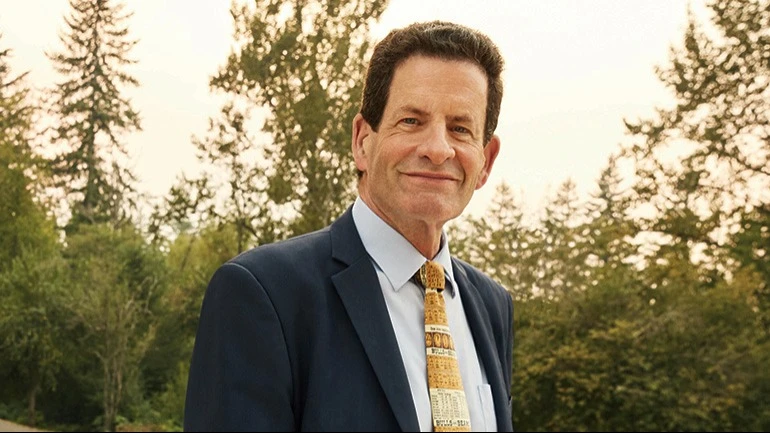
Fisher Investments has more than 1,000 stocks in its portfolio, but the main focus is on U.S. bigtechs / Photo: fisherinvestments.com
Billionaire Ken Fisher, who heads Fisher Investments and is known for his "contrary to the market" predictions, has revealed his fourth-quarter 2025 deals. According to the 13F report, the investor ended the year with a massive rotation in bonds and strengthened positions in semiconductors, which continue to dominate his strategy. The fund's total assets under management rose 6% to $293 billion.
Fisher's approach is based on the belief that market prices already take into account all commonly known facts. The investor team looks for its advantage in finding non-obvious information or in interpreting context more accurately than most bidders. At the end of 2025, this principle has translated into aggressive buying of U.S. Treasuries while remaining faithful to key AI giants.
The biggest deals in bigtech
Fisher remains loyal to the U.S. technology giants he has held in his portfolio for years. The largest stock deal in this industry in the fourth quarter was the purchase of Broadcom, a company that designs, manufactures and supplies semiconductors and infrastructure software. Fisher Investments bought 1.2 million securities, increasing its position by nearly 10%. Now the value of his stake is estimated at $4.8 billion.
Fisher's biggest bet in bigtech remains Nvidia - his stake is valued at $16 bln. In the fourth quarter, the investor increased his position in the chipmaker by 1.7%, having bought 1.5 mln shares. Positions in other companies in the sector also grew: Microsoft - by 1.8% ($12.2 billion), Alphabet - by 1.5% ($11.9 billion), Amazon - by 1.5% ($7.8 billion), Apple - by 1.3% (almost $15 billion). These five companies account for approximately 22% of Fisher Investments' equity portfolio reported on Form 13F.
Fisher also increased his stake in Meta Platforms by 1.7%. At the same time, the fund cleaned up the IT sector of emerging markets, completely eliminating its position in the Indian giant Infosys, which was valued at $146 million at the end of the third quarter.
New promotions and industry rotation
In the fourth quarter, Fisher Investments added 113 new issuers to its portfolio. New assets appeared in the healthcare and industrial sectors. The largest of them were biotech company Arcellx, in which the fund invested $21 million, and electronic components manufacturer Bel Fuse, where it opened a position for $42.6 million. The capitalization of both companies is less than $4 billion.
The energy sector underwent rotation: positions in BP and Chevron grew by 1.4% and 1.5% and are now worth $2.3 bln and $3.3 bln respectively. The stake in Canadian Suncor Energy increased by almost 8% to $746.2 mln. At the same time, the investor cooled to the oilfield services segment: positions in Halliburton ($10.7 mln) and SLB ($40 mln) were reduced by 12% and 7%, while the fund excluded Helix Energy and Cactus Inc securities completely.
In total, the fund exited 114 assets during the quarter. In the corporate block, Fisher was most active in getting rid of securities in the technology and consumer sectors. The investor completely withdrew from the capital of the Chipotle Mexican Grill restaurant chain, the Airbnb home rental marketplace, the Whirlpool home appliance manufacturer, and the Tyson Foods food corporation.
In the technology block, the fund sold shares of cloud company Cloudflare, software company DocuSign and cybersecurity company Fortinet. In the server equipment segment, the fund got rid of the securities of Super Micro Computer, a manufacturer of servers and solutions for data centers. Eliners manufacturer Align Technology, diagnostic company Exact Sciences and medical systems developer Hologic disappeared from the portfolio.
The investor also sold its entire stake in VanEck Bitcoin ETF, an exchange traded fund that invests in bitcoin.
Maneuver in bonds: bet on medium-term government debt
Fisher made an overhaul in debt instruments during the fourth quarter. The investor increased its bet on medium-term U.S. government bonds by purchasing more than 47.1 million shares of iShares 7-10 Year Treasury Bond ETF (IEF). The move increased the position in the portfolio by 53.8% and the total asset value reached $12.96 billion.
At the same time, Fisher Investments almost completely got rid of other debt instruments. The fund reduced its investment in the iShares MBS Mortgage Bond ETF by 95%, selling 21.4 million shares, and almost completely exited the State Street SPDR Portfolio Long Term Treasury ETF, reducing the position by 98.1%. This large-scale exit from long-term and mortgage-backed securities in favor of medium-term government debt was the most notable structural change in the portfolio in the fourth quarter of 2025.
What the Fisher portfolio looks like
It's a very diversified portfolio - according to the 13F report, Fisher had 1,014 securities in its portfolio at the end of 2025. The fund's assets are spread across 10 key sectors, including technology, financial services, healthcare, industrials and energy.
At the end of the year, Fisher maintained a high concentration in technology giants. The first two lines in his portfolio were occupied by Nvidia (5.5%) and Apple (5.1%). Third place went to iShares 7-10 Year Treasury Bond (4.4%), which displaced Microsoft (4.2%) and Alphabet (4%) in the top five. The remaining positions in the top 10 are distributed among representatives of different industries: retailer Amazon (2.7%), debt fund Vanguard Intermediate-Term Corporate Bond (2.4%) and the banking sector represented by Goldman Sachs (2%). Rounding out the list of the fund's largest investments are Taiwan's TSMC (1.9%) and industrial giant Caterpillar (1.9%).
Context
In the U.S., large investors are required to disclose their equity investments at the end of each calendar quarter in a Form 13F report filed with the U.S. Securities and Exchange Commission (SEC). The filing takes 45 days from the end of the quarter, so by the time the disclosure is made, the data in the reports may no longer be current, The Wall Street Journal notes.
This article was AI-translated and verified by a human editor