"Buffett's Heirs: Who and How Today Replicates the Legendary Investor's Strategy
Managers are moving to more concentrated strategies, focusing on quality and corporate sustainability
More and more fund managers are turning to concentrated investment strategies inspired by Warren Buffett's approach. They are building compact portfolios of 20-60 stocks, emphasizing companies with sustainable business models, low debt and strong corporate governance. Among the funds adhering to this philosophy are Oakmark, GMO U.S. Quality and others.
Details
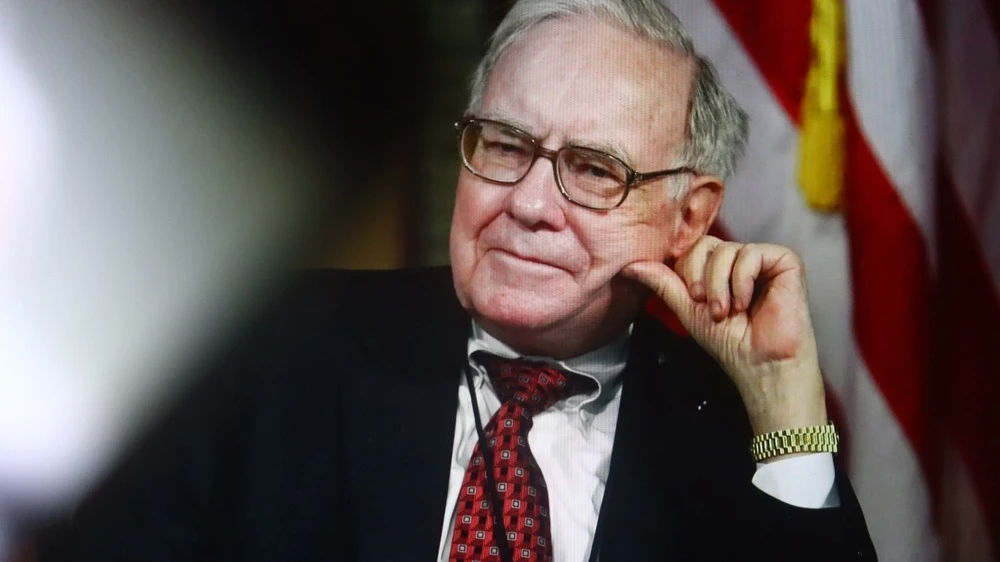
Ahead of Warren Buffett's departure as CEO of Berkshire Hathaway at the end of the year, more managers are emulating the concentrated investing style of the legendary "Oracle of Omaha." Their key characteristics are concentrated portfolios, a combination of value and quality factors, and good corporate governance, Barron's notes.
Buffett himself once described his strategy as "Keep all your eggs in one basket, but watch that basket carefully," the publication recalls. Today, in the era of numerous index funds with a large number of stocks, Buffett's concentrated active style is increasingly rare, Barron's adds.
"If you want a different result than the index, you can't just copy the index, you have to allocate assets differently," explains Chris Davis, manager of the Davis Select U.S. Equity ETF. - But with 25 to 30 stocks, you can provide enough diversification."
As Davis explains, he rarely allows a single company's share of the portfolio to exceed 10%, following Berkshire's example. As Barron's explains, Berkshire is quite diversified within its business lines - the company is simultaneously represented in insurance, industrial, energy and other sectors - and therefore more easily withstands market downturns.
This conglomerate's resilience is further bolstered by Buffett's focus on quality companies with consistent cash flows, strong balance sheets and so-called economic moats, Barron's writes. By "economic moat," Buffett means a company's advantages that protect it from competitors - such as patents, a strong brand or monopoly control over a market.
At the same time, a concentrated portfolio also has risks, says Davis. One of them is "uneven" profitability, which may differ greatly from the index both for better and for worse. But there is also another risk that cannot be ignored - the collapse of individual companies, which violates the "watch the basket" principle.
Examples of funds
FullerThaler Behavioral Unconstrained Equity
The so-called quality factor quantifies part of Buffett's strategy. Morningstar analysts define it as a combination of 12-month return on equity and debt-to-capital ratio, favoring companies with high cash flow and low debt, Barron's writes.
One of the best concentrated funds with 24 stocks and a high Morningstar quality rating is FullerThaler Behavioral Unconstrained Equity. Its manager, Raymond Lin, looks for undervalued stocks to which the market is reacting inappropriately: either undervaluing good news or overreacting to bad news. At the same time, companies should be "durable" in the spirit of Buffett, able to withstand an economic downturn.
"If we want to see a clear example of underperformance or overvaluation while strictly following the downside protection criteria - i.e. looking for oligopolies and monopolies with positive free cash flow and low debt - there are few such companies," Lin explains. - Therefore, we have come to the conclusion that the optimal number of positions in the portfolio is 20-30.
Oakmark
Buffett is also considered one of Buffett's "heirs" by manager Bill Nygren, who runs the Oakmark and Oakmark Select funds, as well as the recently launched Oakmark U.S. Large Cap ETF. He often finds quality companies in sectors that are generally considered more cyclical and less "quality" than technology. So in his funds, oil company Phillips 66 with a P/E (price-to-earnings multiple, one of the most popular stock valuation metrics) of 13 is next door to search engine giant Alphabet with a P/E of 25.
"Phillips 66 is a very high-quality refining and midstream business, but the companies themselves will never be valued as highly as Alphabet, and we're fine with that," Nygren says. He prefers to own steady companies like Phillips when the entire oil sector is cyclically unpopular and wait for a recovery.
GMO U.S. Quality
The GMO U.S. Quality fund focuses on business quality rather than value. It has only 36 stocks in its portfolio, but a significant 41% of its holdings are in the technology sector, and its average P/E ratio is 22, which is noticeably higher than the 13 of the Oakmark ETF, which focuses on undervalued assets.
Like Buffett when he bought Coca-Cola stock in the 1980s, fund manager Tom Hancock recognizes that intangible assets - such as intellectual property, a recognizable brand and user base - create real but not obvious value.
Companies like Microsoft and Meta Platforms have an intangible strength that traditional valuation methods simply don't capture, Hancock says. Over time, these companies perform much better than the numbers would suggest, he says.
This article was AI-translated and verified by a human editor