Compressed Spring: why an investor in The Big Short is expecting a collapse like never before seen
A prominent short-seller believes that the optimism around AI has blinded investors - and because of this, they are failing to see the dangerous fragility of the market

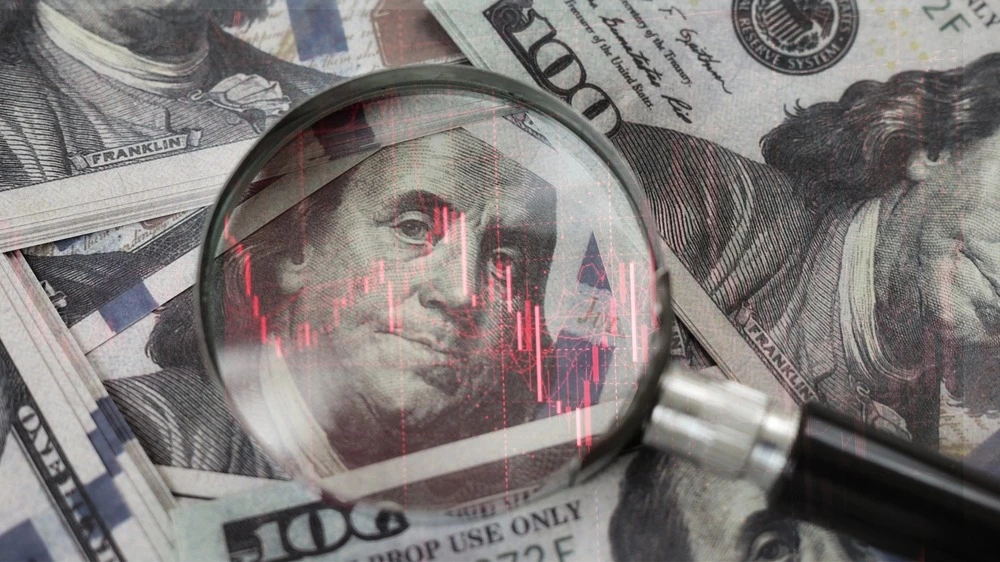
According to Burry, the U.S. stock market is now so fragile that any trigger could trigger a prolonged crisis / Photo: Shutterstock.com
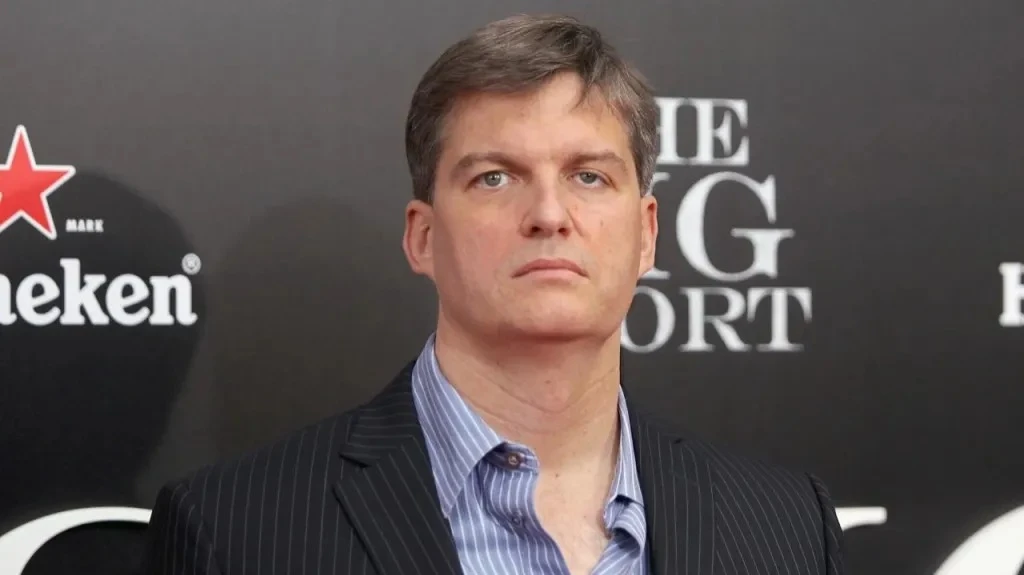
The U.S. stock market has reached a stage where each new "black swan" has increasingly devastating consequences, believes investor Michael Burry, known as the prototypical "Downgrade" character. For 34 years, stock prices have been rising in isolation from real corporate profits - a gap that has turned the market into a "compressed spring" that must sooner or later return to its original position, he writes in his Substack blog. Burry believes the next crash will be more powerful than last year's Bailout Day, and its effects will be longer-lasting.
Shock index
In order to assess the scale of market crashes, Burry introduces the "shock index": the ratio of market losses over two days to GDP per capita (48 hours for Burry is a universal "ruler" of an acute crash, allowing to compare peak panics of different eras). "Shock Index" translates abstract capitalization into an understandable quantity: how much of the average American's annual income goes to zero in a moment of panic.
The investor calculates that "Emancipation Day" in 2025 (the simultaneous collapse of stocks, bonds, and the dollar) would wipe out the equivalent of about 22% of the average American's annual income in 48 hours. This is less than the Great Depression of 1929 (25.6%), but higher than the covid shock (20.6%). The main anomaly of the 2025 crash was that investors had nowhere to hide: defensive instruments were also losing value.
The investor cites IMF data for 2026, which confirms that bonds are no longer "insurance" and are now falling in sync with stocks. Burry attributes this to the fact that investors have stopped relying on the math of earnings and interest rates. Therefore, the stock price becomes hostage to subjective expectations. Once optimism is replaced by panic, a domino effect occurs that turns any market shock into a prolonged crash.
"I am confident that market crashes will continue this trend: they will become more severe and synchronized. And, ultimately, more meaningful and longer lasting."
The "stupid money" trap
Burry cites the breakdown of the market's internal mechanisms as the cause of the painful collapses: active managers looking for the real value of companies were replaced by passive strategies.
"It's stupid money: capital is injected into stocks without any analysis of the business. The decision to buy is not made by intelligence, but by the very fact that funds are flowing in. As a result, the market is inflated and becomes critically illiquid, because no one else checks whether the company is worth its money"
This structure creates an illusion of stability: as long as the pension systems receive monthly deductions from salaries, the funds are obliged to allocate them to the purchase of shares included in the index. This forced inflow of money keeps quotations afloat, but behind the facade there is a vacuum - there are almost no people left on the market who are ready to buy assets consciously in moments of panic.
Burry writes that the resulting lacuna was filled by two forces:
High-frequency algorithms are trading robots that make thousands of trades per second. They account for 60% of all market turnover, but Burry calls their liquidity "phantom". Unlike stock market specialists, who can buy when everyone is selling, robots simply shut down in a moment of panic.
Multi-strategy funds are large platforms with $1 trillion in assets, consisting of hundreds of independent teams. They work according to the most brutal mathematical models: a loss of 5% of capital means immediate closure of all positions.
Burry believes that it is they who turn local volatility into a systemic catastrophe: in moments of panic, large funds start dumping shares en masse to automatically close their losses. And private investors, who are used to simply holding the index, find themselves trapped: there are no more buyers in the market, and it is impossible to sell a huge volume of securities at the same time - the market is simply unable to absorb such a mass of bids without the price falling. This structural fragility makes the market hypersensitive to any external shock.
2028 is the point of no return
If the fragile market structure is a "powder keg," demographics will be the spark that undermines it, Burry says. Today, investors over the age of 70 control more than 30% of U.S. stocks (over $32 trillion). After age 73, they are required to withdraw those funds, thus turning a major source of demand in the market into a source of inevitable selloffs. Burry estimates that 2028 will be the tipping point: for the first time in three decades, retiree redemptions will exceed new contributions from the working population.
"The tailwind that baby boomers have been creating for decades will be replaced by a headwind - it will be barely noticeable at first, and then the process will become rapid. Selling will be completely devoid of fundamental analysis: stocks will start to be dumped mechanically, without looking at the price"
This is a game changer, says the investor: the "blind" money that used to buy out any drawdowns will now methodically push prices down. Such a demographic tide cannot be stopped by the Fed's printing press, which will make the future crisis exhaustingly long.
The vanishing "crutch"
The second powerful factor of market support - buybacks - is now being undermined by the companies themselves. For years, this mechanism served as the main "crutch" of the U.S. market: by buying back their own shares, companies artificially reduced their number and pushed the price up. In 2022, the volume of buybacks exceeded $1 trillion, and in 2025 this record was broken, but now the resource for such support is exhausted.
The reason is what Burry calls "structural breakdown": the Magnificent Seven no longer want to support their quotes. All the free cachet is now being channeled into the race for AI leadership.
"They are borrowing tens of billions - Oracle, Meta, Alphabet have already racked up impressive debts. These funds are being used to build data centers, not to buy back shares. Market support through buybacks is collapsing - and this is not a pause, but a fundamental shift"
At the end of 2025, the buybacks of the biggest bigtechs have collapsed by 74%, Burry writes. Free cash flow is evaporating: Alphabet expects the figure to fall by 90%, and Amazon, according to various estimates, risks going negative by $17-28 billion.
Burry calls it a direct road to collapse: the market has lost its main insurance - the "price floor". According to Burry, without this defense mechanism, stocks will simply have nothing to cling to when they fall.
The perennial darkness
Burry doesn't try to guess a specific reason for the collapse - it could be anything from the realization that $5 trillion in investments in venture capital "unicorns" is worthless to a sudden geopolitical crisis. It is not the trigger that scares him, but the market's internal readiness for disaster.
"In a market that has come so far away from historical valuation levels, tension has built up like a compressed spring. It's one thing that this was caused by predictable forces that are now reversing. But it is quite another that it is happening in a system that has become structurally more fragile and prone to chain reactions. At some point, this gloom could become protracted"
As long as the majority continues to believe in illusions of a "perfect future" and market fairy tales, the accumulated tension is ready to recoil. In Burry's view, this will trigger a collapse more powerful and prolonged than anything investors have seen before.
Investors believe that the only way to endure will be a return to fundamental analysis and real cash flows. The biggest players are already turning to math. As examples, Burry cites Warren Buffett, who has amassed a record $373 billion in cash in his Berkshire Hathaway holding, and Gamestop CEO Ryan Cohen, who is looking for undervalued assets to buy.
This article was AI-translated and verified by a human editor