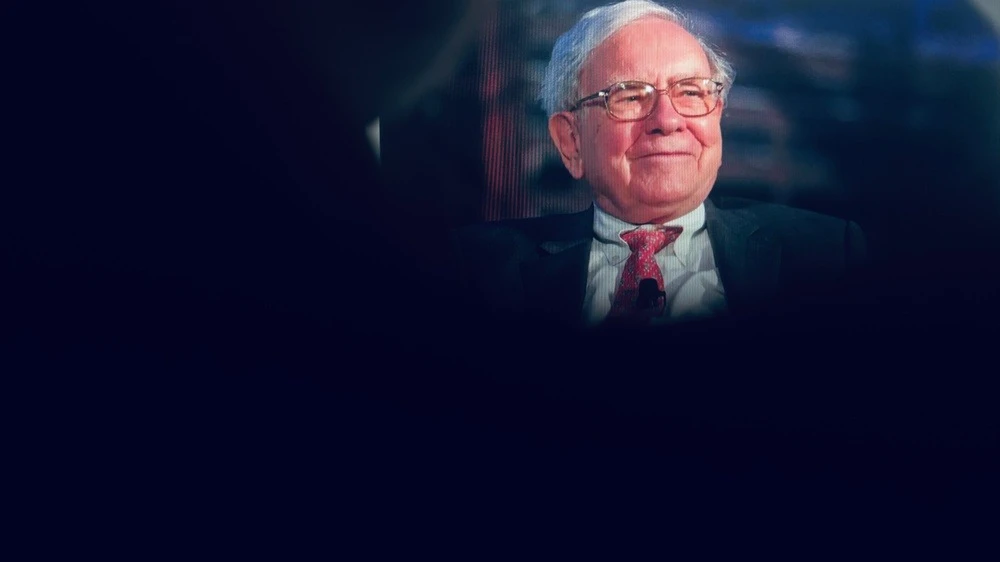
Deepfakes, casinos in church and the golden rule: what Buffett said in a surprise interview
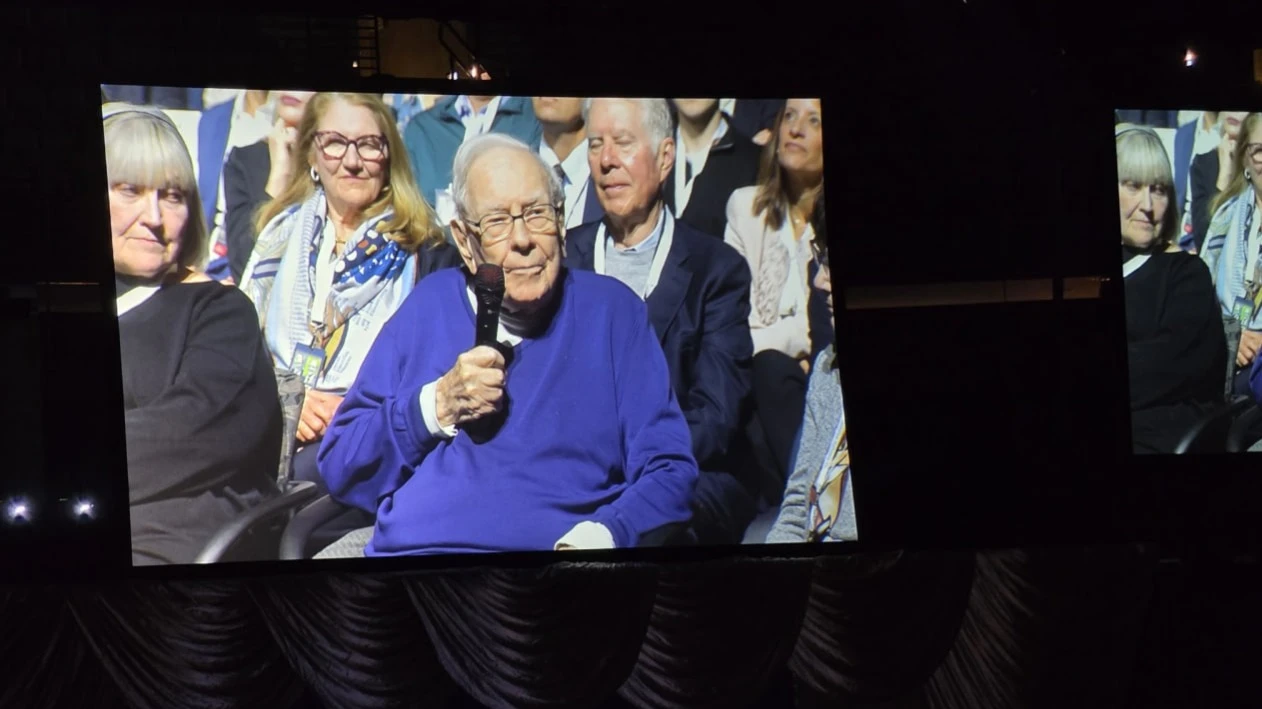
Buffett gave a surprise interview at the Berkshire shareholders' meeting / Photo: X / Michael Gielkens
During Berkshire Hathaway's annual shareholder meeting, founder and former CEO Warren Buffett watched from the audience for the first time, rather than speaking from the stage. However, during a break, the legendary guru, whose advice is heeded by investors around the world, gave an interview to CNBC backstage. Here's what he said.
Not an ideal situation for investment
Buffett said the market situation is not suitable for new investments. "It's not the most ideal situation - or environment, it's more correct to say - in terms of capital allocation for Berkshire," he said. The financier cited high prices in the market as one reason for caution. That said, Berkshire, he said, has "the right management" and has the ability to "pick its moments." Sometimes it may seem that the company "does nothing", but in other periods it is "quite active", Buffett recalled. He noted that of the 60 years he has been in the business, only five have been truly "intense."
Asked when is the right time to invest, Buffett said it will be when "no one is answering the phone," referring to the panic of a market crash. One of Buffett's widely known investment principles is to "only be greedy when others are afraid."
A church with a casino attached to it
Speaking of the boom in short-term trading and the growing interest in prediction markets, the Oracle of Omaha warned that "never before have people been in such a gambling mood as they are now."
He compared "the markets to a church with a casino attached to it." "People can go back and forth between church and casino, and I would say there are more people in church than in casino, but casino has become very attractive," Buffett said. - "If you buy overnight options or sell them, it's not investing, it's not even speculation - it's gambling.
The financier commented on the recent case of a US serviceman who allegedly used classified information about a military operation in Venezuela to make $400,000 on the prediction market. The case is now being reviewed by the U.S. Justice Department. "No one can explain why one would buy a day option unless that person had the opportunity to make some $400,000-plus dollars knowing when we were going to go into Venezuela. The magnitude of these things is mind-boggling," Buffett acknowledged.
"That doesn't mean investing is bad. But it does mean that the prices of so many things look ridiculous," he pointed out.
Not a single new industry
Buffett is known for investing only within his "circle of expertise," writes Business Insider. In an interview with CNBC, he said that he has not explored a single new industry in the last decade.
"I don't kid myself about these things. I'm not going to learn them, and I'm not going to get an advantage over a lot of younger people who grew up with it, used those products and have seen things evolve. You don't need to understand too many of these companies, though - like Apple, for example." Buffett has repeatedly admitted that he doesn't follow tech companies, and he considers Apple to be a player in the consumer sector, not the technology sector.
"The world is full of people suggesting you do different things, and it's a matter of finding what you understand and what makes sense. There may be twenty other options that also make sense, but you don't understand them - and then you just leave them alone," the investor said.
The threat of dipfakes
Buffett commented on the growing popularity of diplomacy and other forms of imitation, calling it a "frightening" trend: "It's particularly frightening given that there are about nine countries with nuclear weapons, and yet people are working on something even more dangerous. We haven't encountered that. We don't know what's going to happen next."
"My biggest fear would be if a really good imitation of any of the presidents came out," he noted.
At the Berkshire meeting, the first question asked by Buffett's "dipface" was about artificial intelligence. The company's new CEO, Greg Abel, said he was taking a cautious approach to the use of AI. "It should be an extension of our business," he said. - We're not implementing AI for AI's sake."
Golden Rule
The main rule that shareholders and partners should adhere to is to follow the "golden rule," Buffett said, which is to treat others the way you want to be treated. He emphasized that "there hasn't been a better principle expressed in the last couple thousand years." "If the whole world lived by the golden rule, it would be a much better society," he said. - It applies to everything from parenthood to leadership roles."
"It doesn't cost you anything. What's more, it reflects in a better attitude towards you, so in a way it's even a pretty selfish strategy. I have never seen a person who was unhappy behaving this way," the legendary guru added.
Context
Berkshire Hathaway's financial report published before the meeting showed that the first quarter of 2026 was the 14th consecutive quarter in which the company sold shares. As a result, the volume of cache on its balance sheet updated the record and exceeded $380 billion.
At the core of Berkshire's portfolio remains the so-called Big Four: Apple, American Express, Moody's and Coca-Cola, as well as stakes in Japanese trading houses, Abel said. Among other significant positions, he singled out Bank of America, Chevron and Alphabet.
Buffett's successor added that he is "fully engaged" with him on investments.
This article was AI-translated and verified by a human editor