Delta warned of financial damage due to the shutdown. What does this mean for the stock?
The U.S. government shutdown will not "wipe out" Delta's quarterly earnings entirely

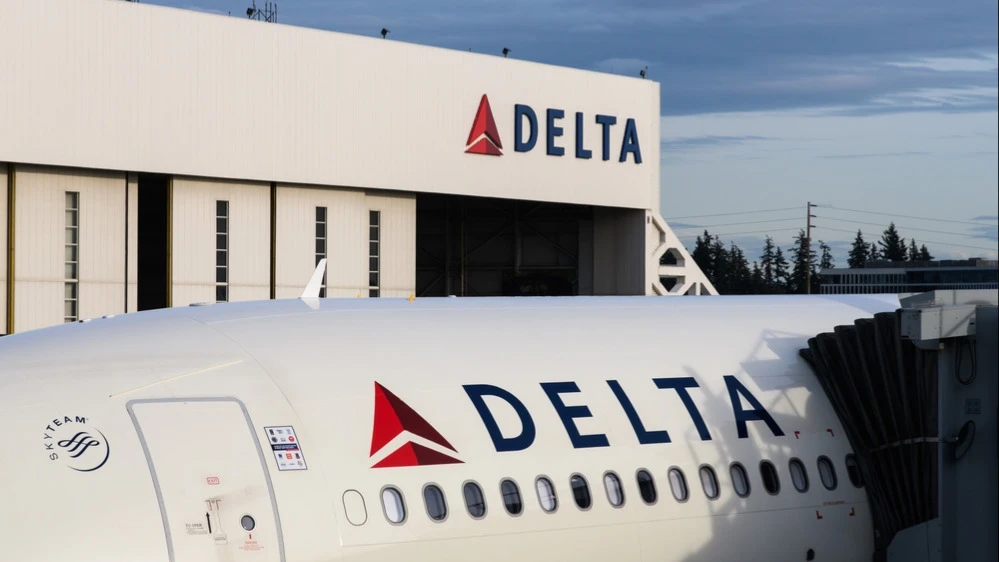
American air carrier Delta Air Lines warned that it will suffer financial losses in the current quarter due to flight reductions caused by the U.S. government shutdown. However, this did not upset investors: Delta's securities at the trading on November 12 rose in price by more than 4%. The carrier hopes operations will return to normal before the traditionally busy Thanksgiving holiday - provided the government shutdown ends this week.
Details
Massive flight cancelations and delays caused by a shortage of air traffic controllers due to the U.S. shutdown will have a significant effect on Delta Air Lines' financial performance, CEO Ed Bastian warned in an interview with Bloomberg Television.
"We had just over 2,000 [flight] cancelations. It's impossible to compensate for that within one quarter. So yes, it affected us," the top manager stated.
According to Bastian, bookings for the holidays - Thanksgiving and Christmas - have slowed due to passenger concerns about flight delays and cancelations. "We're seeing some decline in bookings, not critical, but let's say 5-10% down from normal levels," Bastian said. Delta has also had to refund some customers, he added.
In trading on Wednesday, November 12, securities of Delta Air Lines were up 4.8% to $60.5. Investors, probably, focused on positive comments of management. Delta expects to restore normal operations by Friday, Nov. 15, if the shutdown ends Wednesday, Bloomberg reports. Bastian also said on CNBC that the airline expects strong financial results in the fourth quarter despite the flight cancelations, Reuters reports. According to the top executive, although the current disruptions in air travel are costly to both the industry and the economy as a whole, they will not "wipe out" Delta's quarterly profits completely.
Why flights are being canceled and when it will end
Last week, the U.S. Federal Aviation Administration (FAA) ordered a temporary reduction in the number of flights at 40 of the nation's busiest airports to ease the strain on the system amid the ongoing shutdown. Late last week, the FAA reduced the planned number of flights by about 4 percent. The cuts are scheduled to reach 10% by the end of this week, Barron's writes. Most airlines cut domestic routes, while trying to preserve international and long-haul flights.
More than 9,000 flights have been canceled since the measure went into effect, according to data from analytics firm Cirium. The shutdown has forced 13,000 air traffic controllers and 50,000 TSA (Transportation Security Administration) employees to work without pay, Bloomberg reported.
The U.S. House of Representatives plans to vote Wednesday on a bill that would end the 43-day shutdown, which has become a record in U.S. history. If the bill is approved, it will go to President Donald Trump, who has previously expressed support for the document, for his signature.
What the analysts are saying
- "Even if an agreement to reopen the government is reached soon, it remains unclear whether flight restrictions will be lifted by Thanksgiving, given potential delays in air traffic controller salaries and the FAA's requirement that staffing levels return to normal before restrictions are lifted," Fitch Ratings analysts said in a recent research note cited by Barron's.
- "The flight cuts are unambiguously destabilizing (and driving up unit costs) and will, in our estimation, put pressure on [airlines'] margins," Deutsche Bank analyst Michael Linenberg wrote. He added that the current period of low demand - the off-season - should soften the blow of flight cuts. However, if the restrictions persist through the Thanksgiving holiday travel period, the financial damage will be significant, especially for the most vulnerable carriers, the analyst said.
Delta's stock price has barely changed since the beginning of 2025. But most analysts are confidently advising to buy the company's securities: they have 19 Buy ratings and three Overweight ratings out of a total of 25, MarketWatch shows. Two analysts recommend holding the stock (Hold), only one recommends selling (Sell). The average target price is $73.49, up 27% from the last closing price.
This article was AI-translated and verified by a human editor