Duolingo shares collapsed 22% after the report. The service disappointed the market with its forecast
The service's management decided to abandon "aggressive monetization" for the sake of the goal of 100 million active users

Shares of Duolingo, the world's largest online language learning platform, collapsed nearly 23% in the postmarket on Feb. 26 / Photo: El editorial/Shutterstock
Shares of Duolingo, the world's largest online language-learning platform, plunged nearly 23% in the postmarket on February 26 - after posting a weak outlook for 2026. Although the service's fourth-quarter results beat analysts' expectations, the company warned of structural changes that could negatively impact its financial performance in the near term.
Details
Duolingo reported adjusted earnings per share of $0.84 for the fourth quarter, beating analysts' estimates of $0.83, Investing.com writes. Revenue rose 35% year-over-year to $282.9 million, beating consensus of $275.74 million.
Meanwhile, the outlook for 2026 was significantly weaker than Wall Street's expectations, with the company estimating first-quarter revenue of $288.5 million versus consensus of $291.8 million, and full-year guidance in the $1.2-$1.22 billion range falling short of the $1.26 billion estimate.
The company also reported fourth-quarter adjusted EBITDA (earnings before interest, taxes, depreciation and amortization) of $84.3 million, beating analysts' average forecasts of $77.9 million. Duolingo expects that figure to be $73.6 million for the current quarter - $10 million less than the market had hoped to see.
The number of daily active users (DAUs) in the fourth quarter grew 30% year-on-year to 52.7 million, while the number of paid subscribers rose 28% to 12.2 million, with DAU growth at its slowest pace in four years, according to Bloomberg data.
Duolingo transformation
The company is trying to stem the slowdown in DAU growth by increasing the value of the free version of the app, MarketWatch points out. In a letter to shareholders, management acknowledged that revenue per user growth used to be achieved by creating "small barriers" to free accounts - for example, increased advertising or intrusive paid subscription offers. Duolingo now believes that this approach slowed down audience influx, so it has decided to prioritize user growth over aggressive monetization. Such moves will result in financial losses, Duolingo warned.
This is not the first time Duolingo is talking about this: since the publication of the previous accounts in November 2025, the platform has already reported on the upcoming changes and described their consequences in the same way. The company expects revenue growth to decline sequentially in the second and third quarters before stabilizing at the end of the year. Bookings growth (cash commitments from users) will be just 11% this fiscal year instead of the expected 20% that would have been possible if the old model had been maintained. The company's ultimate goal is to double the current number of DAUs to 100 million by 2028.
Profits will also come under pressure due to the need for major investments. EBITDA margin is expected to decline to 25% compared to 29.5% last year.
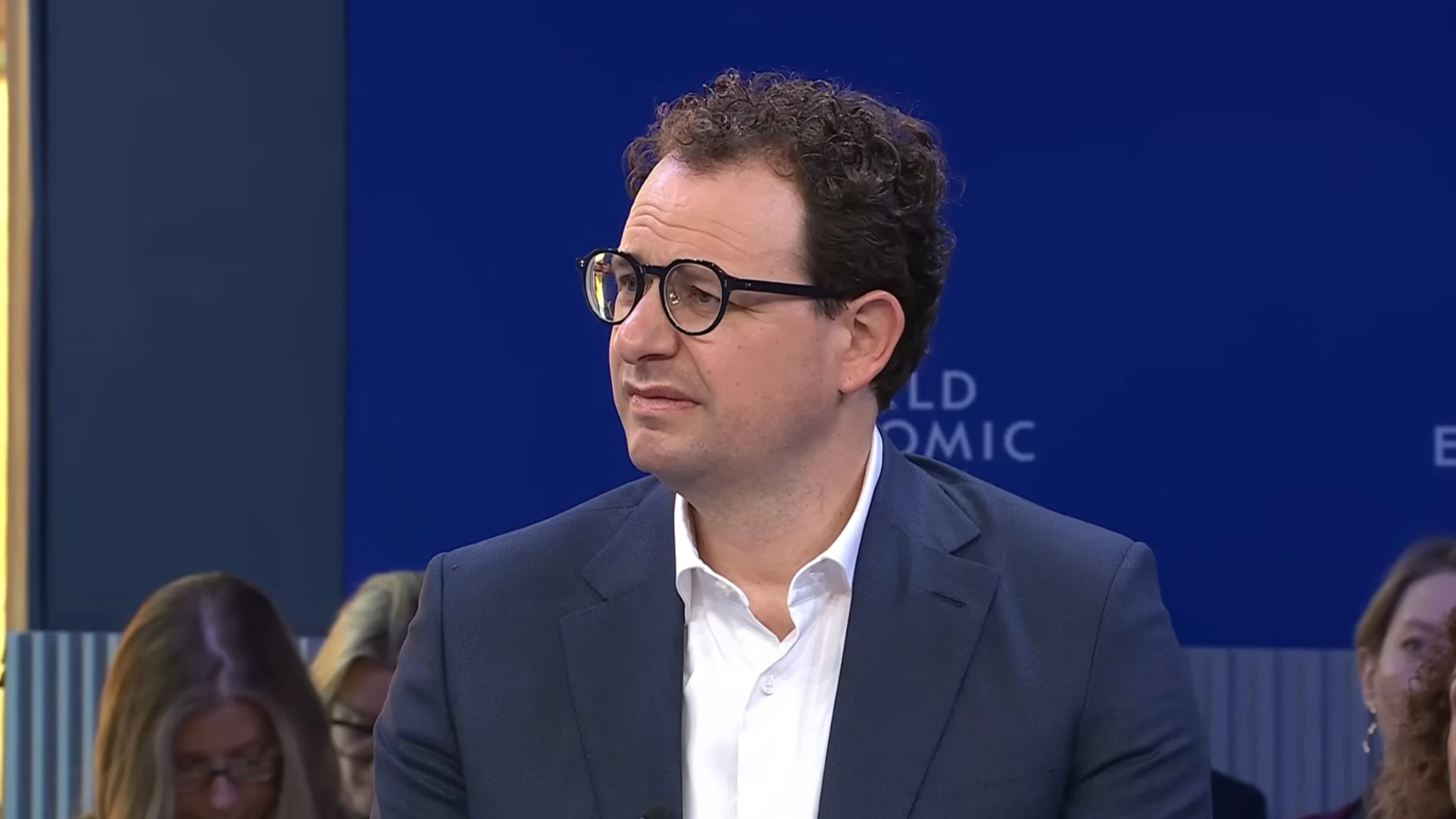
CEO Louis von Ahn said in an address to shareholders that from the outside, such decisions might seem odd in the context of the next quarter, but emphasized that his goal is to build the company for decades to come and train "billions" of people for the long term.
"In 2026, we are intentionally focusing on user growth and improving the learning experience. The focus will be on improving the experience of free users to drive word of mouth and support new growth areas such as chess, math and music, even if it slows down short-term financial returns," von Ahn pointed out.
To stay competitive, Duolingo is actively incorporating AI into its products, MarketWatch adds. Users can already access video chats with animated AI-powered characters and various voice features to check progress. One key measure will be moving the flagship AI product "Video Call with Lily" from the exclusive and expensive Duolingo Max plan to the more affordable Super Duolingo subscription.
What about the stock
Investors are generally worried about the app as AI has made it as easy as possible to translate and communicate in different languages, MarketWatch emphasizes. By the close of trading on Feb. 26, Duolingo's stock was worth 78% less than its peak last Ma.
According to MarketWatch, most Wall Street experts expect stocks to rise, though there are some with a cautious stance. 15 analysts recommend buying them, 10 recommend holding and one recommends selling.
This article was AI-translated and verified by a human editor