EU to offer US partnership on critical minerals. Which companies' stocks are rising?
The rally in the sector began thanks to Trump's decision to create a strategic rare earth metals stockpile

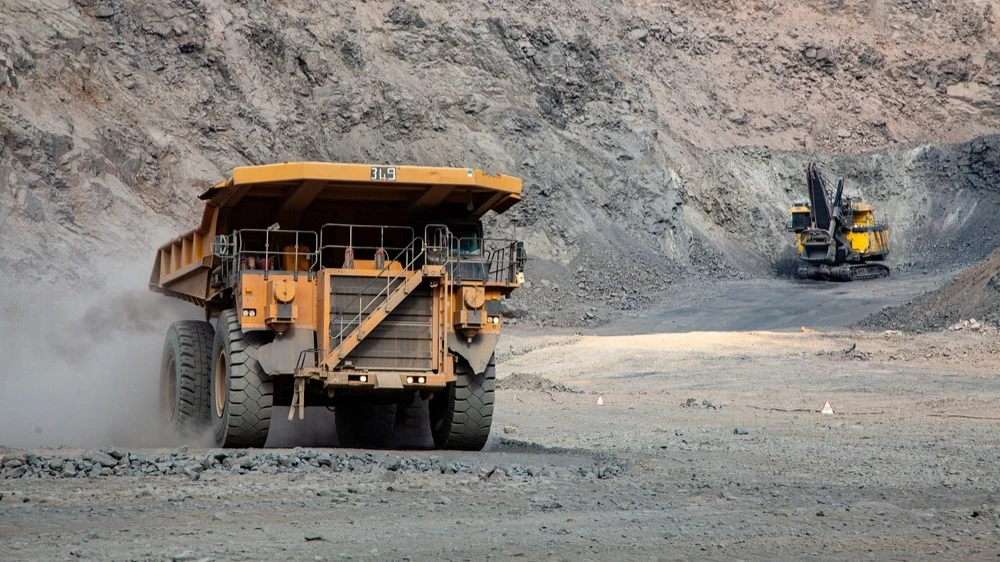
EU to offer critical minerals partnership to US / Photo: BETO SANTILLAN/Shutterstock.com
The European Union intends to offer the U.S. a partnership in critical minerals to reduce dependence on China and strengthen supply chains, Bloomberg has learned. Earlier, U.S. President Donald Trump announced the creation of a reserve for critical minerals, which triggered a rally in the shares of companies working in this sector.
Details
The European Union this week intends to offer the U.S. a partnership in critical minerals to limit China's influence, Bloomberg reported citing sources. The EU is ready to sign a memorandum of understanding with the U.S. to develop a "strategic partnership roadmap" within three months, the agency's sources said.
The partnership aims to jointly work out ways to secure supplies of critical minerals needed for most modern technologies without relying on China, Bloomberg explained. Both the U.S. and the EU rely heavily on abundant and cheap Chinese supplies, which gives Beijing leverage over their supply chains, the agency noted.
The EU memorandum mentions the possibility of stockpiling critical minerals, which is also at the center of Trump's attention, Bloomberg sources claim. On Feb. 2, Trump signed an executive order to launch Project Vault, the creation of the first strategic mineral reserve. According to Trump, the plan includes raising $1.67 billion in private capital and a $10 billion loan from the U.S. Export-Import Bank.
Against this background, securities of companies mining rare-earth metals rose sharply. Thus, shares of Critical Metals rose on February 3 by more than 16%, securities of USA Rare Earth added 18%, and MP Materials grew by about 10%. Shares of Energy Fuels rose 16%, Idaho Strategic Resources - more than 5%, and NioCorp Developments - almost 19%.
What are the analysts saying?
The initiative demonstrates the administration's "serious focus on rare earth elements" and its "determination to take control away from China," wrote William Blair analyst Neil Dingmann, who expects further government funding for both rare earth producers and consumers. His opinion is published by Bloomberg.
U.S. officials "want to make sure they are reducing external vulnerabilities in metals supply chains," Helen Amos, a commodities analyst at BMO Capital Markets, noted in a Bloomberg story. "They are directly investing in capital, stockpiling inventory and looking at strategic partnerships with trading companies. They are approaching this from every possible angle," Amos said.
At the same time, Project Vault, Amos said, is more about building resilience and shaping market dynamics rather than eliminating any immediate shortages. Stockpiling would give policymakers a tool to smooth domestic prices - buying during downturns and releasing metal when prices spike, echoing the logic of Cold War-era reserves, she added.
According to Lewis Black, head of Almonty, the $12 billion amount looks quite modest when spread across dozens of critical metals and compared to the scale of stockpiling during the Cold War era. He noted that regulations require government purchases not to disrupt the market, further limiting the program's effectiveness.
Nevertheless, the scale of Project Vault far exceeds the $2.5 billion strategic sustainability reserve proposed by lawmakers as part of the Secure Minerals Act bill, Bloomberg notes. The gap points to a growing cross-party consensus that metals deserve the same strategic approach as oil amid heightened geopolitical risks and China's increasing control over a number of critical minerals, the agency notes.
This article was AI-translated and verified by a human editor