Eurozone inflation accelerated to the highest since September 2023. Will there be stagflation?

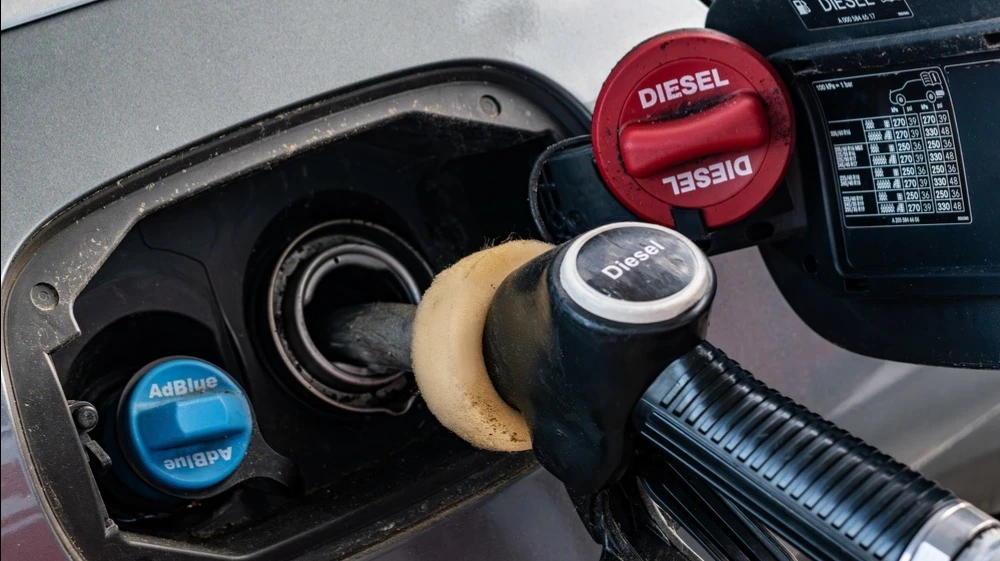
Inflation in the eurozone accelerated to 3% amid almost stalled economic growth / Photo: symbiot / Shutterstock
Inflation in the euro zone in April accelerated to 3% in annual terms - against 2.6% in the same period last year and 1.9% a month earlier, according to preliminary data from Eurostat, published on April 30. This is the fastest growth rate since September 2023, Bloomberg notes. The conflict in the Middle East is holding back business activity in Europe and increasing pressure on prices, primarily through higher energy costs, CNBC notes.
Against this background, the EU economy in the first quarter grew by only 0.1%. This was below the forecasts of economists and the pace of the previous quarter, where both indicators amounted to 0.2%, notes Reuters.
Among the region's largest economies, Spain was once again the leader with growth of 0.6%. Germany's economy grew by 0.3%, while France showed no growth.
What's in the markets
Pan-European index STOXX Europe 600 on April 30 at the opening lost about 0.4% amid news of war in the Middle East, as well as in anticipation of central bank rate decisions, but then recovered this fall and at the time of publication adds almost 0.6%, notes CNBC.
The German DAX index rises by 0.7%, the British FTSE 100 index jumped by more than 1%. By contrast, France's CAC 40 index is down 0.2%.
What's happening to Europe's economy
The European Central Bank (ECB) is expected to keep the deposit rate at 2% later in the day. The regulator will continue to assess the economic impact of the conflict in Iran, although markets are laying the rate hike in June and two more times before the end of the year, Bloomberg reports. On the eve, April 29, the head of the European Commission Ursula von der Leyen warned that the consequences of the war in the Middle East could be felt "for many years".
Berenberg economists warn of the risk of stagflation in Europe - a combination of weak growth, high inflation and rising unemployment - amid the energy crisis and deteriorating business and consumer confidence. The ongoing blockade of the Strait of Hormuz, a key oil and gas supply route, by both the U.S. and Iran remains a worrying factor for Europe's economy as it struggles to find alternative sources of oil, gas and jet fuel outside the Middle East region amid already strong demand, CNBC notes.
"The world has become a dangerous place. In addition to [U.S. President Donald] Trump's duties and subsidized export pressure from China, the consequences of war with Iran are now hitting European economies," Berenberg economists warned last week.
They noted that even if the active phase of the war in the Middle East is over by the end of April, as assumed in their baseline scenario, economic growth in Europe this year will be weaker than last year. In this regard, Berenberg believes that the ECB does not need to change interest rates yet.
"Further dynamics will largely depend on the ECB's actions. In our view, inflation risks are much weaker now than in 2022 [referring to the outbreak of war in Ukraine]... However, if the [European] regulator raises rates in response to a temporary spike in inflation, the euro area could first face an unnecessary short-term recession in late 2026 or early 2027," they warned, noting that "one can only hope - the ECB will keep rates unchanged this year."
"Eurozone inflation accelerated in April on the back of higher energy prices. However, both overall and core inflation remain in line with quarterly averages, which are likely to be slightly below the forecasts in the ECB economists' baseline scenario. These data are unlikely to significantly affect the governing council's wait-and-see stance," said David Powell, senior eurozone economist at Bloomberg Economics.
This article was AI-translated and verified by a human editor