Ferrari's drop in deliveries upset investors in spite of rising profits. Is the war to blame?
The company claims that the drop in shipments was planned

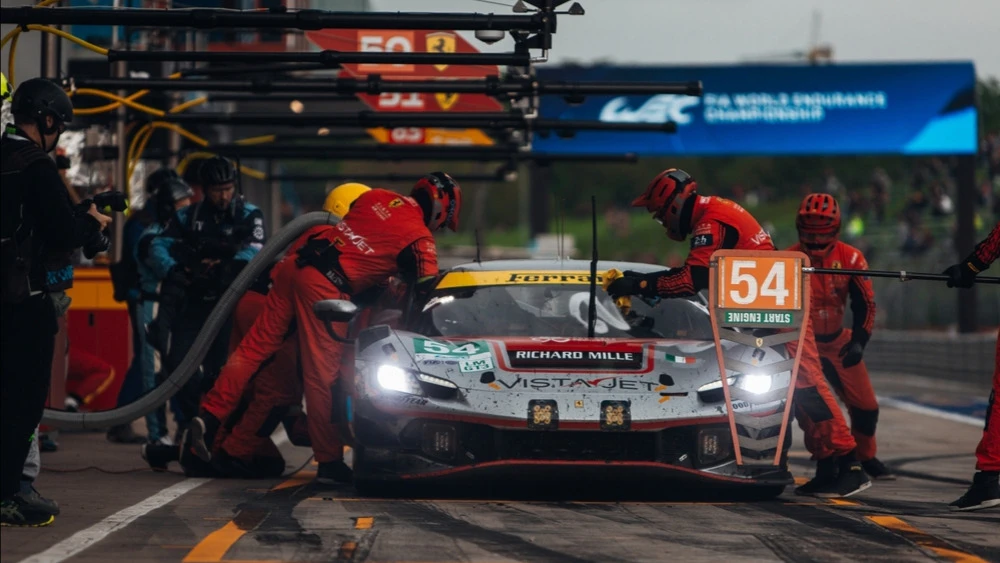
Ferrari's first-quarter operating profit rose 4.1% on a 4.4% drop in deliveries / Photo: abitaev.art / Shutterstock.com
Italian luxury car maker Ferrari reported a drop in deliveries in the first quarter. Although the company claims that it was planned, for investors it turned out to be more important than profit growth: Ferrari's securities in the U.S. fell by 3%. The war in the Middle East disrupted the company's operations, writes Bloomberg, although Ferrari itself claims that the conflict did not affect deliveries. FT previously wrote that the company takes supercars to the region by airplanes.
Details
Ferrari delivered 3,436 cars in the first quarter: a figure down 4.4% on the same period last year. The company writes that this was planned in order to ease the transition to new models. The military conflict in the Middle East had no direct impact on deliveries as Ferrari was flexible and moved some deliveries to other regions earlier, it said. Deliveries to mainland China, Hong Kong and Taiwan rose in the first quarter (up 7.6%), to other Asia-Pacific countries (up 9.5%) and to the Americas (up less than 1%). However, deliveries fell by an immediate 14% in Europe, Africa and the Middle East - the EMEA region, home to an important group of affluent Ferrari customers.
In late March, Financial TImes reported that Ferrari began shipping supercars to Dubai by air as sea transportation became unavailable due to the blockage of the Strait of Hormuz. Ferrari's order book in the Middle East continues to be supported by steady demand and there is no unusual number of order cancelations, Ferrari CEO Benedetto Vigna said at a conference call with analysts, Bloomberg wrote. According to the top manager, the situation is "generally under control".
However, the quarterly results "could be a slight disappointment" for investors, given that Ferrari has regularly exceeded forecasts in previous reports and the company's upbeat comments at a conference call before the quarter ended, Bloomberg quoted a note from analysts at Oddo as saying.
Shares of Ferrari at the auction in Milan on May 5 fell by almost 4% - to € 279.55. The company's shares, traded in New York, fell by 4.8% to $322.61.
Revenue and profit increased
Ferrari's revenue in the first quarter increased by 3% to almost €1.85 billion. Analysts had forecast €1.82 billion, Bloomberg notes. Earnings before interest, taxes, depreciation and amortization (EBITDA) rose 4% to €722 million, while analysts surveyed by Bloomberg expected €710 million.
Ferrari said its order book is already scheduled to run through almost the end of next year. This gives the company a rare predictability of demand for automakers. Given the current understanding of the situation in the Middle East, Ferrari confirmed its previous forecast for 2026: the company expects revenues of around €7.5 billion and EBITDA of at least €2.93 billion.
What it means for investors
The quarterly report shows Ferrari's ability to boost profits even during a period of uncertainty and disruptions caused by the war with Iran, Bloomberg notes. The company has supported sales by personalizing cars and more expensive models, including the F80 supercar. The reporting comes at a time when Ferrari, like other European Union automakers, is facing new pressure from U.S. duties after President Donald Trump decided to raise import duties on cars and trucks from the region from 15% to 25%.
Ferrari shares in Milan and its securities in New York have fallen 11-12% since the beginning of the year, as the conflict in the Persian Gulf increases uncertainty in the luxury sector, Bloomberg writes. Historically, the company has been considered better protected in terms of profitability than mass automakers due to its wealthy customer base, limited production and long waiting lists, the agency emphasizes.
Ferrari is also preparing to unveil its Luce electric supercar this month, a key test of whether the company can build new technology into the lineup without diluting the brand's internal combustion engine heritage, Bloomberg notes.
What analysts recommend
Most analysts tracking Ferrari securities are advising them to buy: they have 22 Buy and Overweight ratings versus only five Hold recommendations, MarketWatch shows. The average target price of $446.78 (for those trading in New York) is 32% above the closing price on Ma. 4.
This article was AI-translated and verified by a human editor