'Going back to the old': what did Michael Burry learn from Buffett and how did he trade in '99?
The investor who predicted the 2008 mortgage crisis tells in a new blog how he combined his first steps in investing with a job at a hospital

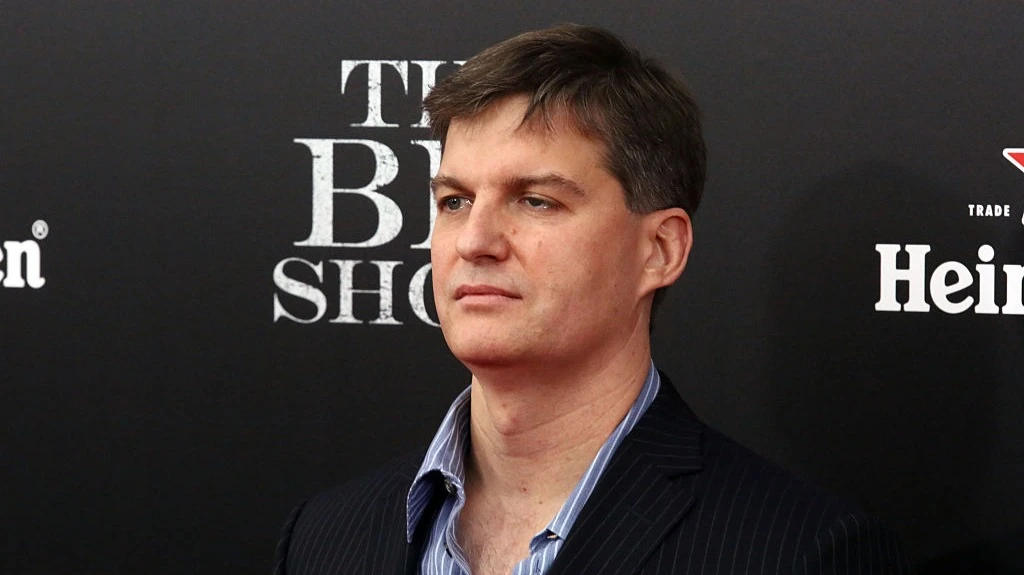
Michael Burry launched his own paid newsletter, Cassandra Unchained, on Substack - just days after he shut down hedge fund Scion Asset Management. He explained that "regulatory requirements effectively gagged him" and prevented him from talking openly about bubbles and risk. His new blog is read by more than 60,000 people, 21,000 have already subscribed to the paid content, according to Reuters, and the subscription price is $39 a month.
The investor is going to focus on stocks, market and economic trends, special situations and investment mania. "The current market environment is highly debatable and highly overheated. There is a lot to talk about," he writes. In addition to the reviews, Burry plans to produce question-and-answer sessions, videos and texts by guest authors with narrow expertise. Subscribers, he says, will receive updates once or twice a week on market segments where investment opportunities are emerging, as well as reviews of securities that deserve a detailed look.
Why Burry has launched a new blog
Here's how the investor himself explains it:
- After 25 years professionally managing various Scion funds, I left the hedge fund industry to focus on what I've always loved: writing and sharing investment ideas. In the 1990s, I published Valuestocks.net, which Forbes twice named "Best on the Net," and wrote for Microsoft MSN Money under the pseudonym Value Doc. For years, my letters to Scion Capital investors did all the marketing for me. Cassandra Unchained is a return to the public space, and damn am I excited about it.
- Professional money management came with regulatory restrictions and compliance requirements that effectively gagged me. Because of these frameworks, I could only publish cryptic scraps of thoughts, if I could write anything at all. Without my commentary or clarification, the media wildly misrepresented the meaning of many of my mandatory reports to the SEC - even causing chaos in the markets and angry controversy that I never wanted. I'm done with that. Cassandra - as Warren Buffett called me during his congressional testimony on the global financial crisis - is free of her chains.
- I'm not retired. This project has my full attention. There is still nothing I enjoy more than analyzing companies and markets every single day. It's not every day, or even every week or month that a great idea is born, but the process itself is enjoyable. And now I am happy to share it with you.
The main point of Burry's first memo is.
Burry called his first publication "The Basics: My 1999 (and part of 2000)". In it, he describes how he learned about investing while working as a hospital resident. Here are the main points of his story:
- Stanford Hospital (where Burry was a neurology resident - Oninvest) stands on Sand Hill Road, the center of the venture universe in 1999. I was making $33k and had $150k in debt, and there was an atmosphere of insane wealth all around. Physician colleagues kept patients waiting while they themselves checked stock quotes. I was one of the few who didn't. I wrote for Microsoft MSN Money under the pseudonym Value Doc and was a little wary of any of them finding out about it.
- One day, a colleague of mine who is a coordinator once casually mentioned that he had made $1.5 million on Polycom stock. And luckily for him, he was - and still is to this day - a convinced gold bug (a fan of gold investments). Things worked out just fine for him: today he lives in a luxurious neighborhood. And it's all thanks to gold. Not a typical Silicon Valley success story at all. As I said, the bubble was inflating not only in the stock market reports, but also on the streets.
- I read just about every book on investing I could find at the old BookStar bookstore in Nashville. It was located in a former movie theater building, and I would just sit right in the aisle, read, and then put the book back without buying it. Any spare minute I had, I chose that activity over going out to entertain myself
- I was looking for my own style of investing. Everything I had read about Buffett and Graham told me that they were two very different approaches. Buffett, although his mentor and friend was the father of value investing himself, had to go his own way as the environment changed. I believed that I would eventually have to do the same.
- Writing investment texts for my website and MSN Money was my way of relaxing deep into the night or early morning. I even wrote during hospital duty when I had a free minute. By the way, did I mention that MSN Money paid me a dollar a word? For me, a starving young resident, that was a lot of money. I had always loved writing and couldn't believe I was getting paid to do it.
- In dedicating myself to the Cassandra Unchained blog, I am returning to an old path I once turned off of. I feel lucky and grateful for the opportunity to walk it again.
Burry's investment strategy
- I bought Apple stock for the "VSN Portfolio" - a small portfolio I maintained publicly, in plain sight. I did this with money I received after my father died in 1996 while I was in medical school. My three brothers and I received $50k each as compensation for his death. I decided to invest that money instead of paying off a third of my student loans. If I had used that "death money" to pay off my loans, I would still be working as a doctor.
- My article "Buffett: A New Look" was written because of Apple, When I bought Apple stock, VSN readers met it with hostility, and the article became my response to the critics. "Pointing out that Apple's stock price has been treading in the same range for the past eleven years, one critic said, "Even in a million years, you won't find these three companies (Buffett's favorites - Coca-Cola, American Express, Disney) having such an eleven-year period where they have delivered losses to shareholders in real terms." How quickly time flies! Coca-Cola's inflation-adjusted stock price collapsed 58% in 11 years, and no, dividends couldn't keep up with the runaway inflation. American Express' real capital loss from 1973-1984 was 60%, dividends helped a little more than Coke's here, but didn't even come close to offset the ravages of inflation. Disney had 12 years of waiting and a 70% real loss. Dividends? Disney paid no dividends at all from 1973-1985.
- Great companies can fall out of favor in the marketplace for years. Apple was one of them. At the time, I loved the place it held in the "creative computing" culture, with its uniquely closed approach, ability to deliver small hits, and ability to survive long periods of stagnation. Plus, they had just released their iMacs in Blueberry, Strawberry, Tangerine, Grape, and Lime colors. And I thought, "Yeah, that's what Apple is worth holding on to." It was often very cheap in those days. Later, when I was managing my own fund, I once bought it for about $12 a share - with about $11 in cash and ARM Holdings securities per share. The company was selling off its stake in ARM at the time, and I thought it would be a catalyst for growth.

- On October 11, 1999, Randall Forsyth of Barron's surprised me by including my site in his column entitled "Eternal Values". "The ValueStocks.net site, formerly known as The Market Wizard, adheres to Graham's tenets - especially his emphasis on "margin of safety" when buying securities. Here's where to look for ideas: stocks that have been "beaten into the dirt" and are trading at a deep discount on a variety of criteria; industries under severe stress; and small-cap companies that have rarely been so cheap compared to their larger counterparts. Year-to-date through October 2, the VSN fund has returned 38.7%, significantly outperforming the Dow and Nasdaq indexes."
- On February 21, 2000, Harry Domash of the San Francisco Chronicle published "The Best Investment Advice Web Sites." He included my site in this review. "The ValueStocks.net site is run by Dr. Michael Burry, chief executive officer and chief investment strategist at hedge fund Scion Capital Inc. When I looked there, he had a short position (short) open on Amazon.com."
- Fourteen days later, the NASDAQ Composite index hit an epic peak that it didn't return to for the next 15 years. And no, I didn't stay short on Amazon. After all, I was one of the first members of the Amazon Affiliate program and was selling their books on my website.
This article was AI-translated and verified by a human editor