Gold prices soared and fell over $500 in a week: what happens next?

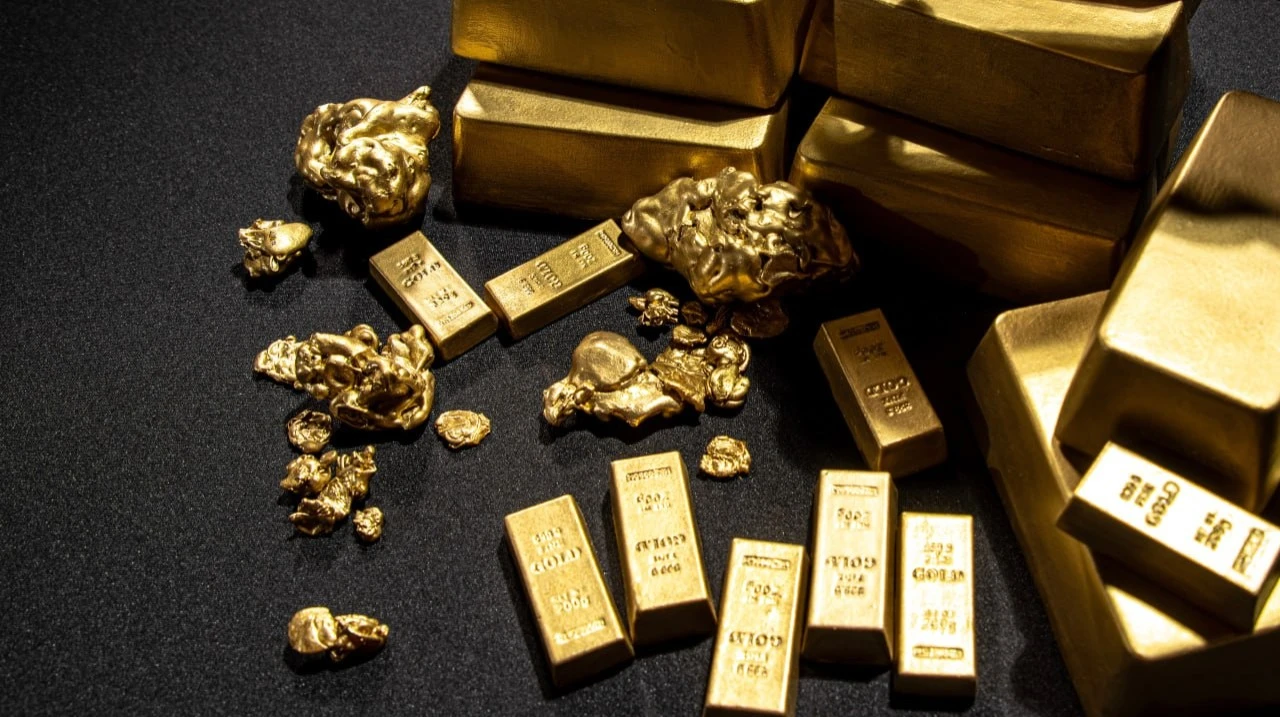
After a multi-day rally on Jan. 30, the price of gold is down 8%: the biggest sell-off in years. Photo: TSViPhoto / Shutterstock.com
Gold set several records in the last week of January 2026, surpassing the $5600 per ounce mark on January 29. By the evening the price began to fall rapidly and on Friday fell below $5000. Yevgeny Marchenko, an investor and author of the Kubyshka Telegram channel, believes that gold has only one option - to grow.
Gold's parabolic rise is no accident. It's a red flag
Gold is rising parabolically. And that's not an accident. It's a signal. A very disturbing signal about what is happening to the global financial system right now.
The dollar is losing value. And this is not a conspiracy theory, it is an empirical fact that can be verified by numbers. Countries are getting rid of U.S. debt en masse and accumulating gold reserves. Central banks are buying gold in unprecedented amounts. The last year has made this obvious even to skeptics.
That said, everyone is screaming about the S&P 500 being at "all-time highs." But I think it's critical to understand one thing: the economy is not the stock market.
The stock market is about corporate profits and speculation. The economy is about people. And most of them are now struggling to survive, not thriving.
Let's break down what's really going on.
The dollar is losing value - and that's a fact
Over the past three years, the dollar has lost much of its purchasing power. Official inflation in the U.S. is about 20-25% cumulative since 2020. The real one, according to people's feelings, is much higher.
But it's not just about inflation inside the US. The point is that the dollar is losing its status as the world's reserve currency.
The facts speak for themselves:
China's dollar reserves are shrinking. Over the past two years, China has sold more than $300 billion in U.S. government bonds. These are not random portfolio fluctuations. This is a strategic withdrawal.
Japan is selling, too. Traditionally the largest foreign holder of U.S. debt is actively reducing positions.
The BRICS countries are looking for alternatives. Talks about trade in national currencies and the creation of alternative payment systems are not just talk. These are real steps that are already taking place.
And they're all buying gold. Massively. Systematically. Aggressively.
Central banks are buying up gold like never before
2023 was a record year for gold purchases by central banks. More than 1000 tons of gold were bought by central banks of different countries. This is a historical record.
2024 continues this trend. The pace is not slowing down.
Who's buying?
China - officially and unofficially building up reserves. The real volumes are probably much higher than stated.
Russia - despite all sanctions and restrictions, continues to accumulate gold.
Turkey has been one of the most aggressive buyers in recent years.
India, Poland, Singapore, Middle Eastern countries are all actively diversifying reserves towards gold.
Why? Because they see something that many private investors have not yet realized: confidence in fiat currencies, especially the dollar, is systemically eroding.
The stock market is at highs. And the economy?
Yes, the S&P 500 is hitting all-time highs. Yes, stocks are rising. But let's be honest: Who does that help?
The stock market is corporate profits. It's speculation by institutional investors. It is the 10% of the population who own 90% of the assets.
The economy is about real people. It's wages, rent, groceries, gasoline, utilities.
And that's what we see in the real economy:
Real wages are falling. Adjusted for inflation, the purchasing power of the average U.S. wage is lower than it was three years ago.
Household debt at record levels. Credit cards, car loans, student loans are all at historic highs. People are going into debt to maintain their previous standard of living.
Delinquencies are growing. The percentage of defaulted loans is increasing. People cannot cope with payments.
What does all this mean for gold?
Gold is not growing because "everyone suddenly fell in love with precious metals". Gold is rising because it is the only asset that does not depend on the decisions of governments and central banks.
You can't print gold. You can't devalue it by political decision. You can't confiscate it by sanctions (if it is physically in your jurisdiction). Therefore, I don't see any other option but up for gold. And use any corrections to strengthen the position.
What do you think?
This article was AI-translated and verified by a human editor