Highlights for the morning: selloff in China, Nasdaq trades around the clock, PayPal goes to the banks

PayPal has applied to create its own bank to lend to small businesses and launch savings accounts. The Nasdaq exchange decided to switch to round-the-clock trading. The U.S. has collected more than $200 billion since the beginning of 2025 due to import duties imposed by Donald Trump. About these and other topics - in our review of key events for the morning of December 16.
PayPal has applied to set up a bank in the US
PayPal has applied to regulators to create PayPal Bank, a proprietary bank that will be able to lend to small businesses and offer interest-bearing savings accounts. According to the head of the company, Alex Kriss, this should increase the efficiency of its business.
PayPal owns the popular mobile payment service Venmo and also expects to offer interest-bearing savings accounts to its customers, it said in a statement. The company already provides lines of credit to consumers and is trying to expand its suite of banking services to compete with traditional banks.
Ford will abandon some EV projects and write down $19.5 billion
Ford has announced a sharp reversal of strategy in electric vehicles: the company is abandoning some pure EV projects in favor of hybrids and extended range electric vehicles (EREVs), and will write off $19.5 billion. The current version of the F-150 Lightning will be discontinued, and the next generation pickup will switch to an EREV architecture and be assembled in Michigan. EV development in North America will focus on a new low-cost, versatile platform to produce more compact and mass-market models.
An electric vehicle plant in Tennessee will shift to trucks, a site in Ohio will become a Ford Pro for gasoline and hybrid commercial models, and facilities in Kentucky and Michigan are being reoriented for the energy storage systems business.
Ford expects about 50% of global sales to come from hybrids, EREVs and EVs by 2030, versus 17% in 2025.
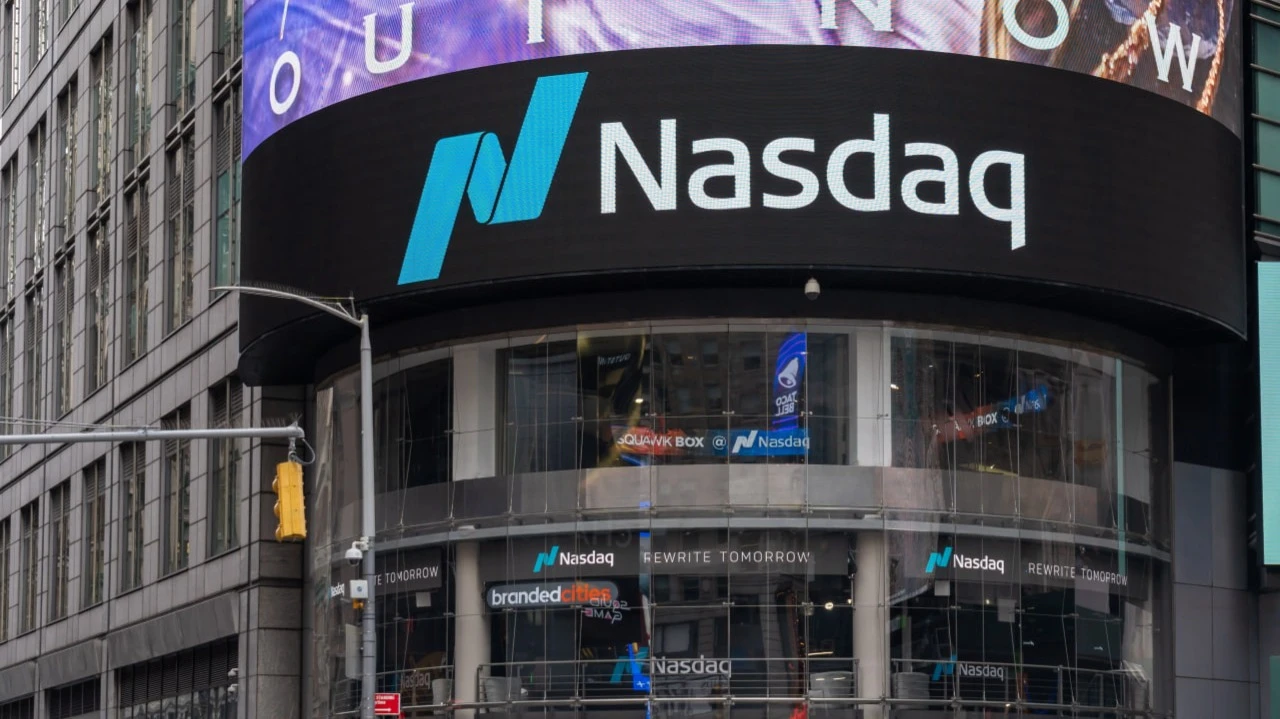
Nasdaq has decided to move to round-the-clock stock trading
The Nasdaq exchange is preparing to file an application with the U.S. Securities and Exchange Commission (SEC) to launch 24-hour stock trading five days a week, Reuters reported. According to the exchange, foreign investors own $17 trillion worth of U.S. stocks, and the U.S. market itself accounts for nearly two-thirds of global capitalization. Similar plans were previously announced by NYSE and Cboe.
According to the Nasdaq project, trading hours will be extended to 23 hours a day: the day session will run from 4:00 to 8:00 p.m. U.S. Eastern Time, followed by an hour break, and then the night session will begin from 9:00 p.m. to 4:00. The trading week will start on Sunday evening and end on Friday. The launch is possible in the second half of 2026, provided the clearing and market infrastructure is updated, the agency points out.
The U.S. has collected more than $200 billion in duties since the beginning of the year
The U.S. has collected more than $200 billion in import duties imposed by President Donald Trump since the beginning of 2025, the country's Customs and Border Protection reported, CNBC reported. This includes the so-called "reciprocal duties" and "fentanyl duties" on Canada, China and Mexico.
At the same time, the pace of collections began to decline: in November, revenues decreased for the first time since spring - to $30.75 billion. The fall is due to the slowdown in imports and partial reduction of duty rates, the channel specifies.
What's in the markets
- Chinese stocks fell sharply on Tuesday amid weakening tech sector and renewed concerns about economic growth, Bloomberg reports. The MSCI China Index and Hang Seng Index lost about 2% and are on the way to a technical correction, the agency points out. Alibaba and Tencent were among the securities pulling the market down the hardest. An index of technology stocks traded in Hong Kong is one step away from entering a "bear market," Bloomberg writes.
- Japan's broad Topix index fell nearly 2 percent, while the Nikkei 225 was down 1.5 percent.
- In South Korea, the Kospi index collapsed 1.9 percent and the Kosdaq fell 2.5 percent.
- Australia's S&P/ASX 200 fell 0.4 percent.
- Futures on S&P 500 lost 0.6%, futures on Nasdaq Composite - 0.9%. Exchange contracts on Dow Jones Industrial Average fell by 0.4%.
This article was AI-translated and verified by a human editor