Hope for the world: Dow out of correction zone, S&P 500 and Nasdaq second day with records

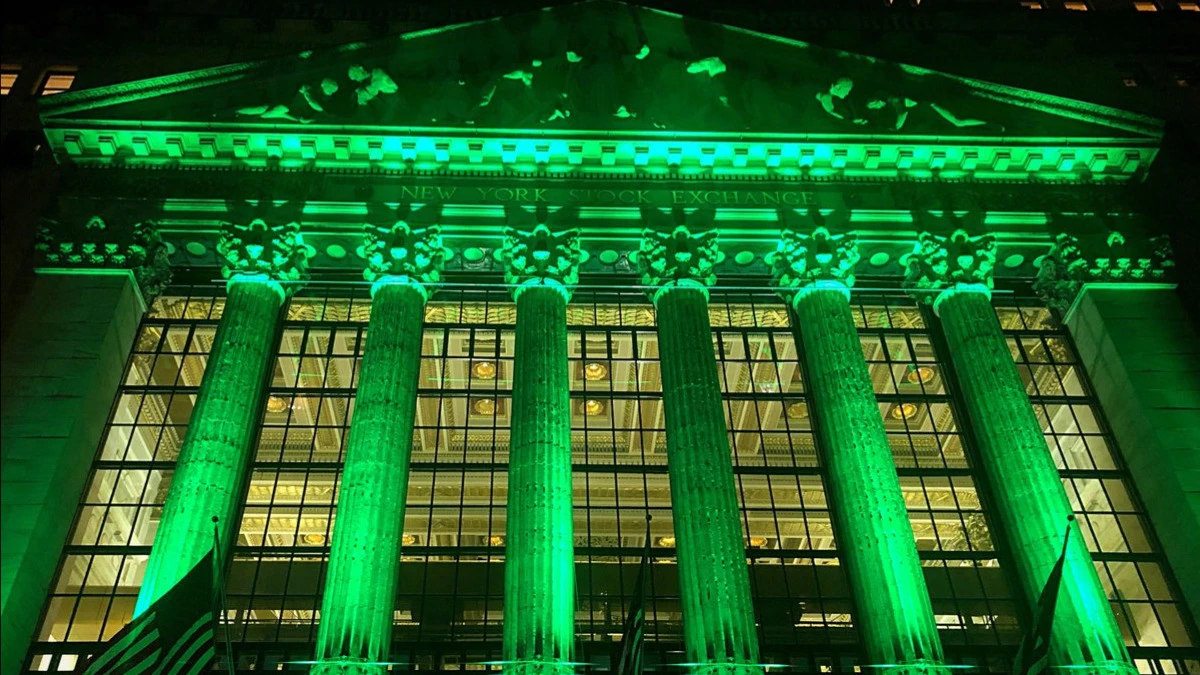
S&P 500 and Nasdaq Composite have records for the second day in a row / Photo: X / NYSE
U.S. stocks rose on Wednesday, Ma. 6, following reports that the U.S. and Iran are nearing an agreement to end the war. According to Axios, the agreements between Washington and Tehran will include a moratorium on uranium enrichment. Trump, meanwhile, has threatened more strikes if peace is not achieved. Against this backdrop, the S&P 500, Nasdaq Composite and Russell 2000 set records for the second day in a row, while the Dow came out of the correction zone. Brent crude oil dipped to $97.5 in afternoon trading, but then recovered some of its losses.
Details
- The S&P 500 broad market index rose 1.46% on Ma. 6 and closed at a record high for the second day in a row, reaching 7,365.12 points.
- The blue-chip index Dow Jones Industrial Average added 1.24% and ended trading at 49,910.6 points. In the course of trading, it rose above 50,000 and also officially exited the correction zone - that's what they call a drop of 10% or more from the last peak, MarketWatch notes.
- The Nasdaq Composite Technology Sector Index rose 2% and also ended the day at a record 25,838.94 points.
- Russell 2000 index of small and medium capitalization companies added 1.47%. The closing level of 2886.77 points also became a record level for it.
- Brent crude futures were down 7.5% to $101.6 a barrel and WTI crude futures were down 6.7% to $95.4 a barrel.
- Gold rose 3% to $4700 a troy ounce.
What influenced the stock
US President Donald Trump told reporters on Wednesday that the United States has had very good talks with Iran in the past 24 hours, adding that it is very likely that Washington and Tehran will make a deal, Reuters reports. The news came out shortly before the close of trading on Wednesday.
During the day, Axios sources reported that the US and Iran were approaching an agreement that would resolve the conflict. According to the publication, the agreement will include a moratorium on uranium enrichment in Iran. A spokesman for the country's foreign ministry also told CNBC that Tehran is evaluating the U.S. settlement proposal. Following the news, Brent crude oil futures fell to $97.5. Oil prices recovered some of their losses afterward, with Trump writing on social media site Truth Social that Iran's agreement to "give what it agreed to" was a "big assumption."
"If they don't agree, the bombing will begin, and unfortunately, it will be at a much higher level and much more intense than before," the president wrote in Truth Social.
Back on Tuesday night, Trump announced that he was suspending Project Freedom, the U.S. plan to escort ships out of the Strait of Hormuz. In a post at Truth Social, he cited "significant progress" in working out an agreement to end the war with Iran as the reason for the decision. .
Investor sentiment continues to be supported by the publication of strong reports. Shares of chipmaker Advanced Micro Devices soared 17% after it gave an optimistic outlook for the second quarter. AMD also beat revenue and profit expectations in the first quarter. The report supported the semiconductor sector, with the VanEck Semiconductor ETF (SMH) jumping 4% and Intel shares rising 2%. Nvidia announced an investment in fiber optic manufacturer Corning, after which its shares jumped 12%.
In April, U.S. companies increased the number of jobs at the highest rate in more than a year - a new sign of stabilization in the labor market, notes Bloomberg. According to ADP Research, employment in the U.S. private sector in April increased by 109,000 jobs after a revised increase of 61,000 in March.
What the analysts are saying
- "We remain on a path toward de-escalation and an end to the conflict," Bloomberg quoted Pepperstone senior strategist-analyst Michael Brown as saying. - While that path is clearly not going to be an easy one, as long as we stay on it and the direction of travel remains more optimistic, support for risk appetite should continue."
- "If we do get to a point where the fighting starts to slow down or actually stops completely and the Strait of Hormuz reopens, that would allow some of the most economically sensitive and hardest hit regions like Southeast Asia and Europe to potentially escape their own economic difficulties," U.S. Bank Asset Management Group investment director Bill Northey told CNBC. He said this "sets the stage for a sharp rebound in equity markets."
- Apollo Global Management CEO Mark Rowan warned investors Wednesday that he is preparing his large management company for a possible market downturn, CNBC writes. The strong market backdrop, Rowan said, masks the growing risk of "out-of-the-box" shocks: markets could be destabilized by the convergence of several factors, including a "complete geopolitical reset," policies that could prove pro-inflationary due to labor and trade restrictions, and a massive cycle of artificial intelligence developments reshaping jobs and economic growth. "Restricting the supply of goods, restricting the supply of labor and restricting the free movement of goods and labor - perhaps for good and justifiable reasons to do so - are all inflationary in the short term, even if we don't see signs of it yet," Rowan said.
This article was AI-translated and verified by a human editor