How an investor can find the new Netflix or Amazon: 6 principles from the founder of The Motley Fool
David Gardner, an early investor in Tesla and Nvidia, on how to pick individual stocks in the era of index investing

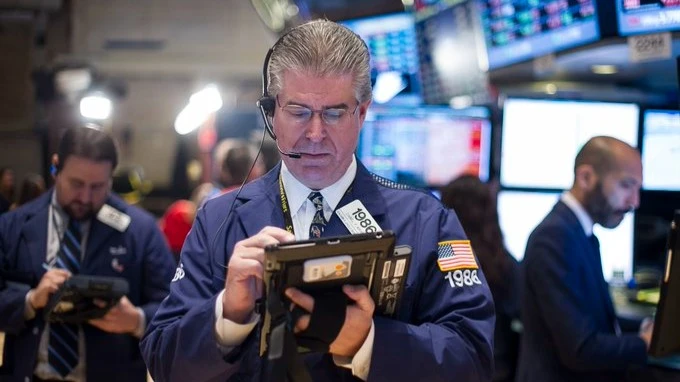
The vogue for index funds is dumbing down investors to notice companies that are transforming the market, says founder of The Motley Fool / Photo: X / NYSE
Investors in exchange-traded funds are wrong to reject picking individual stocks on their own - that way they lose the chance to spot future market leaders, says David Gardner, co-founder of investment advice platform The Motley Fool. He does not reject index funds, but worries that investors have stopped looking for businesses that change people's habits and can grow into large-scale companies.
Gardner is one of America's best-known advocates of active stock selection. The company calls him the Chief Rule Breaker - the chief of finding companies that are "breaking the rules" in their industries. In 28 years of stock picking, he has provided subscribers to Motley Fool's flagship Motley Fool service with annualized returns of about 21%. In a Bloomberg podcast, the investor discussed how he looks for the "right" stocks and why he is willing to buy ideas that look odd or overvalued early on.
The investor who stopped choosing
The co-founder of The Motley Fool doesn't argue against index investing, but sees the problem as people refusing to observe and analyze.
"I grew up in an era when buying stocks was quite commonplace - at least in my family. Today, however, there is a perception that you have to be crazy to buy individual stocks, it's too risky. Now everyone says the same thing: just invest in an index"

Gardner believes that investors have stopped asking the questions that make strong ideas: why a new app beats an old one, or why a seemingly strange technology is starting to change the market.
"If you are curious and wondering where society is going, if you are looking for exactly the right products and services that will make our lives and our children's lives better - then you have 'cast your rod' in the right place"

Six signs of the "right" stock
Over 40 years of stock picking, the co-founder of The Motley Fool has developed six traits that help him identify a promising stock. He has used them to pick AOL, Amazon, Tesla and Nvidia over the years.
1. market leader or industry pioneer
You need to look for innovative companies that are changing the usual consumption model or setting new rules in their category. It could be a chip maker, a software company, a restaurant chain, a retailer or a medical business. Gardner cites Nvidia, Broadcom, AMD and Google as examples.
"I'm a pioneering enthusiast. I have a whole closet of "first generation" stuff that either didn't work well or quickly became irrelevant. But it was this habit that made me buy Tesla stock early on. I love all things new. I'm inspired by AI - it's not just a separate industry, it's a tectonic shift for society. It's going to spawn a lot of new industries. In the same way we were once inspired by the Internet and Amazon - whose stock I still hold, and my entry price on it is only 16 cents

2. Sustainable competitive advantage
A company that is suited for the long haul must have a sustainable competitive advantage - something that cannot be quickly replicated or neutralized. This could be technology, business scale, brand strength, customer network, product quality, or a model that is difficult for competitors to replicate.
3. Strong past performance of the stock
A sharp rise in a stock is not a reason to refuse to buy. Rather, it's a sign that the market has already begun to recognize the quality of the business. Gardner cites Intuitive Surgical, Netflix, Apple, and Nvidia as examples: in the three to nine months before he bought them, these stocks were up an average of 30-90%.
4. Quality leadership
The co-founder of The Motley Fool believes that standard financial metrics reflect earnings, cash flow and assets, but don't take into account what's particularly important to him when owning a stock for a long time: the quality of management, the culture of the company and who supports it.
5. Recognizable brand or loyal audience
Gardner focuses on companies with "raving fans": loyal customers, users or partners who are really attached to the product. For example, biotech company Intuitive Surgical's recognizability is tied to its Da Vinci surgical robot, which hospitals use to communicate with patients.
6. Reputation of "overvalued" stock
Gardner calls attention to stocks that Wall Street calls overpriced. He acknowledges that there are some real overvalued companies. But if a business meets the other five criteria, Wall Street's skepticism becomes an additional factor for him: the market may not take into account the potential scale of the company.
"All we need is for people to scream that Tesla is absurdly expensive. That Amazon will never start turning a profit. When I first recommended Intuitive Surgical - and it has since brought in over a "hundred X's" - it was trading at a P/E ratio of 73. And there will always be people (if they're still following the quotes at all) who will declare, "There's no way I'm buying a stock that's worth 73 its annualized earnings"

Investor Superpower
Once a company is chosen, the harder part begins, the investor says, is keeping the stock in the portfolio: not everyone is willing to go through drawdowns. Sharp drops have been part of the history of almost all the companies that Gardner calls "the great stocks of a generation": for example, he first recommended Amazon at $3, then its price rose to $95, and in 2001 it fell to $7.
"I can hold Netflix stock even when it's losing two-thirds of its value because I believe in the company. I see evidence every day of how important Amazon, Netflix, Tesla - and the list goes on - have been in their day. That's what keeps me from getting out of assets. If you follow the company itself, rather than zigzagging charts or news headlines, you become a much more patient investor. It's become a kind of superpower for me."

But with this approach, Gardner says, the investor should be comfortable with mistakes.
"Not every horse will win the race. Not every one will even make it to the race. Some get a great start but finish poorly, and I can't always anticipate that. But by holding them back, I allow those who are clearly going for the win to get there. Eventually, when you make more than a "thousand X's" on Amazon or Nvidia, it becomes completely irrelevant that you had some "lame nags" in your portfolio as well

This article was AI-translated and verified by a human editor