How oncology company Revolution Medicines monetized a year of operations in 48 hours

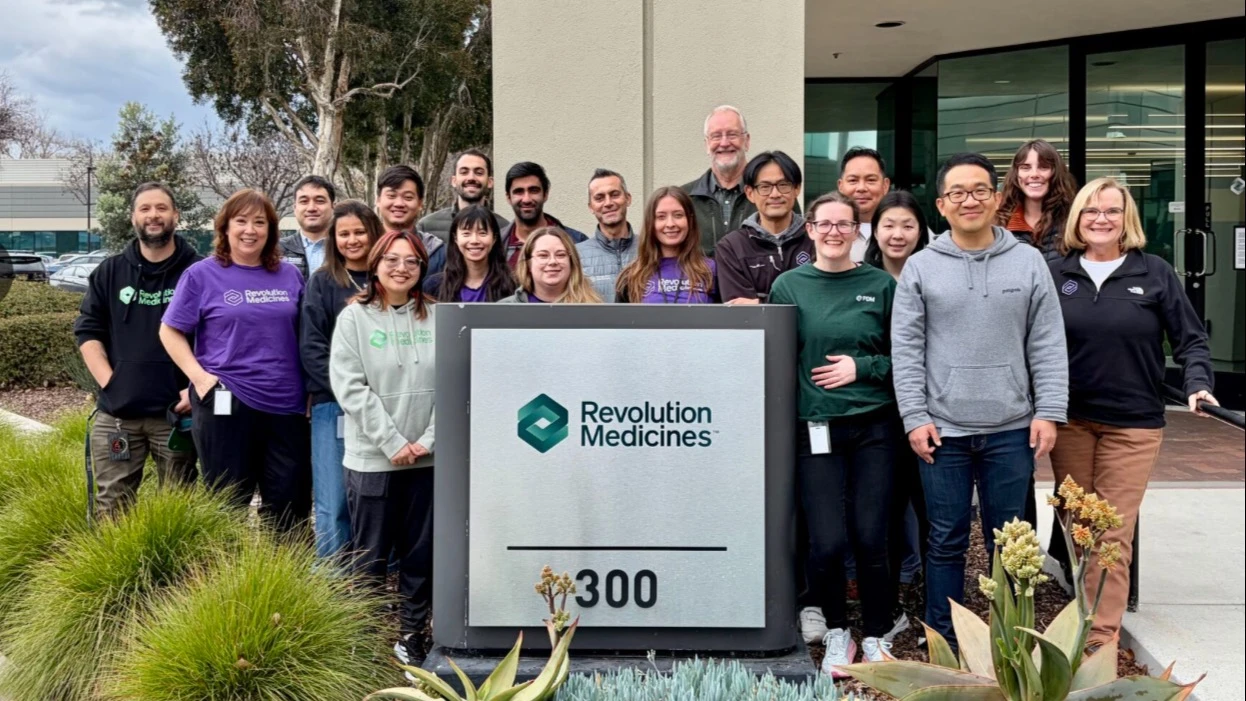
Revolution Medicines in April announced "unprecedented" results for its pancreatic cancer drug. Its shares have risen nearly 300% in a year. Photo: LinkedIn page
Revolution Medicines on April 13 presented breakthrough results from a study of a drug against the deadliest type of cancer. Freedom Holding co-founder Igor Klyushnev believes that this story deserves to be directed by a talented director. It is about how breakthrough clinical data is combined with high dynamics of events. And most importantly, it is a story about people who turned out to be ready for important events.
Monday, April 13
At exactly 08:00 Eastern Time, US-based Revolution Medicines, a clinical oncology company based in Redwood City, California, issued a press release about the results of its Phase 3 RASolute 302 study. The drug it was testing is called daraxonrasib. It is a pill to be taken once a day and the intended use is metastatic pancreatic cancer. This study involved patients who had previously received therapy. Pancreatic cancer is one of the most difficult cancers to treat: the five-year survival rate is 3% to 13%, the lowest among commonly occurring cancers.
The data presented in the release read almost implausible. Patients' life expectancy nearly doubled with daraxonrasib: median overall survival was 13.2 months, compared with 6.7 months on standard chemotherapy. The company itself calls these results "unprecedented".
The judgment is evaluative, but behind it is a specific statement: no drug in the history of phase III clinical trials in pancreatic cancer has achieved overall survival of more than a year. Prof. Shubham Pant of MD Anderson Shubham Pant, who has seen many years of research failures in this nosology, is silent several times during the CNBC interview, holding back emotion.
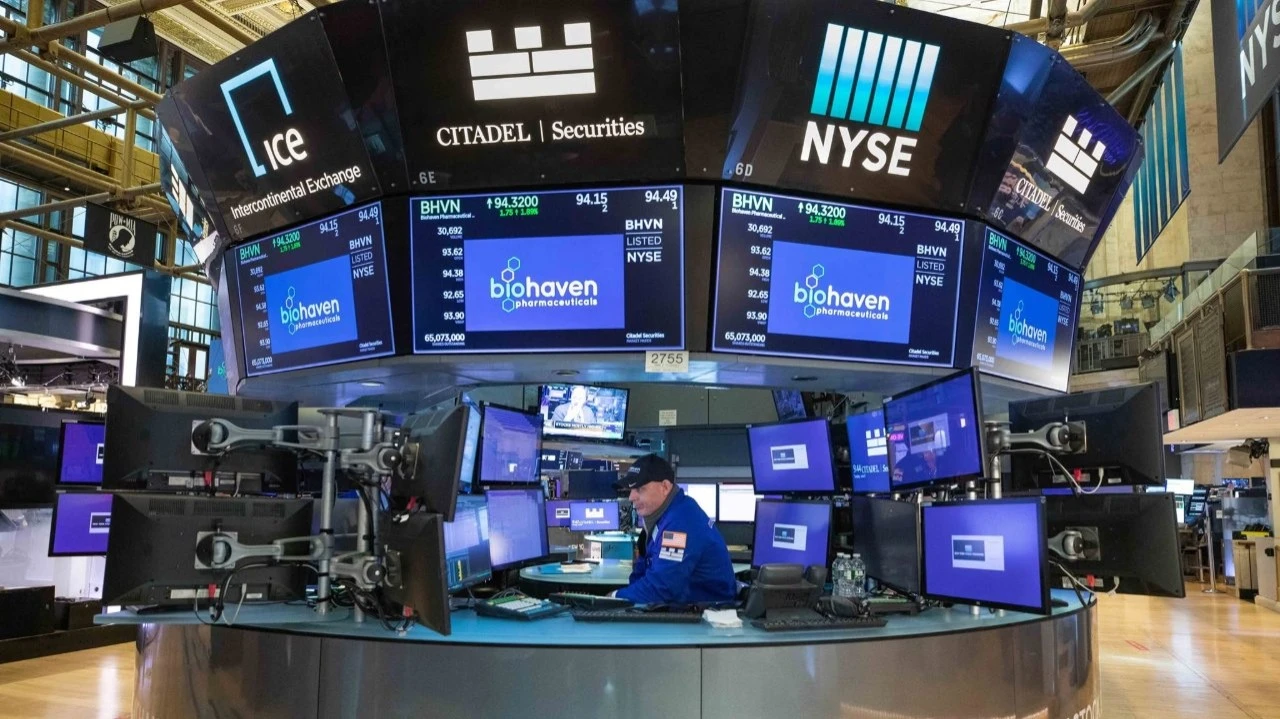
The market reacted instantly. Shares of Revolution Medicines soared more than 41% to $136.30. The company's capitalization added about $5.6 billion in one session. By evening, analyst teams began rewriting their target prices: Oppenheimer raised it to $165, Wells Fargo - to $167, Leerink - to $147. The previous consensus of around $134 became obsolete instantly.
Most observers saw it as the familiar story: 'biotech took a shot at clinical data'. Success, applause, reassessment, next news. Standard scenario.
But at 8:01 p.m. the same day, 12 hours after the morning release, the company issued a second one. The text is dry: Revolution Medicines announces it intends to issue $750 million in common stock and $250 million in convertible notes due 2033. A total of $1 billion in new capital. Lead organizers are JPMorgan, TD Cowen, and Guggenheim. Both offerings are public and have been processed through a pre-issue shelf registration (shelf registration) filed in advance with the SEC.
This is no longer the standard scenario. The second release was ready even before the first one came out. The lawyers signed the prospectus, the bankers put together a syndicate, the SEC received the documents - all this was happening in the very days when the research data had not yet been disclosed to the company itself.
Tuesday, April 14
The stock price held above $140. This is also an important signal: retail positions usually sell off a day after a price jump, as investors lock in profits. But in this case institutional players were increasing their positions.
Wednesday, April 15
At night the company announced the final terms of the offerings. Both were doubled: from $750 mln to $1.5 bln in shares and from $250 mln to $500 mln in bonds. The total is $2 billion versus the originally announced $1 billion. 10.56 mln shares were placed at $142 - the discount amounted to only 3.4% to the previous day's closing market price. For an SPO of this size, this is very Ma: markets usually require a 7-10% discount to place this many shares at a time. It also diluted current shareholders' stakes by 5.6%. Plus, there is an option of additional allotment to underwriters for 1.58 mln shares within 30 days.
The convertible bonds were placed with a coupon of 0.5% per annum and a conversion price of $198.8 per share - 40% higher than the offering price. Such a coupon for a late-stage biotech company with no revenue is essentially free money. Conventional corporate debt would cost 8-12%. Borrowers are willing to give capital so cheaply only because the bonds have a built-in call option on shares: the investor buys debt protection and equity upside at the same time.
That is, in the roughly 48 hours since the study data was released, Revolution Medicines has confirmed an unprecedented clinical result, added $5.6 billion in capitalization, raised $2 billion in new capital at near market value, borrowed $500 million at 0.5% APR, and put its share price target of $198.8 through a bond conversion as a clear signal that the next level of value for the company is not in today's $31 billion capitalization, but somewhere closer to $40 billion. It has also gained a fortified position on any future M&A negotiations.
This looks like a perfectly planned operation. In fact, it was, it just started much earlier. The story of Revolution Medicines is not an April sprint, but a ten-month race with a clear plan for each checkpoint.
Ten months before that.
On June 23, 2025, the US Food and Drug Administration (FDA) granted breakthrough therapy status to daraxonrasib for previously treated patients with metastatic pancreatic adenocarcinoma with KRAS G12 mutations. This signaled a formal signal from the regulator, "We see promise and are ready to move quickly." The FDA made its decision based on data from the drug's Phase I trial, that is, long before the RASolute 302 results were announced.
The next day, Revolution Medicines announced an agreement with Royalty Pharma for up to $2 billion to raise investment - up to $1.25 billion in exchange for a synthetic royalty on future sales of daraxonrasib and up to $750 million in the form of a senior secured credit facility. Revolution Medicines received the first tranche of $250 million immediately. It receives the second upon positive Phase 3 data. The rest is subject to FDA approval and commercial milestones.
Publishing these two news items one after the other is clearly a strategic decision. Breakthrough therapy status publicly reduces the risk of the asset in the eyes of financial counterparties. And the company used this to obtain flexible financing that provides a safety cushion for any scenario, but does not tie its hands in the event of success.
September - December 2025. Flow of mini-catalysts
In September 2025, the company presented compelling new data from a Phase 1 clinical trial of daraxonrasib in the treatment of metastatic pancreatic adenocarcinoma. These results included both previously untreated patients and those who had already received chemotherapy.
A month later, the company first received a national priority voucher from the FDA, which means an accelerated review of the application, and then daraxonsib received the status of an orphan drug. This implies the possibility of receiving tax benefits for its research, guarantees of market exclusivity after approval for seven years, and priority consulting support from the FDA.
These news combined to consistently reduce uncertainty around the asset and create a backdrop against which the final announcement of the data will be seen not as a lottery ticket, but as confirmation of a calibrated trajectory.
January 2026. Takeover rumors and JPMorgan conference week
On January 7, the Wall Street Journal reported that AbbVie plans to buy Revolution Medicines, and the parties are already at an advanced stage of negotiations. At that time, the market value of the latter was about $20 billion. The article said that another buyer was also claiming to buy the company. AbbVie then publicly denied the fact of negotiations. The next day the Financial Times wrote that Merck also wants to buy Revolution Medicines and is ready to pay $28-32 billion.
The negotiations did not end in anything. But the main effect of these publications was not even in the potential deal, but in the revaluation of the market. If major pharmaceutical companies are willing to discuss such a price, it means that Revolution Medicines is perceived as a strategic asset. Stifel wrote bluntly in January that the $28-32 billion range "may be an underestimate."
All this is happening during the annual JPMorgan Healthcare Conference, the premier event of the year for biotech investors, where the biggest pharma companies and funds concentrate in one place. At it, Revolution Medicines CEO Mark Goldsmith declined to comment on "rumors and speculation." No wonder: for a negotiating position, management's silence at such a moment is worth more than any comments.
February 2026. Silent mobilization
On February 25, Revolution Medicines published its annual report. There were a few figures in it that are important for those who know how to read reports.
The company's R&D expenses for the year rose from $592 mln to $987 mln - this is growth on the research front. General and administrative expenses (G&A) jumped almost twofold, from $97 million to $195 million. In biotech, this is worth paying attention to: a commercial team may be recruited and preparations may be underway to bring the drug to market.
The company had $2 billion in cash and securities on its balance sheet at the time the report was published. Plus $1.75 billion of reserved capital from Royalty Pharma. That's nearly $4 billion of financial cushion with operating expenses of $1.2 billion per year. That's a three-year liquidity cushion even without raising new capital.
By the April offering, the company went public not because it needed the money, but because it was the best price the market had ever given it and probably won't for a long time to come.
Final touches
On April 2, Revolution Medicines launched RASolute 303, a trial of first-line therapy for pancreatic cancer - for patients who have not yet received any treatment. This is an important signal 11 days before the RASolute 302 data was announced: the company has publicly documented that it is already investing in expanding the use of the drug.
And on April 17, AACR 2026 kicked off in San Diego, the premier oncology conference for early phase drugs. That is, when Revolution Medicines announced "unprecedented" results from its daraxonrasib study on April 13, it entered the AACR window with the loudest possible news and got several more days of related publications, presentations, and behind-the-scenes chatter.
What's next: the outlook for price movement
The stock is up almost 300% in a year, and now the key question is: does the stock still have upside potential? The short answer is yes, about 40% by the end of 2026 and the first half of 2027 looks like a realistic benchmark.
The most reliable indicator is shown by the company itself. Conversion price of bonds $198.8 is the level, which was agreed by management, investment banks and institutional buyers of bonds. This is about 36% above the current price. The 0.5% annualized coupon means that bond buyers don't expect to earn interest, they expect a conversion yield. If the $198.8 price level isn't taken in seven years, the deal won't meet their expectations.
The consensus of the banks after the announcement of the survey data shifted to the same range: the target price for the next 12 months at Oppenheimer is $165, at Wells Fargo - $167. Analysts traditionally keep target prices conservative and adjust them upward as uncertainty decreases.
Ma 29-June 2, the American Society of Clinical Oncology (ASCO) conference will be held in Chicago, where Revolution Medicine is expected to present detailed data from the daraxonrasib study. It will then submit an application to the FDA for approval of the drug. Then we can expect the next wave of target price revisions - to the upper limit of $200-220.
In the next 3-6 months, we can expect a period of short-term volatility in the $150-180 range. The price will react more to news flow than to fundamental milestones.
The next 6-18 months will be the most important period for the investment thesis. The FDA's decision on whether to approve daraxonrasib could come in late 2026 or early 2027. In late 2026, trial data could be released on the use of daraxonrasib in combination with Merck's Keytruda for the treatment of lung cancer in patients who have not previously received therapy. This would potentially increase the addressable market several-fold. If successful on both counts, Revolution Medicine shares could rise to $180 to $220.
On the distant horizon - 18 to 48 months - Revolution Medicines will move into large-scale sales. In addition to treating pancreatic cancer, it plans to capture the multibillion-dollar lung and colon cancer therapy markets. The company also has a development portfolio of three more RAS(ON) class clinical molecules.
The probability of a takeover by a pharma giant will increase precisely after the drug is registered, when the main risks disappear. In this scenario, the goal is obvious: either growth of shares to over $250 in the status of an independent leader, or sale of the business for $40-50 bln.
It looks interesting, of course, but the risks are high. First of all, the company's shares have already grown significantly over the past year, and short-term pullbacks due to profit taking are natural. The range of $125-130 looks like a probable support zone in case of general market correction.
Second, the regulatory landscape under new FDA leadership remains unpredictable: a national priority voucher expedites review but does not guarantee approval.
Third, competition in the class of RAS inhibitors is intensifying, and the superiority of daraxonrasib in pancreatic cancer does not mean superiority in all RAS-associated tumors.
And yet the main practical conclusion from this whole story is not about targets or dates. A biotech investor loses when he tries to guess the date of results announcement, the date of the FDA decision deadline, the date of approval.
And he wins when he "reads the chain" of events. 48 hours, which looked like a sensation, is actually the finishing touch. The main work was done before the market saw it. And what happens in the next 10 months is being written right now. And it's worth following.
This article was AI-translated and verified by a human editor