Howard Marks: "It's better to underperform the market a little bit than to be under the rubble at a crash"
A new note from the founder of Oaktree Capital - on how investors should set goals and evaluate the effectiveness of their strategy over the long haul
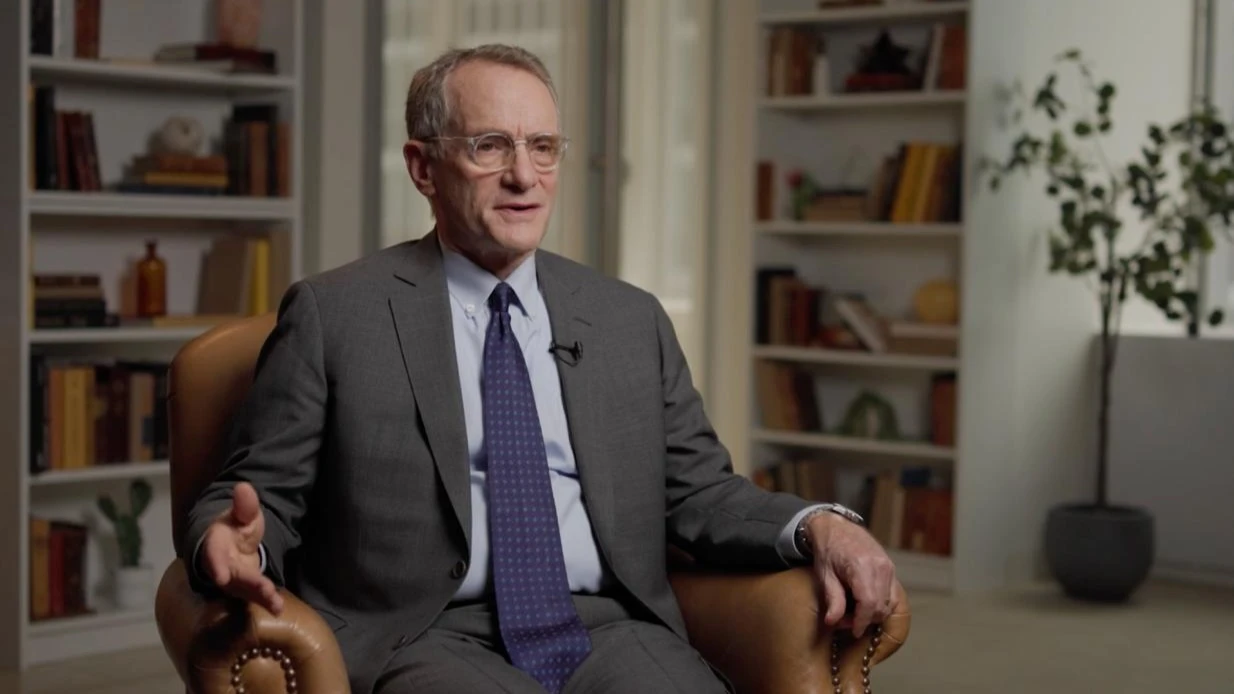
Legendary investor Howard Marks has released a new note, A Look Under the Hood. The occasion for it was a meeting with the board of an American pension fund and a discussion of their investment principles. But behind the private details, Marks sees a broader theme - how investors can make decisions and measure success.
Co-founder and co-chairman of Oaktree Capital Management, which manages over $120 billion in assets, Marks has been publishing his memos since 1990. In 35 years, he has written more than a hundred memos, which are read by Buffett, Dalio and the heads of major funds.
Risk
Marks begins his note with a theme that he says defines the essence of investing: not how much risk you are willing to take, but how much you can handle. He describes how the fund's consultants suggested that participants consider risk in two ways - financial (how much the investor can afford to lose) and psychological (how much he or she is willing to take).
According to Marks, it is this distinction that helps us understand where prudence ends and complacency begins. "What could be more foolish than to take a risk whose potential consequences you cannot cope with?" - he writes.
In the early 2000s, Marks chaired the University of Pennsylvania's investment committee. After the tumultuous 1990s, the fund's returns were noticeably inferior to other university endowments, and the board debated whether to increase equity and venture capital investments to close the gap. Marks convinced the board to abandon the idea: "It was too late to chase a horse that had long since escaped the stable. Better to lag a little behind than to enter the market at the peak and find yourself under the rubble when the growth is over."
The pension fund that Marks writes about in this note has taken a similar approach: the board consciously takes less risk than its finances allow and is willing to give up some of its potential returns to avoid facing the full force of market downturns. Marks believes that such a decision is not a sign of weakness but an indicator of maturity. A private investor can take a similar stance - one who realizes that sustainability over the long term is more important than short spurts at the peak of the market.
Diversification
Marks writes that pension fund managers are sober about the nature of investing. They do not seek to avoid risk - they realize that goals cannot be achieved without it, and they accept that caution inevitably limits return potential. "They are not looking for that elusive secret strategy that others think will provide them with risk-free returns," Marks writes.
Pension fund managers prefer "normal" market risks - those that arise from the nature of the market itself: price fluctuations, periods of growth and decline - and avoid innovative but opaque strategies that promise returns at "below-average" risk levels. Marks emphasizes that such moderation is prudent: it is better to understand where risk comes from than to rely on models that hide its nature.
Portfolio diversification according to Marks is not a set of assets that gain at the same time, but a balance of different sources of return. There will always be positions in the portfolio that temporarily lag behind, and this is natural: they are the ones that keep the system from overheating. Marks notes that managers should not be judged by how individual securities behave in a short period if the overall strategy is built on sustainability.
This attitude, says Marks, makes a strategy sustainable over the long haul. Diversification does not insure against fluctuations, it insures against mistakes. For a private investor, this is the main benchmark: if everything in the portfolio is growing, it means that it is not diversified, but focused on one risk.
Volatility
Marks noticed that the pension fund's board members spoke calmly about volatility. They did not perceive market fluctuations as a major threat: in their opinion, short-term drawdowns are inevitable, and it is more important not to smooth out fluctuations, but to preserve the fund's ability to fulfill its obligations to participants. The majority felt that the pursuit of stability should not interfere with achieving high long-term returns.
Marks agrees with this approach: he believes that investors attach too much importance to volatility because it is the only risk that can be expressed numerically: price fluctuations have come to be considered the best indicator of risk.
"I'll make a controversial statement here: from a purely investment perspective, there is no intrinsic reason for long-term investors to worry about volatility (as opposed to the risk of irrecoverable loss). Warren Buffett has been known to say that he would "rather earn an uneven 15% return than a smooth 12%." Doesn't that make sense?"
According to Marks, fear of market fluctuations is not born out of the economy, but out of external circumstances - accountability, political and career constraints, client pressure, or fear of looking inferior. These "externalities" make volatility a problem not for the investment itself, but for the investor. For example, the shares of a technology company may seem risky to a fund manager who reports daily to shareholders, but pose no threat to a sovereign wealth fund where capital is not withdrawn and there is no need to show daily results.
Effectiveness of the strategy
The pension fund that Marks is writing about, the most important thing it did was to achieve a target return sufficient to meet its obligations. Outperformance of indices, benchmarks or peers is secondary.
Marks supports this approach. He notes that the main goal of a strategy is not to win the competition with the market, but to ensure that the portfolio consistently performs its function. In the long term, sustainability, not record performance, is important.
At the same time, Marks draws attention to a key problem in assessing effectiveness: too short a horizon. According to him, one year or even a few years cannot be a reasonable basis for conclusions - too many factors can temporarily distort the result. "A market can rise or fall because of a single event," Marks writes. - Should we hold the managers responsible for this?"
He adds that in the short term, absolute numbers don't tell you much. When the market is up 20%, a 6% return does not look like a success; when the market is down 20%, the same 6% is a great result. Therefore, Marks says, short-term valuations should be relative - an investor should not ask "how much did I make" but "could I have done better in these conditions".
Investors often look for a fixed period - three, five or ten years - but the right answer, according to Marks, cannot be a number. The evaluation period should be long enough to smooth out occasional spikes and downturns and show how the strategy behaves in different phases of the market. "If performance is evaluated only in good times, the best results will be shown by those who have taken the most risk. But this is not a sign of skill," Marks writes.
According to him, a reasonable horizon should cover the full market cycle - periods of growth and decline. This is the only way to distinguish a sustainable strategy from a fortunate coincidence and to understand where investor decisions are really justified.
Marks notes that the point of an investment strategy is to withstand the inevitable downturns and maintain the ability to recover. And the portfolio itself should be evaluated not by the moment, but by the distance - it is important not to win a year, but not to lose a decade.
This article was AI-translated and verified by a human editor