Hyperscalers vs. meek: who will win the AI race

Last week there was a failure on Amazon's servers, which had global consequences: it brought down the work of many large sites and companies for some time. The event clearly showed how much the modern world depends on cloud services, usually invisible to the user, that rent computing power and programs over the Internet. But the AI boom is moving us even further in that direction, sparking a veritable fever of building new cloud data centers. Which may not be needed in such large numbers.
Trapped in the clouds
Amazon's failure began at 3 a.m. New York time on Monday, Oct. 20, and it took a long 15 hours to fix. Only by 6 p.m. did the company report that the effects of the error had been eliminated.
We don't usually think about the extent to which we depend on cloud services, a huge and fast-growing industry that Amazon invented in 2006 (read more about it here). Total revenue for infrastructure cloud services is expected to reach $400 billion this year, according to Statista. Amazon leads this market with a share of about 30%, another 20% for Microsoft and 13% for Google - as it is easy to see, these companies, called "hyperscalers" for the rapid expansion of their cloud capacity, already control almost two-thirds of the market.
Millions of businesses around the world trust them with their services and data because it's easier and more convenient to rent computing power than to purchase, manage and upgrade their own.
In Fortune magazine, Chris Bair, chief commercial officer and partner at Stream Data Centers wrote:
Without data centers, flights would be suspended (pilots couldn't get weather information and flight plans would be unavailable), communications would become primitive, payments would stop being processed - even 911 service through an online system would stop working. And that's just the beginning.
He used to praise modern data centers as one of the most important achievements of civilization, but not two weeks later, this truth turned out to be the opposite: if a major cloud service goes down, everything around it begins to collapse.
Personally, Zoom refused to work for me on Monday, but that was just the flowers. The world's largest companies, including Netflix, Starbucks, United Airlines, Delta Air Lines, McDonald's and many others were temporarily unable to provide customers with access to their online services, according to CNN. According to the BBC, the outage affected more than a thousand companies and millions of Internet users.
"Cloud computing is a marvel, but at its core it's an endless list of complex services and dependencies that are always one configuration away from failure," Wired magazine quoted Mark St. John, co-founder of systems security startup Neon Cyber, as saying.
To be fair, failures in Amazon's cloud services don't usually happen more than once a year, but if they do, it's, as they say, for all the money.
There's more to come
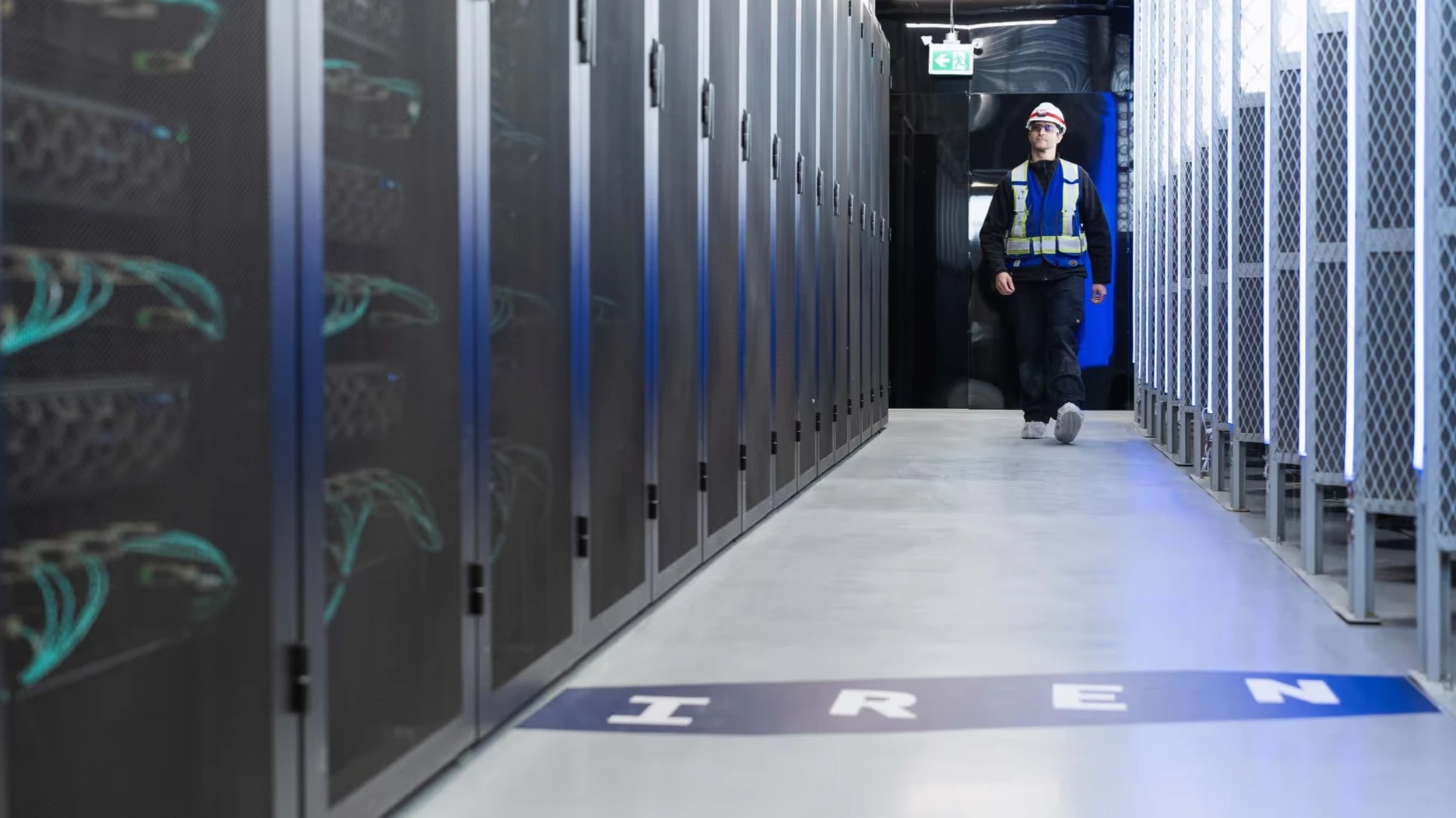
The problem is that promising AI technology is also dependent on cloud services - huge data centers equipped with processors specifically optimized for AI training and application.
That's because the computers needed to run AI tools are powerful and expensive, and local hardware is not easily modified to meet changing business needs. It makes more sense to rent that computer power and pay for it only as needed, CNN notes.
It may seem like a hypothetical scenario today, but the tech industry promises a rapid shift to AI agents, autonomous programs that will do more work on behalf of humans in the near future, and that could make companies, schools, hospitals and financial institutions even more reliant on cloud services
McKinsey surveyed 1,491 companies from 101 countries in 2024 - and 78% of respondents said their organizations use AI in at least one business function. A year earlier, the figure was 55%.
The agency estimates that by 2030, global capital expenditures on data center infrastructure (excluding IT equipment) will exceed $1.7 trillion, with the lion's share of the growth coming from AI needs - they will require 156 GW of data center capacity versus 64 GW for all other applications.
It's not for nothing that Oracle is rushing into this field, seeing in Xi its chance to become another hyperscaler, which it missed in the early 2010s because of co-founder Larry Ellison's skepticism about cloud computing.
As AI becomes more widespread, data center outages may occur more frequently because artificial intelligence models are very power-hungry, CNN quotes Jacob Bourne, a senior analyst at Emarketer, as saying.
However, there is light at the end of the tunnel: new players such as the aforementioned Oracle, Meta and OpenAI are entering the AI data center business, and AI itself can help detect and remediate security vulnerabilities "if companies invest in these capabilities in the same way they do in trendy and popular tools such as AI-based chatbots and video creation applications," Duffy believes.
That's all well and good, but what if the giant data centers that OpenAI has already committed to investing more than $1 trillion in aren't needed at all?
The meek will inherit the AI world
"Blessed are the meek, for they shall inherit the earth" is a quote from the New Testament, the Gospel of Matthew. And part of the title of a research paper by the Massachusetts Institute of Technology (MIT), clearly not intentionally titled "The meek model inherit the earth".
OpenAI CEO Sam Altman's profound belief that AI is all the better the more computing power available to it is being challenged.
"The last decade has seen incredible scaling of AI systems by several companies, resulting in disparities in the performance of AI models. This paper argues that, contrary to the prevailing intuition, the diminishing returns to scaling computation will lead to convergence in the capabilities of AI models. "In other words, 'meek' models (with limited computational budgets) will inherit the world, approaching the performance level of the best models overall," the study authors write.
"Artificial intelligence labs aim to build data centers the size of Manhattan, each costing billions of dollars and consuming as much energy as a small city. These efforts are based on a deep belief in "scaling" - the idea that adding computing power to existing AI training methods will eventually lead to superintelligent systems capable of performing any type of task. However, a growing number of AI researchers are arguing that scaling large language models may have reached its limits and that other breakthroughs may be needed to improve AI performance," echoed TechCrunch.
Researchers from MIT estimate that over the next decade, the performance of advanced AI running in giant data centers will gradually decline, while thanks to improvements in algorithms, the efficiency of models running on more modest hardware will increase, closing the gap, writes Wired.
As an example, the magazine cites the case of China's inexpensive and efficient AI model DeepSeek, which crashed the U.S. tech market by $1 trillion in January 2025.
Thinking Machines Lab, a startup founded by former OpenAI CTO Mira Murati, is also challenging scaling. The way forward is not to increase the volume of training, but to improve the quality of training, Venturebeat quotes Thinking Machines researcher Rafael Rafailov as saying.
Sarah Hooker, former head of research at AI lab Cohere and now co-founder of startup Adaption Labs, has a similar viewpoint. In an interview with TechCrunch, she said that Adaption Labs creates artificial intelligence systems capable of continuously adapting and learning from real-world experience, doing so extremely efficiently, but declined to disclose details.
"OpenAI and other U.S. tech companies have signed agreements worth hundreds of billions of dollars to build artificial intelligence infrastructure in the U.S... More and more experts are questioning whether such deals are worthwhile," Wired opined.
So what happens if the "meek" win?
"Dark Fiber" and the Old Testament.
A possible scenario is suggested by the story of the "fiber glut" that occurred during the dot-com bubble of the late 1990s and early 2000s.
In 1998, the U.S. Department of Commerce released an ultra-optimistic forecast that Internet traffic was expected to double every 100 days, i.e. grow about 10 times in a year, The Wall Street Journal wrote in 2002.
On the wave of excitement, telecommunications companies laid millions of miles of fiber optic cable under the streets and on the ocean floor. The predictions proved wrong. Traffic grew, but not nearly as fast. As a result, only 2.7 percent of the laid lines were in use in 2002. Much of the remaining fiber, referred to in the industry as "dark fiber," risked going unused forever. The excess capacity caused bandwidth prices to fall by an average of 65% and most long-distance data companies to go bankrupt, the WSJ wrote.
Shares of Corning, the world's largest producer of optical fiber, plummeted from $109 in 2000 to $1.6 by 2002. The company, however, survived and is now doing quite well with a capitalization of about $75 billion, although its stock has not yet reached its 2000 peak. Not everyone is so lucky. One of the largest telecom operators, WorldCom, as well as many other companies like Global Crossing, Winstar Communications, and Metromedia Fiber Network have undergone restructuring or liquidation, Fierce Network writes, drawing a parallel between those days and the current boom in AI data centers.
If we're going to turn to biblical quotes, here's another one: "What has been is what will be; and what has been done is what will be done, and there is nothing new under the sun," says Ecclesiastes.
While in the past we learned from mistakes through bankruptcies and stock crashes, today the stakes are higher: not only business, but also healthcare, transportation, and security depend on the stability of cloud infrastructure.
The future is likely to be hybrid: some tasks will be solved in giant data centers, and some will be done on local, energy-efficient and "meek" models. Whoever manages to find the balance between power and intelligence will inherit not only the earth, but also the next technological era.
This article was AI-translated and verified by a human editor