Intel gave a weak outlook for the quarter due to manufacturing issues. The stock is down 12%
Intel can't deliver enough new processors to the market due to high defect rates

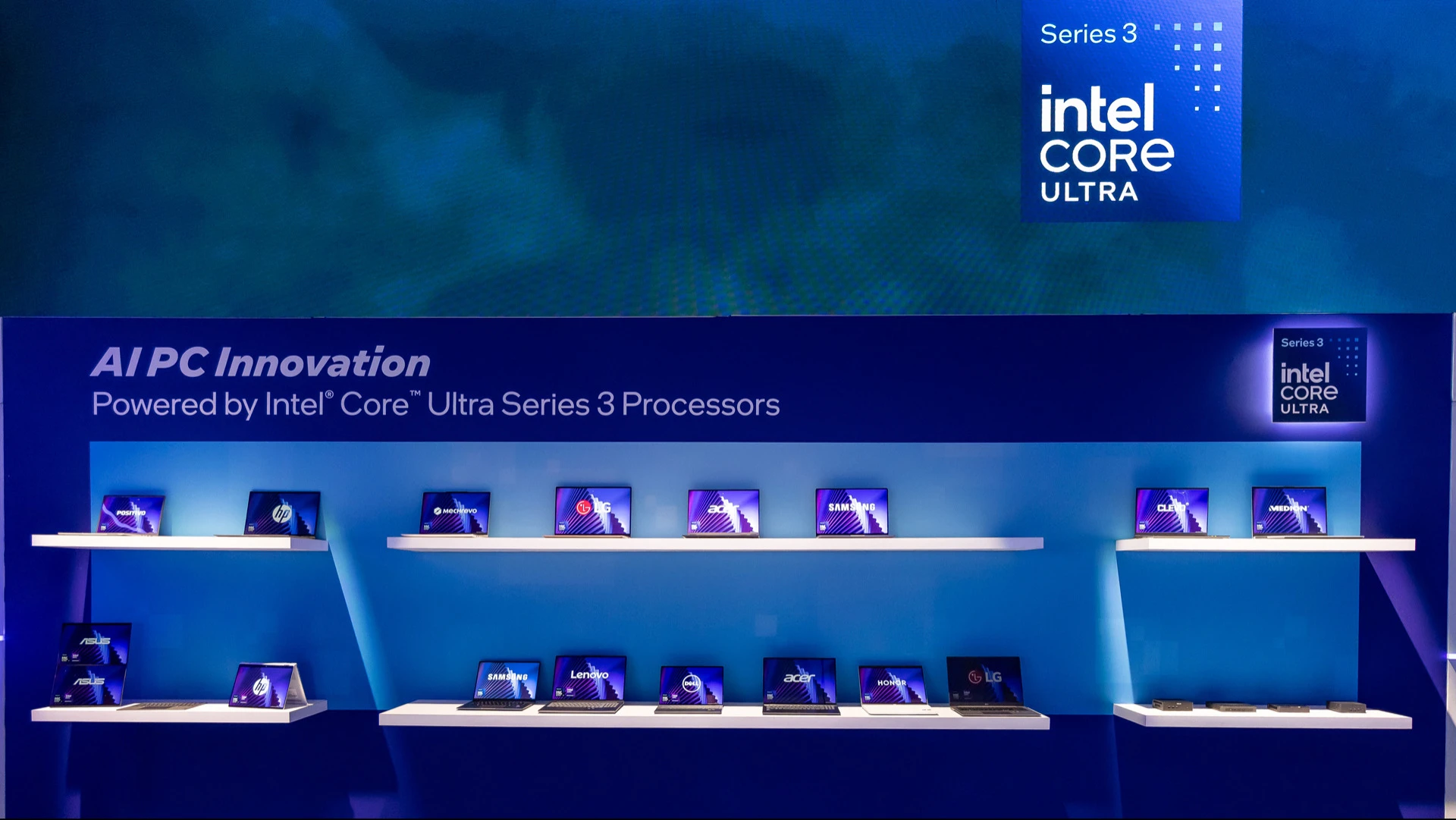
Intel unveiled the first laptops with new processors at CES / Photo: Intel
Intel gave a weak outlook for the current quarter, citing a shortage of its own products. The company is unable to take advantage of demand due to problems with the new production process, characterized by a high level of scrap. Thus Intel disappointed investors who expected a more tangible effect from the release of new chips, writes Bloomberg. After the publication of the report shares of the manufacturer of processors for PCs and servers collapsed on the postmarket by 12%.
Details
Intel estimates that revenue in the first quarter will range from $11.7 billion to $12.7 billion. The average of this range was below analysts' consensus forecast of $12.6 billion, Bloomberg notes. On adjusted earnings per share, the company expects to come in at zero, while Wall Street expected $0.05 per paper, CNBC writes.
Intel continues to face problems in production: the share of yearly chips (yield) at the end of the assembly line remains low, which hinders the company's efforts to regain lost market positions, states Bloomberg. The chipmaker has been trying to regain its technological leadership for several years: for this purpose it introduced a new 18A process. Current difficulties in the form of a high percentage of defects at the output of products from the production line is another obstacle on this path, the agency writes.
Demand is "pretty strong" and the company is working hard to fix its manufacturing problems, Intel CEO Lip-Bu Tan told Bloomberg. However, the chipmaker has exhausted a significant portion of its inventory of year-old processors in the fourth quarter of 2025. "Our yields and manufacturing efficiencies are not up to my standards," Tan acknowledged. - That needs to be corrected."
"We expect available shipments to hit a low in the first Ma before rebounding in the second quarter and beyond," Intel CFO David Zinsner said in a press release.
After the publication of the report, Intel shares collapsed in extended trading by more than 12%. At the same time, in the course of the main trading on January 22, the securities reached the maximum for the last four years.
What was the fourth quarter and year
Intel's fourth-quarter 2025 revenue fell 4.1% year-over-year to $13.7 billion in the fourth quarter of 2024. Analysts polled by LSEG expected $13.4 billion, CNBC writes. Adjusted earnings per share amounted to $0.15, while Wall Street had forecast $0.08.
The company reported a net loss of $600 million, or $0.12 per share. By comparison, Intel reported a net loss of $100 million, or $0.3 per share, for the same period in 2024.
The chipmaker reported that revenue from contract manufacturing (Intel Foundry Services) amounted to $4.5 billion - 4% more than a year earlier. However, most of this amount is related to internal orders - the production of the company's own chips, CNBC notes. Revenue from the PC processor division totaled $8.2 billion, falling slightly short of Wall Street expectations ($8.3 billion). Sales of data center components reached $4.7 billion versus a forecast of $4.4 billion.
The company's annual revenue in 2025 was $53 billion - down $25 billion from its peak in 2021, Bloomberg noted.
Context
In recent months, Intel quotes have been actively growing amid investor excitement, Bloomberg writes. Market participants were betting on the fact that the launch of new products will help to improve financial performance. The company has also attracted the attention of major investors, including the U.S. government, Nvidia and SoftBank.
In January, Intel securities were the best performing asset in the Philadelphia Stock Exchange Semiconductor Index, continuing to rise after jumping 84% in 2025. This month, Intel introduced processors with the Panther Lake architecture on the 18A process and announced the release of the first laptops with Intel Core Ultra Series processors. This encouraged investors who thought Intel's troubles were now behind it.
In August, Reuters reported that by the summer of 2025, Intel's 18A processor yield had reached about 10%, which was not enough to start mass production. On December 30, Forbes wrote that current analysts' estimates of yields are already between 50% and 60%, which is enough for in-house production but not enough for contract chip production.
This article was AI-translated and verified by a human editor