IPO plans, blocked accounts and Dubai: highlights from Revolut founder's interview
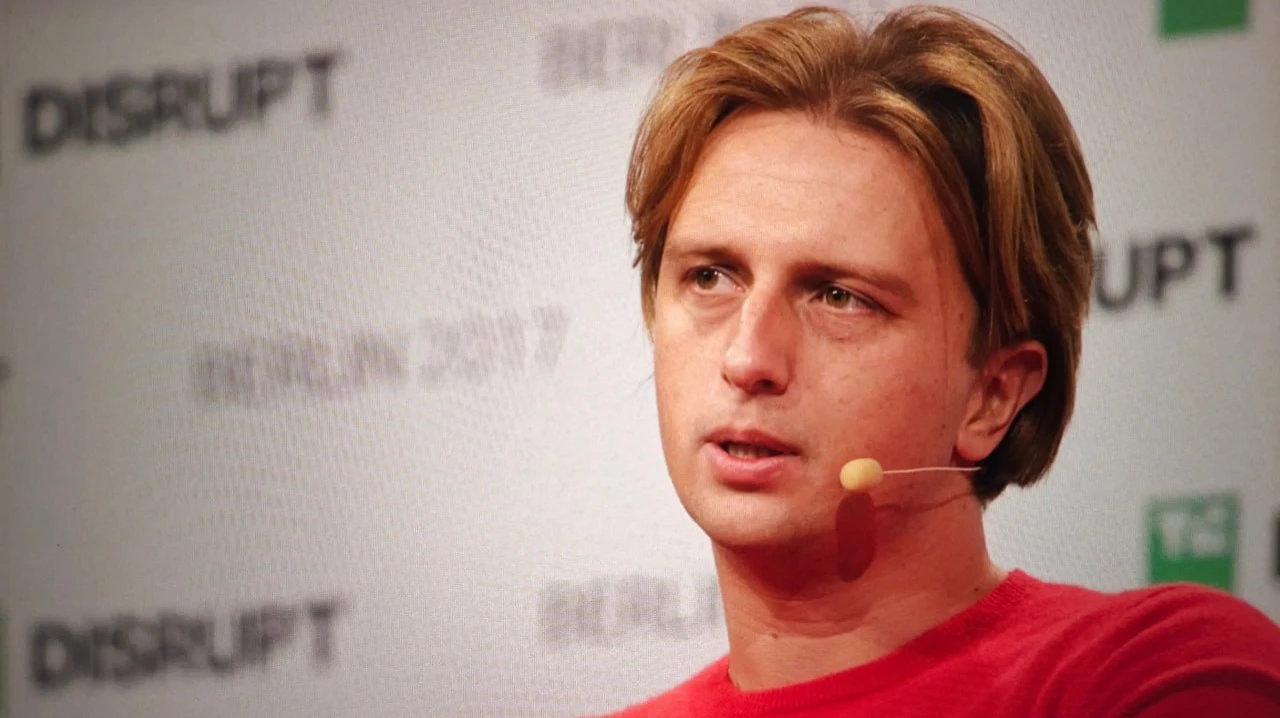
Nikolai Storonsky, founder and CEO of the fintech bank Revolut, told in a large interview about plans for an IPO, increasing his stake in the company, and called reports about moving to Dubai a fake. He also touched upon the topic of account blocking, which was massively faced by citizens of Russia and Belarus, and explained why the bank applied sanctions to the accounts of family members of businessman Oleg Tinkov when he was blacklisted in the UK.
IPO on a 2-3 year horizon
Nikolay Storonsky said in an interview with Youtube channel "Eto Osetinskaya" that the company is still considering the possibility of going public in the perspective of two-three years. At the same time IPO, according to him, is not a key strategic goal for Revolut. Rather, it is an intermediate stage of development: when the company reaches this point, the very fact of placement ceases to be an independent focus, Storonsky added.
Speaking about the reasons for the possible placement, Storonsky emphasized that for Revolut it is primarily a matter of reputation. According to him, the status of a public company increases the level of confidence in it on the part of the market.
Increase in interest in Revolut
Storonsky said that his stake in Revolut has increased from 25% to 29% of shares since 2024. The stake increased due to the implementation of an incentive program that works similarly to Elon Musk's remuneration at Tesla and is tied to the growth of the company's value. "I have now (...) 29% and plus another 10% extra if I reach certain targets". - shared the businessman.
In August 2024, the valuation of the fintech bank at the sale of its shares to employees was $45 billion. According to Storonsky, in November 2025 Revolut received a new valuation of about $75 billion. According to the businessman, in May, the company was approached by large investors who expressed a desire to enter its capital. The deal was announced publicly only recently. Storonsky explained that it was not about raising new funds, but about secondary placement of securities. Investors acquired stakes from existing shareholders at an agreed valuation. Revolut did not conduct a financing round because it remains profitable and does not need additional external capital, its founder clarified.
On Relocation to Dubai
Storonsky called "fake news" reports that he had changed his residence from the UK to the United Arab Emirates (UAE). In October, Bloomberg wrote that wealthy Britons were leaving the country because of changes in tax legislation. In particular, it was about the abolition of non-domicile status - a regime under which a person could live in the country without being considered a tax resident and without paying taxes on income earned abroad.
"My business is global. I spend three months in London, three months in Europe. We decided to open a big office in Dubai 2-3 years ago, I spend three or four months a year in Dubai. In the States and Latin America, that is, everywhere where we have big offices, I try to spend time" - said the billionaire.
According to Storonsky, his family office opened a legal entity in the UAE and specified an address in Dubai for official correspondence. After that, journalists subscribed to Revolut's corporate disclosures received notification of the change of address, which was the reason for such publications, the businessman believes.
Blocking of accounts of Russians
Storonski commented on the situation with the blocking of accounts and Revolut cards, which in November was massively faced by citizens of Russia and Belarus without residence permits or European passports. It also affected those whose residence permits were at that moment under renewal or the documents were temporary. The bank's support at the time cited the tightening of EU sanctions. Storonsky explained that Revolut has to comply not only with the law, but also with the "regulator's expectations" (expectations - Oninvest), which can be tougher than the laws themselves and depend on political trends. When asked whether the bank receives "additional instructions", the businessman answered in the affirmative, but did not disclose details. Besides, according to him, temporary residence permits are very easy to forge, so many banks do not accept them as justification.
"There are clear laws that are sometimes unclear, then there are regulator expectations that are sometimes not very clear either. In such an environment, people make mistakes [in the document verification process]. As a result, the organization is at risk. When it's all based on code, on models, there's a smaller percentage of error," Storonsky said.
Why Revolut blocked Tinkov's wife's account
Storonsky also explained why, when entrepreneur Oleg Tinkov fell under UK sanctions, not only his Revolut accounts were blocked, but also the accounts of his family members, in particular his wife. The restrictive measures against Tinkov were lifted in July 2023.
"Legislation requires that money from individuals or legal entities that have fallen under sanctions should not be transferred to other people. And if they have already been transferred to other people, those people are also subject to account blocking. Here you have $100, which was in the account of a sanctioned person, and if $50 of them are transferred to his wife, $10 - to his child, then naturally [their] accounts are also closed," - said the founder of the bank. He clarified that this also applies to transactions that have already been made. "So where did they get the money from? It's not something they earned themselves. It came [money] from Oleg. This is the law," Storonsky said.
This article was AI-translated and verified by a human editor