Iran's Achilles heel: what's the importance of the Kharq coral island that Trump is targeting
36 years ago, a future U.S. president threatened to blow Hark "to smithereens" if Tehran fired "even a bullet" at Americans

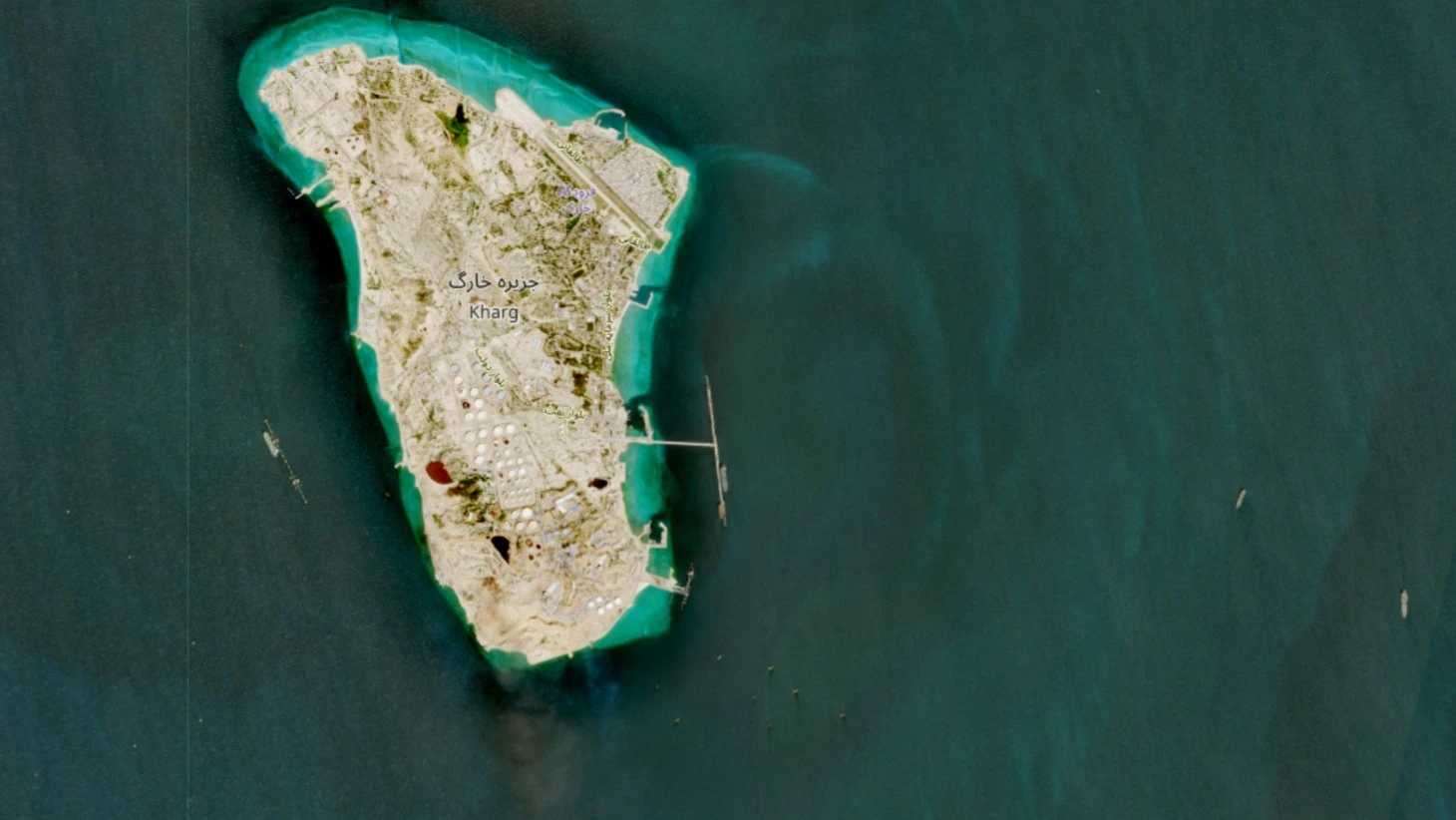
Famous Iranian writer Jalal Ale-Ahmad dubbed Kharq Island "the orphaned pearl of the Persian Gulf" / Photo: screenshot of a satellite image from the Copernicus Climate Service website
U.S. President Donald Trump is considering seizing Kharq Island in the Persian Gulf, Axios reported March 16, citing unnamed U.S. officials. Despite its microscopic size, this small coral patch of land is "the center of the circulatory system" of Iran's economy and, at the same time, "the Achilles' heel of the Trump-hating Iranian regime," the BBC stated. A potential US attack on the island's oil infrastructure would risk an immediate shock to the entire energy supply chain, threatening unpredictable consequences for the global economy and a new round of escalation in the Middle East.
Where is Hark?
Kharq Island is a coral formation about the size of a third of Manhattan, located in the Persian Gulf 26 kilometers off the Iranian mainland. Unlike the shallow Iranian coastline, the sea depth off Kharqa is deep enough to moor supertankers. This strictly protected area, known among Iranians as the "Forbidden Island," is home to an oil terminal built by the U.S.-based Amoco in the 1960s and nationalized by Iranian authorities after the 1979 Islamic Revolution. The island's population is made up mostly of oil and gas workers who travel to and from the facility via the airport of the National Iranian Oil Company.
What is the significance of the island?
Despite Kharqa's small size, about 90% of Iran's oil exports pass through it. The terminal on the island handles about 1.5 million barrels per day, a volume that exceeds the production of most OPEC countries. Shipments from the terminal are closely monitored by international traders who analyze the dynamics of oil shipments from OPEC's fourth-largest producer. As early as 1984, the CIA noted that the Kharq Island facilities were "the most vital in Iran's oil system and their uninterrupted operation is critical to the economic well-being" of the country. Israeli opposition leader Yair Lapid recently said that destroying the terminal would "crush the Iranian economy and topple the regime."
What oil facilities are there in Harka?
Oil is brought to the island from Iranian fields via underwater pipelines and reserved in giant storage tanks before being loaded onto tankers. The facility's infrastructure includes a massive network of tanks with a combined capacity of about 30 million barrels, about a third of the capacity of the largest U.S. oil hub in Cushing, Oklahoma. The terminal can berth up to eight tankers at a time and also has shipping capacity through ship-to-ship oil transfer. Currently, the island stores about 18 million barrels of oil, which is equivalent to the volume of Iranian exports in 10-12 days, The Wall Street Journal reported, citing JPMorgan Chase analyst Natasha Kaneva.
What was the situation on the island before the war?
In the days before the outbreak of war, Iran boosted exports from Kharq Island to near-record levels, shipping more than 2 million barrels daily, WSJ notes. Tanker loading continued even after the outbreak of hostilities as the Iranian government sought to get as much oil as possible out to sea from the zone of probable defeat, Bloomberg suggests.
Who is buying Iranian oil?
The vast majority of Iran's oil exports go to China. Iran sells its oil primarily to small Chinese private refineries, known in the industry as "samovars". These refineries do not have a significant presence in international markets and can defy U.S. sanctions. Before the war, Iran accounted for approximately 13% of China's seaborne oil imports. Beijing continued to buy Iranian oil even during the war: by March 13, at least 10 tankers had taken a total of nearly 19 million barrels out of Harka, according to analyst firm Kpler.
Does Iran have alternative ways to export oil?
Iran has another oil terminal at Jask. It is located in the Gulf of Oman outside the Strait of Hormuz. The facility opened in 2021 and was lightly utilized before the conflict, but in recent weeks has emerged as a key alternative to Kharq. But its throughput is limited, with Jask only able to ship about 1 million barrels per day - half the capacity of the terminal at Kharq. "The decommissioning of the Kharq Island terminal, the loss of its storage facilities and the shortage of viable export alternatives will quickly bring production from the largest fields in southwest [Iran] to a halt," JPMorgan's Kaneva noted.
Has Hark been attacked before?
This is not the first time the island's infrastructure has been targeted in military conflicts in the Middle East. In 1984-1985, during the Iran-Iraq war, Iraqi aircraft struck the island and the ships serving its terminal in an attempt to cut off Iran's main economic artery.
What risks does the Hark attack pose to oil prices?
According to Trump, confirmed by Iranian authorities, the U.S. strike on Kharq destroyed only military targets without damaging oil facilities. However, any disruptions in the operation of the terminal or unexpected spikes in export volumes can quickly affect energy prices: traders immediately put possible consequences for global supply into quotations, Bloomberg warns. If the island's oil infrastructure is damaged, the global market could lose another million barrels of oil per day - in addition to the production cuts already implemented by Iraq, Kuwait and Bahrain, WSJ says.
What is Iran's threat?
Iran has warned Persian Gulf countries that an attack on oil facilities in Kharqa would mean crossing a "red line" and entail a series of strikes on the energy infrastructure of neighboring Arab oil-producing states. The Islamic Revolutionary Guard Corps (IRGC) said that in the event of such attacks on Iran, the oil and gas infrastructure of states cooperating with the United States "will be immediately destroyed and turned to ashes." The statement by the most powerful political force in Iran's leadership did not directly mention the Kharqa oil export hub, but did refer to Trump's words, the WSJ noted.
What is Trump saying?
On March 13, a Fox News host reminded Trump of his 1988 interview with The Guardian, in which he promised, if elected president, to "blow Kharq Island to smithereens" if Tehran fired "even one bullet" at Americans. Asked by the host what Trump's plans are for Kharq now, he replied, "It's one of many options. Not at the top of the list, but one of many." Seven years before Trump's interview with The Guardian The New York Times and other outlets reported that Pentagon plans to invade Iran, developed during the 1979 hostage crisis, began with an attack on Kharq.
This article was AI-translated and verified by a human editor