Is the oil apocalypse off? Why the world is not in danger of running out of physical oil

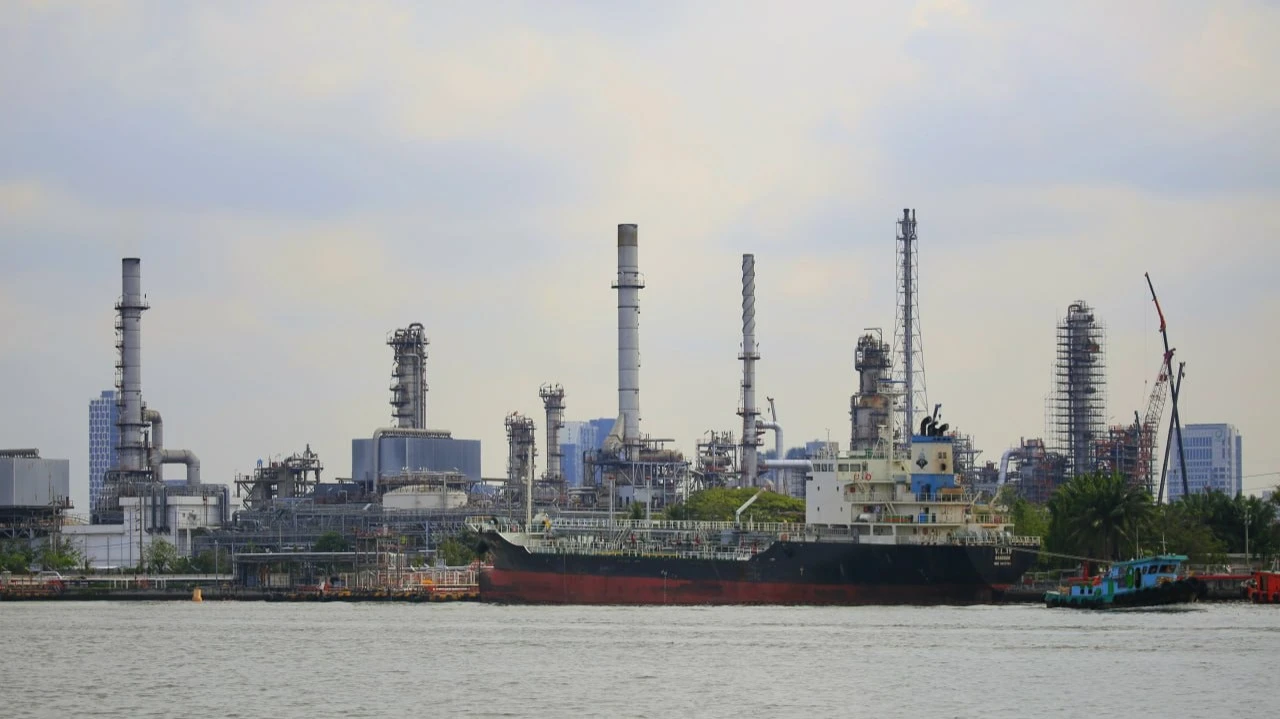
There is no immediate threat of an oil shortage in Europe, European Commission spokeswoman Anna-Kaisa Itkonen said / Photo: somkanae sawatdinak / Shutterstock.com
The largest oil exporter - Saudi Arabia - is cutting production following the UAE and Kuwait, Bloomberg sources report. The reason is the same: full storage facilities due to the actual blockage of the Strait of Hormuz. By mid-day on March 9, the Brent price had consolidated above $100 a barrel, having fallen from a peak of $120. The risks of a physical oil shortage are somewhat exaggerated, Dmitry Nekrasov, director of the CASE (Center for Analysis and Strategies in Europe) analytical center, wrote in his Telegram channel.
How the war over Iran could affect the physical supply of oil
I will present some thoughts on the impact of the war in Iran on the physical supply of oil on the world market. I emphasize: we are talking about physical volumes only!!! No one knows what will happen to prices. I will not touch on LPG yet, it is a big separate topic.
There are two mechanics of the war's impact on world oil supply. The first is related to the very likely destruction of Iran's own oil production infrastructure and its complete or partial withdrawal from the oil market for a period of several months to many years. The second is the temporary closure of the Strait of Hormuz and the temporary cessation of exports of third-country oil that cannot be shipped to the world market except through the Strait, but whose exports will largely recover once the Strait is reopened.
1. Iran exports oil in the range of 1.5-1.7 million barrels per day (mbd) in 2025. It produced more, but domestic consumption there is also considerable. At the same time, in 2025, the world market has a marked excess of oil production over consumption. Some talk about 1 mbd, others barely more than 2 mbd. The reality is more in the range of 1.1-1.4 mbd of excess oil, but it is not exact.
Under these conditions, the disappearance of Iran alone from the oil market cannot cause any global market imbalance. The overhang of supply over demand, which was purchased into Chinese reserves throughout 2025, will disappear. There may be a slight deficit of 0.2-0.4 mbd, which corresponds to the values observed in 2023-2024, and it will be quickly leveled under the influence of market incentives.
2. On the question of the short-term effects of war, one must compare the world's existing reserves of already produced marketable oil, held in strategic and commercial reserves, with the gulf's temporarily depleted volumes. World reserves today are 6-8 billion barrels, as one counts. Last year alone, those reserves grew by 400 million barrels or even 700 million barrels.
If the war ended today, the loss of world oil production outside Iran would hardly be much different from zero.
So far, production has largely continued, with oil accumulating in the Gulf's storage facilities. If normal shipping resumed, the resulting surpluses and tanker jams would dissipate in a few weeks without serious loss of annual production. If the war lasts much longer the situation will change markedly. All available storage and alternative export routes will be full, and production will have to be cut by ~5 mbd, which is simply physically impossible to export except through the strait. All right, let it be 8 mbd.
Even with these assumptions, no more than 150-250 million barrels per month would fall out. That is, just to burn the additional oil reserves created in 2025 would require 2-4 months of a complete blockade of the Strait of Hormuz.
How long will the world's reserves last
However, such reasoning would be justified if we had not observed numerous rapid adaptations of Russian, Iranian and Venezuelan oil exports to the changing situation in recent years. Even in the last week of the most acute phase of hostilities, some tankers continued to pass the Strait of Hormuz. It is difficult to say how many of them - it is difficult to say, they turn off their transponders, but we are talking about plus or minus 10 tankers a day against 110-130 usually. And I do not understand why this figure will not increase in the near future.
The operating cost of producing a barrel in the Gulf is very low, even below $1 a barrel in places. Let it be $5 with a large margin. This means that when the Gulf storage facilities are full of oil and tankers are in short supply, it will be theoretically profitable for producers to sell oil at the port of shipment at any price >$5 per barrel. In other words, at an oil price of $110, a tanker that continues to sail through the Strait of Hormuz in an efficient market could theoretically earn $100 per barrel transported.
The cost of a new modern tanker fresh from the shipyard is $60-$120 per barrel of tonnage. Older tankers may cost $20 per barrel of tonnage. I.e. once sailed through the strait - bought one new tanker or 5 old ones. The real risk of being hit is low, mostly cheap old ships will sail. There are a lot of empty tankers on the roadstead outside the gulf. You don't need to take oil far away, you bought it in the gulf for 10 and sold it on the roadstead for 100. Made $90 million profit on the tanker in a week tops. Sailed for the next one.
It is very hard for me to imagine a situation in which the war lasts for several months, oil prices are over $100, and no one sails through the Strait of Hormuz. It's just economically impossible. I used to be very skeptical of Iran's threats to close the Strait, but today the limitations of such threats are obvious.
I will conclude where I started. Oil prices are unpredictable and at the moment depend more on the psychology of speculators than on the ratio of supply and demand for physical oil. However, if we do not guess about prices, but simply assess the probability of a real physical shortage of oil on the world market, then in the foreseeable horizon such a shortage is not seen even in theory.
This article was AI-translated and verified by a human editor