J.P. Morgan named the companies that will benefit from the World Cup-2026. What are the risks for investors?

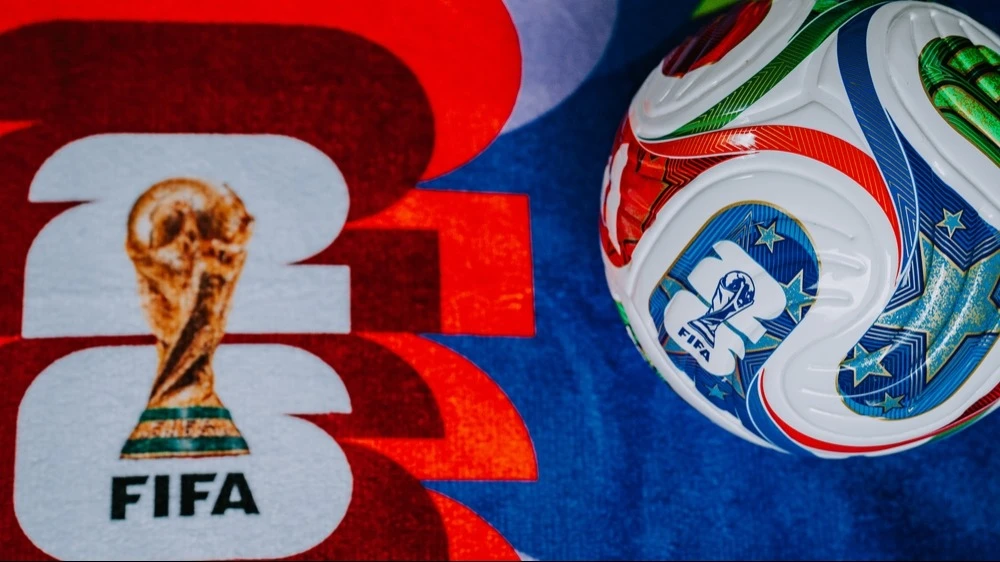
J.P. Morgan named the beneficiary stocks of the World Cup-2026 / Photo: kovop / Shutterstock
The 2026 FIFA World Cup could be a major source of revenue for ticket resellers, travel services and a number of technology companies from the so-called Magnificent Seven. However, these valuations depend on fans being able to travel freely and the tournament being able to take place without political and regulatory crises, Barron's writes.
Details
J.P. Morgan analysts named several potential beneficiaries of the World Cup-2026 - from ticket resale service StubHub Holdings and cab ordering and delivery service Uber, to the owner of Facebook and Instagram Meta Platforms and Google's parent company Alphabet.
- In particular, despite competition from the official FIFA ticket resale marketplace, the StubHub platform can take 35-45% of this market, J.P. Morgan analysts estimate. This corresponds to $400-800 million in gross sales.
This potential is due to a massive supply-demand imbalance: FIFA has received more than 500 million ticket applications against an available 7 million, which J.P. Morgan estimates could result in a resale turnover of $1-1.8 billion.
- The travel and accommodation segment will benefit from Airbnb, which will attract fans traveling between the countries and cities of the tournament. Airbnb acts as a sort of "release valve" for travel demand because of its wide geographic reach and flexibility for short-term rentals, J.P. Morgan analysts said. The company last summer announced an official accommodation partnership with FIFA and said more than 380,000 guests will use the platform during the World Cup.
- Transportation of spectators to and from matches will be provided by ride services Uber and Lyft, Barron's writes. Analysts expect them to receive an additional $377 million and $153 million in gross bookings, respectively. Uber, as well as official World Cup food delivery partner DoorDash, could benefit from increased demand for delivery during the tournament.
- Advertising Market. In 2026, digital advertising revenue is estimated at $5.2 billion, the publication notes. J.P. Morgan estimates that such advertising spending could bring about $900 million in revenue to Google through search advertising and YouTube, as well as about $550 million in additional revenue to Meta.
What could possibly go wrong?
J.P. Morgan analysts' estimates are based on the assumption that fans will be able to travel freely to matches and that participating countries will view the 2026 World Cup in the same way as previous tournaments. That assumption may be in question, Barron's notes.
- Among the risks, the publication calls high ticket prices. Thus, some fans have already reacted negatively to the high starting prices for tickets, which reached several thousand dollars. FIFA President Gianni Infantino defended such prices, referring to the "crazy demand". However, fan discontent may make platforms like StubHub more cautious about reselling tickets at multiples of face value, Barron's notes.
- Political risks remain as well. The U.S. has imposed full or partial entry restrictions on at least four World Cup participants - Iran, Haiti, Senegal and Cote d'Ivoire. In addition, concerns about immigration control may deter some fans from traveling to the tournament, the publication points out.
The probability of real match cancelations or mass boycotts remains low, nevertheless, one cannot completely rule out protests, geopolitical disputes and a certain impact on demand, Barron's writes.
Context
The tournament will be held from June 11 to July 19 in the United States, Canada and Mexico: 48 national teams will play 104 matches. It is expected that billions of fans will follow the championship, and some of them will go to North America, which is already attracting the attention of investors, the bank's analysts wrote.
This article was AI-translated and verified by a human editor