Letter to an investor in 2026: don't expect good news
In which regions of the world should investors look out for flocks of "black" and "gray" swans?

The year 2026 is shaping up not as a year of "one big war" but as a year of many unfinished conflicts - trade, military, hybrid - that affect the entire world in different ways. For the investor, this is not one "black swan" but a powerful flock of "gray swans": each is individually manageable, but collectively they raise the level of uncertainty. Here are five conflict hotspots that point to possible sources of risk.
US-China: from "trade wars are good" to chronic confrontation
The U.S.-China trade standoff actually began back in 2018 when Donald Trump's administration imposed 25 percent tariffs on steel, aluminum and then the rest of Chinese imports. Trump then defiantly declared that "trade wars are good and easy to win." This phrase came to symbolize the U.S. reversal toward more protectionism.
China responded with mirror measures: duties on U.S. agricultural products and industrial exports. But in the end, the United States and China signed an agreement on the first phase of trade dispute settlement.
But key U.S. duties on Chinese goods remained in place, and the subsequent administration of President Joe Biden, while declaring a return to an "allied" foreign policy, did not abolish them either. China has remained in the category of a strategic rival with whom there will be no "reset," and trade and technology are henceforth instruments of deterrence.
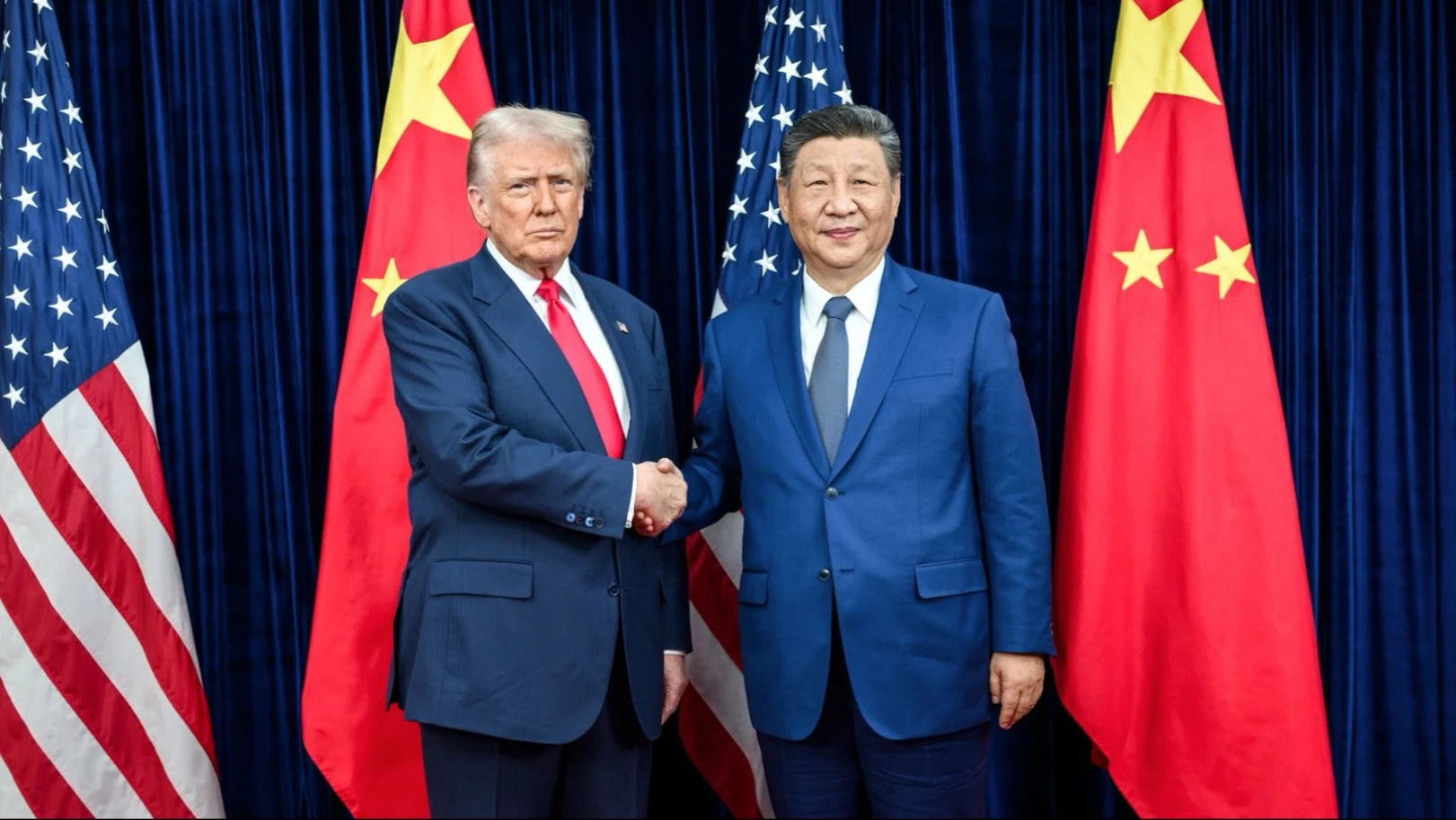
By 2026, for all the tough rhetoric, the two leaders are forced to emphasize the need for dialogue.
The U.S. President said he would allow Nvidia's H200 chips to be exported to China to "verified customers". And China earlier suspended restrictions on rare-earth metal exports for a year, until November 2026.
Investors should remember that in 2026 the dialog between these countries will remain, but it will be fragile. Any new "flashpoint": a high-profile announcement, an investigation against a major Chinese or U.S. company, or another export control measure from Washington or Beijing - all of this instantly affects the valuations of companies tied to the Chinese and U.S. markets and global supply chains.
Which sectors are affected: AI, chip manufacturing, agriculture and engineering.
Russia-Ukraine: a war of attrition
Despite the fact that the war is in its fourth year, neither Moscow nor Kiev are ready to change their long-standing positions.
Back in 2013, Russian President Vladimir Putin published an essay "On the Historical Unity of Russians and Ukrainians," where he claimed that Russians and Ukrainians are "one people - one whole," thereby effectively calling into question the independence of Ukrainian statehood. This ideological justification became the backdrop for the subsequent attempt to revise the borders by force. And demands to change the leadership of Ukraine.
Ukrainian leader Vladimir Zelensky continues the line that his country is an outpost that "defends itself and Europe" by demanding long-term military and financial support from allies in the EU and the United States. In recent comments, he has directly expressed doubts about Moscow's peace initiatives, emphasizing that Russia is "looking for new reasons to drag out the war."
By the end of 2025, the war has acquired the character of a "war of attrition" confrontation. For Eastern Europe and the EU, this means a reallocation of budgets in favor of defense and support for Ukraine, as well as an increase in military expenditures in the structure of the state budget. Europe continues to expand its sanctions regime. By November 1, 2027, the EU will completely refuse Russian gas supplies (both pipeline and liquefied).
For business, all this comes at the cost of a tougher tax and regulatory agenda. The EU is increasingly saying explicitly that "the private sector should contribute" to the growth of defense budgets - through special levies and taxes on excess profits. Latvian MP Andris Šuvaevs, describing how the country is on track to reach defense spending of about 3.5% of GDP, writes that this was made possible by a windfall tax on the financial sector, which allowed for a simultaneous increase in military spending and support for households.
The risk to the investor in 2026 is not only the ongoing war per se, but also the possible gradual tightening of European fiscal policy, deteriorating capital conditions and increased regulatory uncertainty.
A separate, so far rhetorical risk is a possible direct conflict between Moscow and NATO member states. In December, Vladimir Putin explicitly warned that he was ready for such a turn of events: "Russia is not going to go to war with European countries, but if Europe starts a war - Russia is ready right now." EU leaders have so far assumed that the risks of a direct military clash are on the horizon of 2027-2028.
Which sectors are affected: oil and gas, agriculture and engineering, finance and banks.
US-Venezuela-Brazil: sanctions, oil and political bargaining
The current configuration of the US-Venezuela-Brazil triangle grew out of a series of sanctions and Washington's attempts to use access to its market, financial system and technology as leverage over various Latin American countries.
Venezuela was under US sanctions under the previous president Hugo Chavez, who ruled the country until 2013. But a particularly tough "pressure regime" on the part of the United States took shape in 2017-2019, when restrictions hit the oil sector and state-owned PDVSA. In October 2023, the Joe Biden administration tried to move to a more flexible tactic by partially easing oil sanctions: the Venezuelan authorities led by Nicolas Maduro agreed with the opposition to hold presidential elections in 2024. The opposition could choose its candidates, except for the main rivals of the incumbent authorities. The easing of the U.S. sanctions regime was then the biggest rollback of Trump-era restrictions.
But in 2024, the U.S. tightened the terms again, accusing Caracas of violating these agreements - the U.S. limited the validity of licenses to work with oil and left the companies only 45 days to curtail some of the operations in Venezuela.
In 2025, Trump began launching military strikes against drug cartel ships, mostly from Venezuela. In response, Nicolas Maduro chose the rhetoric of a victim seeking help from oil-producing countries. In a letter to OPEC countries in December, he asked the cartel to help Venezuela "confront the growing and illegal threats" from the U.S. and accused Washington of trying to "seize" Venezuela's oil reserves.
Brazil has so far successfully fought Trump's vision of its role in protecting the U.S. market. A major supplier of agro-products and raw materials, the country has been in constant negotiations with Washington over U.S. market access, standards and tariffs. After waves of duties and investigations by Washington - from Trump's announced plans in 2019 to reinstate tariffs on steel and aluminum from Brazil to the imposition of a 40% surcharge on a range of Brazilian products and components in July 2025, followed by partial elimination in November 2025 - it is its soy, meat and coffee exports that have been the subject of bargaining for tariff relief and quotas.
For the investor in 2026, this means chronic high risk performance in oil and agricultural markets. Political signals - White House statements, Maduro's speeches, OPEC+ decisions and the diversion of various products from Brazil to new markets - can have as much effect on prices as classic supply and demand or crop failures. Any assets tied to Venezuelan oil, Caribbean logistics or Brazilian agro-exports carry political risks.
Which sectors are affected: oil, agriculture, maritime transportation.
China-Taiwan: the risk of blocked straits and chip shortages
The conflict over Taiwan has a history of nearly eighty years. After the Chinese Civil War in 1949, the Communists took control of the mainland and the Nationalist Kuomintang government retreated to the island. Since then, Beijing considers Taiwan part of China and has declared the goal of "reunification" without ruling out the use of force, while the island democracy itself has been developing its own political and economic identity. For a long time, the two sides managed to avoid direct confrontation. The situation changed after Tsai Ing-wen came to power in Taiwan in 2016 - the president refused to reaffirm the "One China" formula and took a de facto course on strengthening independence, which caused sharp irritation to Beijing. Since then, the PRC's military exercises around the island, aircraft flights into Taiwan's "air defense zone" and maneuvers in the South China Sea have become more frequent.
The United States is considered the formal guarantor of the island's independence. At the same time, Washington does not have a classic mutual defense treaty with Taiwan, like, say, with Japan, or treaty relations in the NATO format. The U.S.-Taiwan defense treaty was torn up in 1979. In its place today is the Taiwan Relations Act, which enshrines more "fuzzy" guarantees. This document states that Washington will "provide Taiwan with defensive arms and services to the extent necessary to maintain an adequate self-defense capability" and "maintain the ability of the United States to resist any use of force or other forms of coercion that could jeopardize the security or social and economic order of the people of Taiwan."
In 2026, the risk of a PRC military operation against Taiwan remains. Any serious escalation around the island automatically turns into a blow to global supply chains. Key container shipping routes pass through the region, and the island itself is one of the world's centers of chip production. A military blockade, a major exercise or an incident involving the US and Chinese fleets instantly affects insurance, freight, electronics, automobile and equipment supplies. For an investor, the risk is not even in the high probability of a "big war" (it remains more of a hypothetical scenario), but in the constant possibility of a logistical shock.
Which sectors are affected: chip manufacturing, containerized maritime transportation.
Hybrid threat
It cannot be ruled out that with all the risks of the already described conflicts, hybrid conflicts will have a much greater impact on quotations and commodity prices. Drone attacks, cyber operations, interference with navigation, and strikes on individual infrastructure facilities create "subtle noise" that has to be factored into business models.
Since late 2023, attacks by Yemeni Houthis in the Bab el-Mandeb Strait and the Red Sea have led major container lines to massively bypass the Suez Canal, sending ships around the Cape of Good Hope. This increased delivery times and sharply raised freight costs: according to estimates by international organizations, in container logistics alone, average spot rates at the peak were growing by more than 100-130% compared to pre-crisis levels.
In parallel, the number of GPS signal interference is increasing in Europe, especially in the Baltic region. According to estimates of European regulators, in the first months of 2025 alone, interference with satellite navigation has become not "isolated incidents" but a systemic factor: a joint analysis for ICAO states that from January to April, almost 123,000 flights of 365 airlines in European airspace experienced GNSS malfunctions (loss of GPS, false signals, the need to change routes and approach procedures).
Instability in the Black Sea, Ukrainian attacks on tankers, grain carriers and rising insurance rates in the region also remain on the list of risks: insurance for ships calling at Russian ports rose in the week to early December alone from 0.6% to 0.65-0.8% of the ship's value, Reuters reported.
A new reality has emerged in which "peaceful merchant ship" status no longer guarantees security for shippers and receivers.
For the investor, this means that even without a formal declaration of war, civil aviation, maritime, logistics, insurance, and energy sectors are being targeted by hybridization. Transaction costs increase, hidden insurance costs rise, and the value of diversifying routes and duplicating critical infrastructure increases.
Which sectors are affected: oil, agriculture, ocean freight, air transportation, communication services.
What is an investor to do with this set of conflicts
All the described conflicts form a connected network rather than a set of independent risks. Trade restrictions cause a redistribution of supply chains, which increases the burden on logistics. Hybrid attacks hit these logistics. Military conflicts (or the threat of them) force states to reallocate budgets and tighten fiscal policy.
The important thing for investors in 2026 is not so much to "guess" which conflict will escalate, but to build into their decisions the fact that escalation is the norm, not the exception. Diversification across jurisdictions and currencies, verifying the real geography of supply chains, scenario analysis of political shocks and the ability to quickly rebuild a portfolio are becoming more important than trying to find the "perfectly safe" asset.
Asset values are now increasingly determined not only by central bank rates and corporate reporting, but also by exactly what countries' leaders say and do in their long-standing and new conflicts.
This article was AI-translated and verified by a human editor