Lyft plunges 17% on disappointing 1Q EBITDA forecast, unexpected 4Q revenue miss

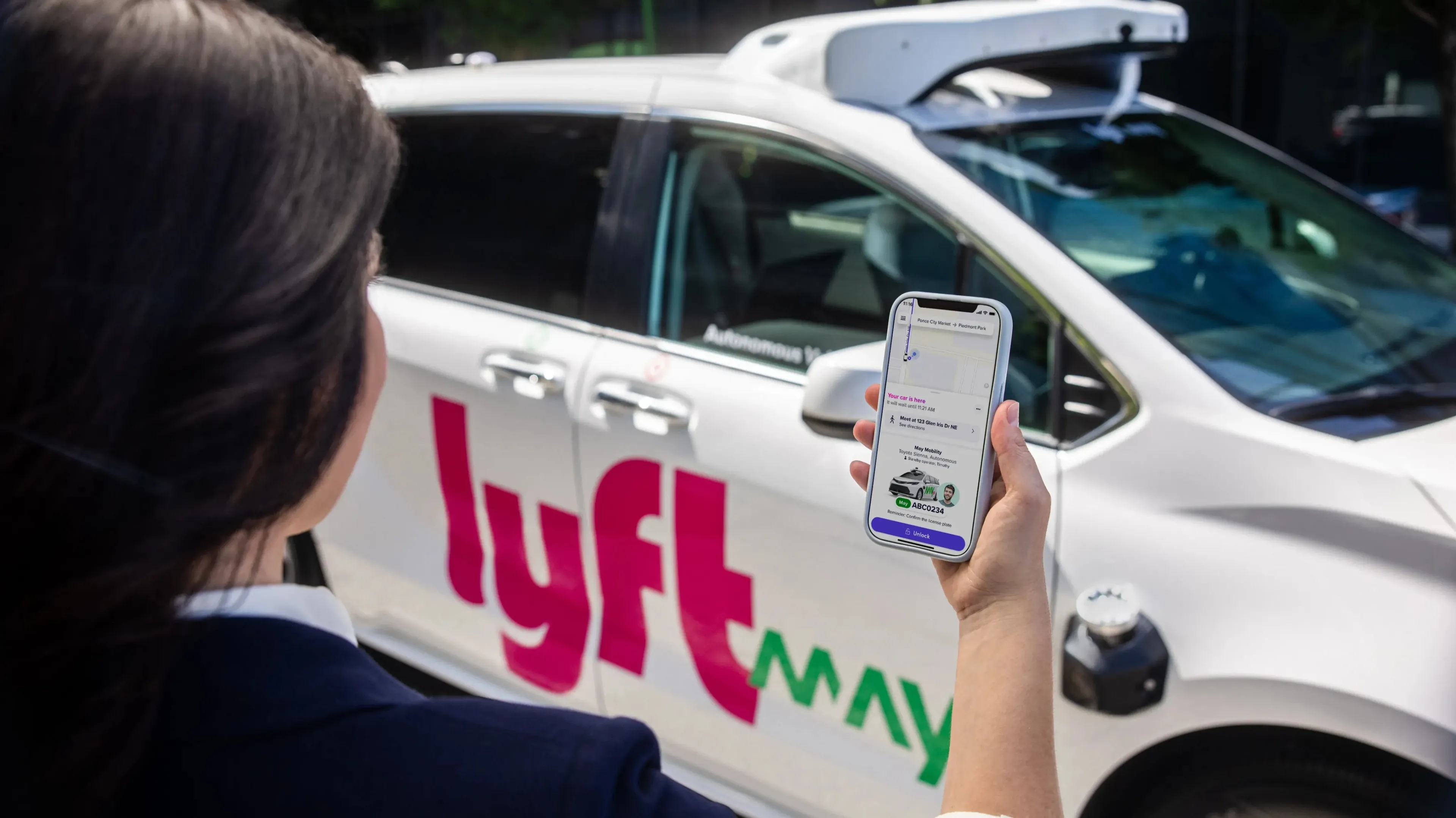
Lyft shares fell after a disappointing first-quarter forecast that missed Wall Street expectations / Photo: Lyft
Shares of cab service Lyft have sunk more than 17% in premarket trading on Wednesday, February 11, after the company released mixed fourth-quarter results and issued a weak outlook for the first quarter. The forecast pointed to a slowdown in Lyft’s post-pandemic recovery and outweighed the positive effect of a new $1 billion share buyback, Reuters reports. The company is pinning its hopes for future growth on the rollout of autonomous vehicles, yet Wall Street is not convinced.
Details
Lyft shares are off 17.2% at $13.95 per share in early trading on Wednesday following the earnings release. Fourth-quarter revenue rose 3% year over year to $1.60 billion, versus Wall Street expectations of $1.76 billion, Bloomberg reported.
Net income surged to $2.8 billion from $61.7 million a year earlier, largely thanks to benefit from the release of Lyft’s valuation allowance of U.S. federal and certain state deferred tax assets, the Wall Street Journal writes, citing the company. At the same time, operating losses widened 58% to $188.4 million.
Lyft guided first-quarter adjusted EBITDA at $120-140 million – below both the prior quarter and the Wall Street consensus of $140.5 million. The forecast signals a moderation in the company’s recovery trajectory after the pandemic shock, Reuters writes.
The softer outlook overshadowed solid demand trends in the holiday period. Fourth-quarter gross bookings increased 19% year over year to $5.1 billion, ahead of analyst expectations of $5.06 billion and marking the strongest growth since early 2024, Bloomberg reported.
A newly authorized $1 billion share buyback program also failed to support the stock.
Outlook
Despite the weak guidance and falling stock price, the management struck an optimistic tone. "2025 was an incredible year in Lyft’s comeback story. Through customer obsession, we’re transforming from your local, 'out-to-dinner' rideshare app to a global, hybrid transportation platform," CEO David Risher said in the earnings release. "As we look ahead, we are entering a transformational phase for Lyft – 2026 will be the year of the AV with deployments in the U.S. and overseas."
In September, Lyft and May Mobility launched hybrid autonomous rides in Atlanta. The company plans to introduce a similar service in Dallas in 2026 with Japan’s Marubeni. Vehicles are expected to use Mobileye Drive technology developed by an Intel subsidiary.
“Now AVs are not going to be material in 2026, you know, from a financial perspective, but if you look at the long-term growth of rideshare, again, you remember that 5% penetrated compared to 300 AVs are going to expand the TAM of rideshare,” Risher said on the earnings call, adding that Lyft is positioning itself "in the center of the trillion-dollar autonomous vehicle revolution."
TD Cowen analyst John Blackledge previously wrote that investors may be underestimating the long-term upside from autonomous taxis.
Stock performance
Year to date, Lyft shares are down 13%. By comparison, Uber shares have declined about 10% over the same period. “Uber, Lyft's main competitor, is growing earnings much faster than Lyft. Uber's EPS growth is 20% while Lyft's is only 13.7%,” Andrew Rocco, stock strategist at Zacks Investment Research, was quoted by Reuters as saying.
Wall Street sentiment remains cautious: Lyft has 32 “hold” ratings versus 15 “buy” and two “sell” calls. Uber, by contrast, has 50 “buy” versus nine “hold” recommendations, according to MarketWatch data.
Wedbush analyst Scott Devitt downgraded Lyft in December, citing weaker investor confidence in the company’s ability to meet long-term targets. He also warned that autonomous-vehicle operators may be less inclined to partner with ride-hailing platforms as their own networks are rolled out.