Lyft stock collapses 17% after report. Why does management remain optimistic?

Lyft quotes fell after a mixed report / Photo: Lyft
Shares of cab service Lyft collapsed by more than 17% on the premarket on February 11. The company released mixed quarterly results and shared a weak outlook for the first quarter. The forecast showed a slowdown in Lyft's post-pandemic business recovery, which overshadowed the positive effect of a new $1 billion share buyback, Reuters writes. The company pins its hopes for future growth on the introduction of unmanned vehicles. Wall Street isn't so sure about that.
Details
Lyft shares fell 17.2% to $13.95 in extended trading on Feb. 11. This occurred after the publication of financial statements. Lyft's revenue in the fourth quarter of 2025 rose 3% to $1.6 billion. Wall Street was expecting this figure to be $1.76 billion, writes Bloomberg.
The service's net profit for the same period soared 45.4 times to $2.8 billion. But the main reason for this is the withdrawal of a significant part of provisions for asset impairment, the WSJ points out. Losses from operating activities grew by 58% to $188.4 million.
The company also shared its outlook for the first quarter of 2026, projecting Adjusted EBITDA to be in the range of $120-140 million, down from the previous quarter and below Wall Street's expectation of $140.5 million. The outlook indicates a slowdown in the company's recovery, according to Reuters. It has been pursuing a recovery strategy since it was hit hard by the coronavirus pandemic.
The subdued forecasts overshadowed the stronger performance of orders in the holiday period, Bloomberg points out. In the fourth quarter, they rose by 19% to $5.1 billion, beating analysts' expectations of $5.06 billion. The agency calls the dynamics the highest since the beginning of 2024.
At the same time Lyft announced a $1 billion share buyback, but it also failed to support the quotes.
What's next
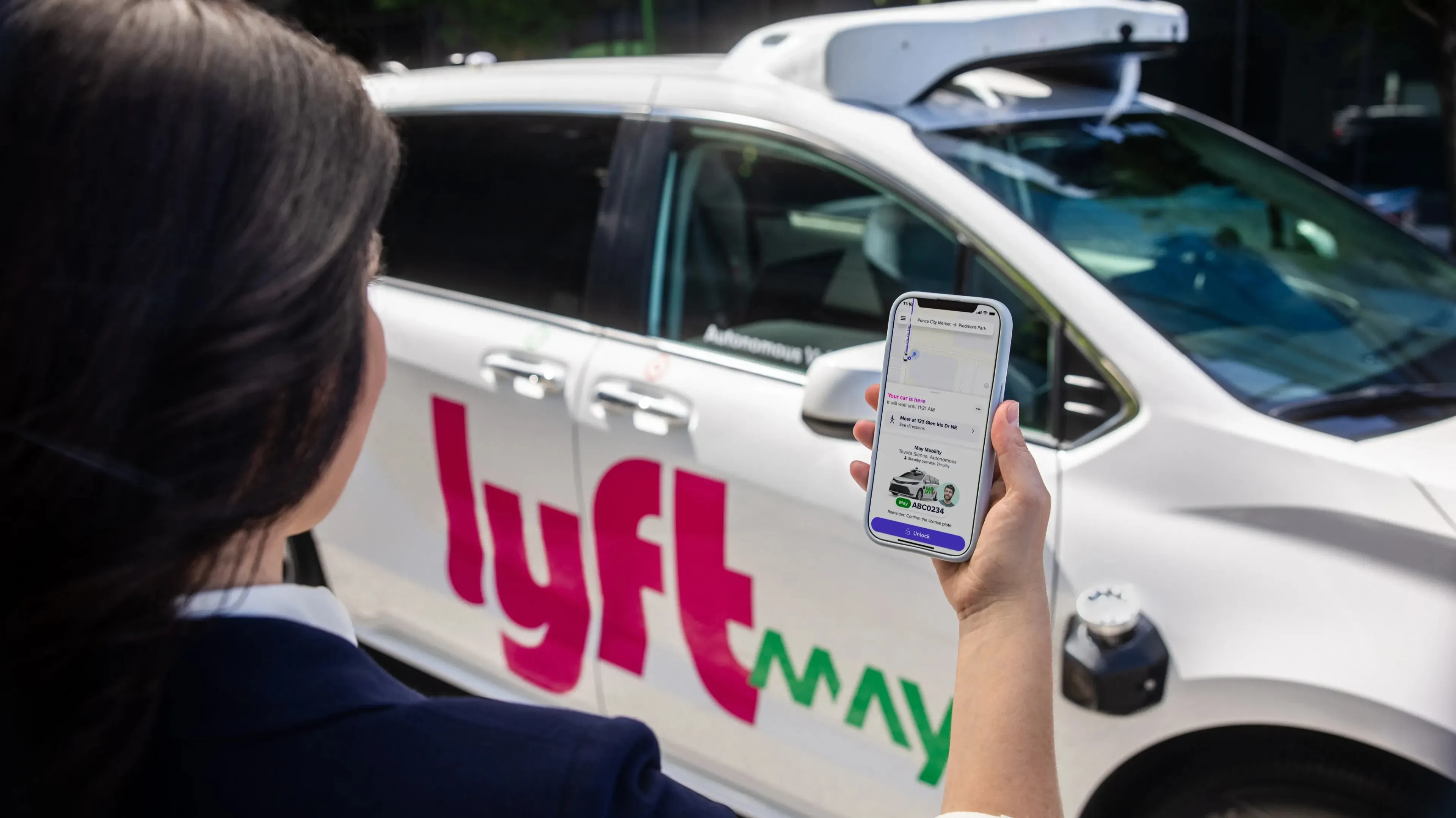
Despite the weak outlook and falling stock prices, Lyft management is optimistic about the future. The company is working to transform itself from a local app for ordering rides "from restaurant to home" to a global hybrid transportation platform, said CEO David Richert, who is quoted in the press release. He attributes the service's prospects to the introduction of unmanned vehicles in the U.S. and Europe. In September 2025 Lyft together with the developer of such transportation May Mobility launched trips on hybrid cars in Atlanta. Plans for 2026 include launching the service in Dallas with another partner, Japan's Marubeni. Robotaxis are planned to be equipped with Mobileye Drive technology from a subsidiary of technology giant Intel.
"From a financial perspective, unmanned cars won't play a significant role in 2026, but if you look at the long-term growth of ride-sharing services, [...] their penetration will expand the overall market size," Richert said on a conference call for investors and analysts. He believes Lyft has "taken center stage in the trillion-dollar revolution of unmanned vehicles."
Investors are underestimating the opportunity that unmanned cabs present to Lyft, TD Cowen analyst John Blackledge wrote in 2025.
What about the stock
Since the beginning of the year, Lyft quotes have fallen by 13%. By comparison, shares of its competitor, Uber, have fallen 10% since the beginning of the year. "Uber, Lyft's main competitor, is showing much faster earnings growth. Uber's earnings per share growth is 20%, while Lyft's is only 13.7%," said Andrew Rocco, an equity strategist at Zacks Investment Research (quoted by Reuters).
Wall Street is cautious about Lyft's prospects: its securities have 32 "hold" recommendations from analysts, 15 - "buy" and two - "sell". At the same time, Uber shares are advised to buy 50 Wall Street analysts, another nine - to hold.
Wedbush analyst Scott Devitt downgraded Lyft in December, saying that investors have somewhat lost confidence in the company's ability to achieve its long-term goals. He also noted that drone car operators may not want to partner with ride-ordering apps as more of their unmanned vehicles hit the streets.
