Main by morning: Trump wants to end Iran conflict by Ma, but oil rises

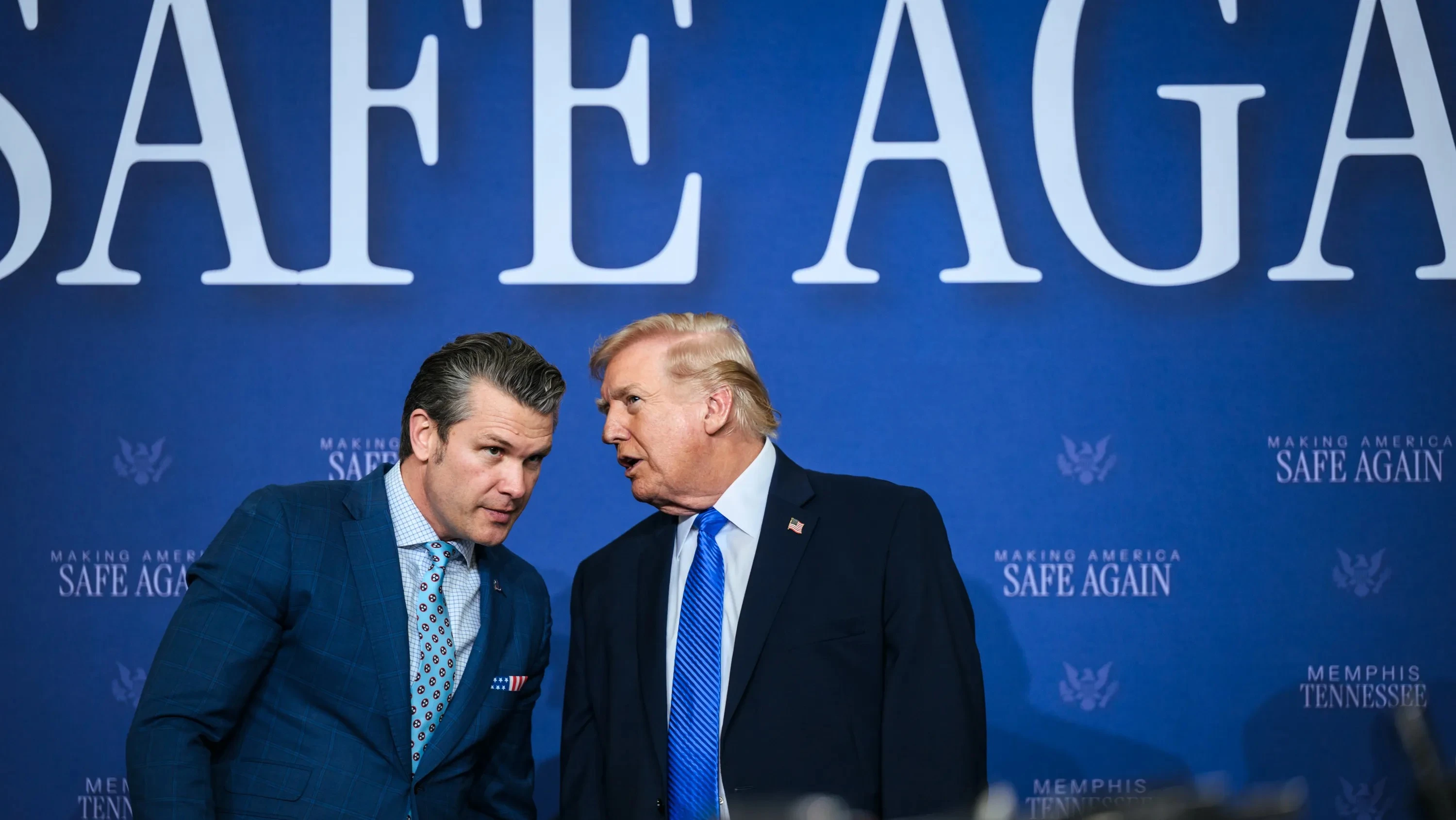
Donald Trump (right) with Secretary of War Pete Hegseth (left) / Photo: The White House
US President Donald Trump assures his entourage that he does not want a prolonged war with Iran. At the same time, Tehran rejects direct negotiations with the U.S., despite Trump's statements about a "deal," and is also preparing a law to introduce a fee of up to $2 million for ships passing through the Strait of Hormuz, which is already de facto levied on certain voyages. These and other topics are covered in our review of key events for the morning of March 26.
Trump believes war with Iran is nearing completion
Donald Trump has told his associates in recent days that he wants to avoid a protracted war with Iran and expects to end the conflict in the coming weeks, sources familiar with the situation told The Wall Street Journal. They said the US president believes that after nearly a month of fighting, the war is in its final stages.
Trump is calling for a publicly stated 4-6 week deadline and expects to end the conflict by mid-Ma. The White House is planning a summit with Chinese President Xi Jinping in Beijing on the assumption that the war will be over by then, the sources said.
Iran wants to impose a fee of up to $2 million for passage through the Strait of Hormuz
Iran is preparing a law to introduce a fee for safe passage of ships through the Strait of Hormuz, a key route for oil and gas, Bloomberg reports citing Iranian media. The fee could be as high as $2 million per voyage and would effectively legalize the practice already in place. The strait, through which much of the world's supplies go, has been effectively closed for about a month: only individual ships, often with Iranian or Chinese ties, pass through.
The initiative increases risks to global trade and puts shipping companies in a choice between security and sanctions, undermining the principle of freedom of navigation, the agency points out.
Oil rises above $104 amid Iran's refusal to negotiate with the US
Oil prices rose after Iran signaled its refusal of direct negotiations with the United States: Brent added about 2% and reached $104.2 per barrel, WTI - $92.2, writes CNBC. Tehran said that contacts through mediators do not mean negotiations, and put forward its own conditions for the end of the conflict, despite Donald Trump's statements about the ongoing dialog.
Against the backdrop of the energy shock, markets are laying down the risks of rising inflation, but analysts believe that the Fed will not be in a hurry to tighten monetary policy, the channel notes. The regulator is likely to maintain a wait-and-see stance and remain focused on a possible rate cut later in 2026 if inflation expectations remain under control.
Shares of memory makers plummet due to Google's new technology
Shares of memory and storage manufacturers fell after Alphabet researchers unveiled TurboQuant technology, which reduces memory consumption for AI models by six times and speeds up inference (output of AI answers) by eight times, Bloomberg writes. Against this background, the securities of SK Hynix, Kioxia, as well as Micron and Sandisk became cheaper.
However, analysts believe that this does not undermine long-term demand, as efficiency gains may, on the contrary, increase consumption. Strong deficit in the memory market and booming AI growth continue to support prices and demand, and the current market reaction rather looks like profit taking after a sharp rally, the agency notes.
Revolut is ramping up to 5,500 staff in India and moving up to 40% of the team there
European fintech Revolut plans to locate about 40% of its global workforce in India by the end of 2026, expanding its technology center, Reuters reports. The company will create 1,600 new jobs, bringing the number of employees in the country to 5,500 with a total workforce of about 12,000. Investment in the India operation will total 500 million pounds ($670 million) over five years, with new roles covering product development, payments and fraud.
The Indian hub already handles about a third of Revolut's operations, including transaction monitoring and AI solutions, which are then scaled to other markets. At the same time, the hub expansion is separate from the local business: the company is preparing to launch the product in India as early as next quarter, making the country a key element of its global strategy, the agency points out.
What's in the markets
- Japan's broad Topix index was down 0.6 percent, while the Nikkei 225 was down 0.7 percent.
- Hong Kong's Hang Seng index was down 2 percent, while mainland China's CSI 300 index was down 1.4 percent.
- In South Korea, the Kospi index was down 3.4 percent and the Kosdaq was down nearly 2 percent.
- Australia's S&P/ASX 200 was down 0.1 percent.
- S&P 500 futures were down 0.4 percent, Nasdaq 100 futures were down 0.4 percent and Dow Jones Industrial Average exchange-traded contracts were down 0.4 percent.
This article was AI-translated and verified by a human editor