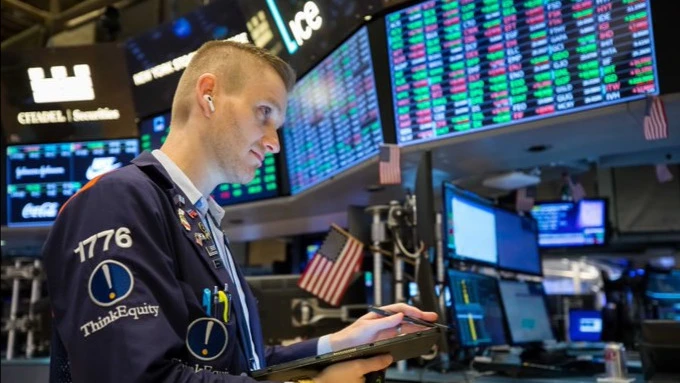
"Major buyers on the downturn" are buying stocks at a record pace. Why it matters.

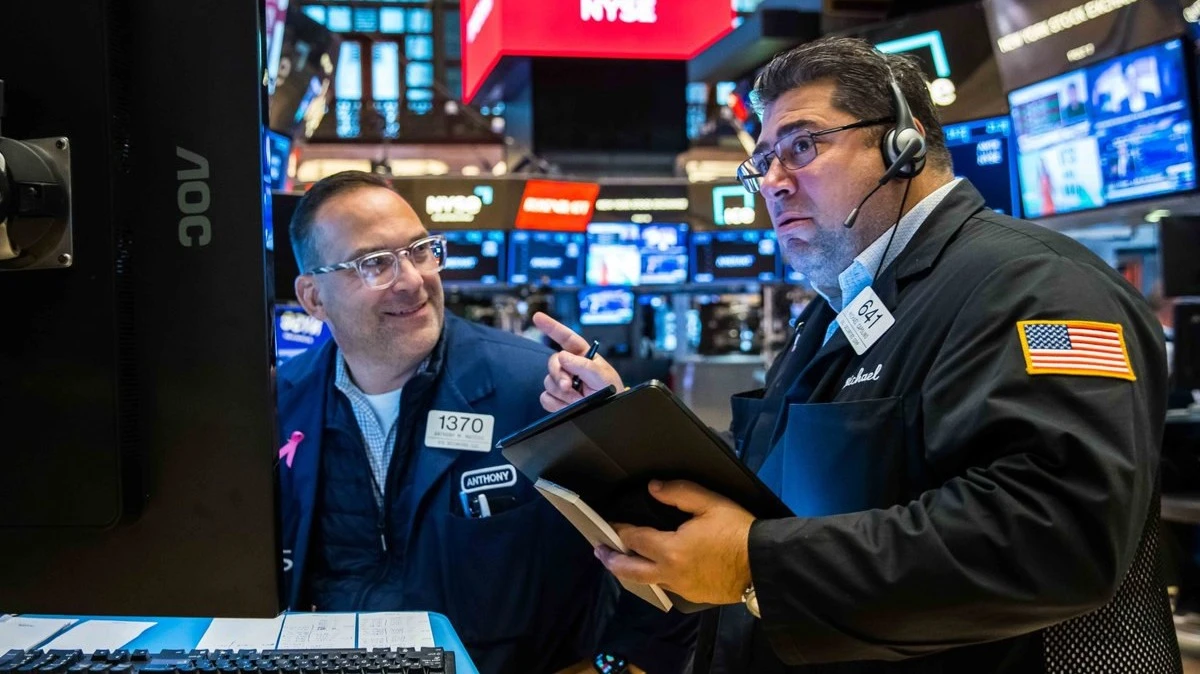
Cumulative stock buyback programs could reach a record $1.55 trillion by the end of the year, according to data compiled by Bloomberg / Photo: X.com/NYSE
U.S. companies have announced record spending on share buybacks this year. This may be a positive signal for investors amid geopolitical uncertainty and the onset of one of the historically best months for trading, Bloomberg writes.
Details
Companies in the S&P 500 index for the first four months of 2026 announced plans to buy back shares for $665 billion - a record for the beginning of the year, according to data from the analytical company Birinyi Associates. The last major company to approve a share buyback was Apple, which announced a $100 billion buyback on April 30.
By the end of the year, the total volume of buybacks could reach $1.55 trillion, surpassing last year's record, Bloomberg notes. "We often hear about investors buying shares of companies on a downturn, however, in the end, it is corporations that become the main buyers when stocks fall," said Jeff Rubin, president of Birinyi Associates.
As the first-quarter reporting season comes to an end, companies are getting out of the constraints of publishing results, Bloomberg notes. According to Goldman Sachs, the so-called window for buybacks has now opened at about 40% of companies. This period will last until June 12, analysts of the bank note.
Context
Buybacks have become the dominant source of demand for U.S. stocks since the 2008 financial crisis, Bloomberg writes. The buyback by companies of their securities reduces the number of shares outstanding, automatically increasing the return on each remaining one. Support from corporations is especially relevant now - after the April rally of the S&P 500 by 10%, the best since 2020, the market is entering a traditionally weak season: since 1928, May is the third worst month for the index, specifies Bloomberg. The market is also concerned about the uncertainty associated with Iran, Bloomberg writes.
Stock buybacks can partially mitigate the negative effect of the war with Iran on corporate earnings, Bloomberg quotes Andrew Greenbaum, senior vice president of equity capital management at Jefferies, as saying. The shift of buybacks toward cyclical sectors could also contribute to broader market growth outside the technology sector, he adds.
However, such a strategy of corporations is criticized by market analysts: opponents of buybacks consider them a cosmetic measure that does not create real value and masks the lack of ideas for investment, Bloomberg writes.
This article was AI-translated and verified by a human editor