Meme stock Hertz rallies almost 14% on robotaxi partnership with Uber

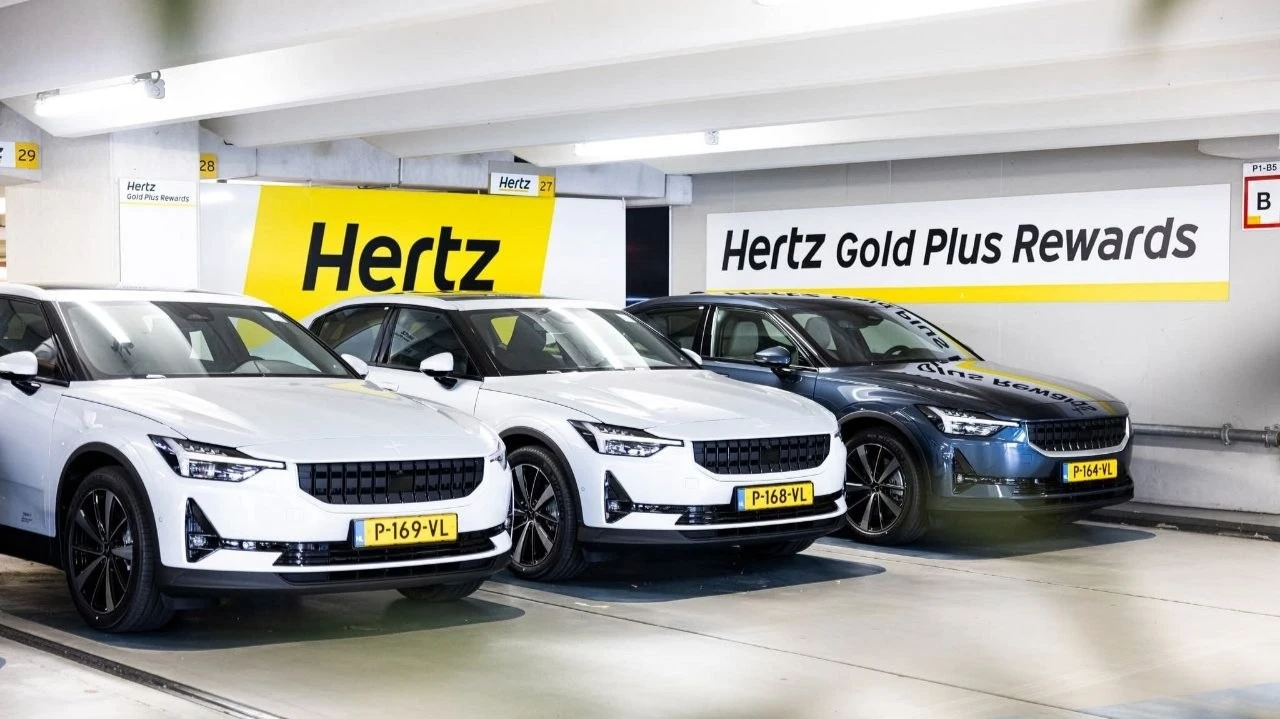
Hertz’s Oro Mobility will manage robotaxi vehicles for Uber in the San Francisco Bay Area and other regions / Photo: Facebook / Hertz
Shares of Hertz Global Holdings, one of the world’s largest car-rental companies, surged nearly 14% on Thursday after the "original meme stock" announced a robotaxi partnership with Uber Technologies.
Details
Hertz shares jumped nearly 14% on the Nasdaq on Thursday to $6.36 per share. The company announced two strategic partnerships between Uber and its newly established subsidiary Oro Mobility.
Under the first agreement, Oro will manage Uber’s robotaxi fleet, including charging, maintenance, repairs, and depot cleaning and staffing. Uber announced plans for the autonomous ride-hailing service in the summer of 2025. The fleet will consist of 20,000 Lucid Gravity SUVs equipped with fourth-generation autonomous driving systems from software developer Nuro, the company previously said. The service is expected to launch in the San Francisco Bay Area by the end of this year, according to Hertz’s press release.
Under the second agreement, Oro will manage a traditional vehicle fleet operating on Uber’s platform.
The partnership “establishes Oro as an integrated solution” in the sector, expands its capabilities, and positions Hertz “to play a significant role as the industry evolves,” Hertz CEO Gil West said in the press release.
About Hertz
Hertz Global Holdings is one of the world’s largest car-rental companies and also owns the Dollar, Thrifty, and Firefly brands. The company also operates the Hertz 24/7 car-sharing service in Europe, as well as the Hertz Car Sales used-car business in the U.S.
The Wall Street Journal has described Hertz as the "original meme stock." In 2020, Hertz shares surged after the car-rental company, which had been hit hard by the pandemic, filed for bankruptcy. Traders piled into the penny stock through the popular Robinhood app, sending the shares up 896%, according to Bloomberg. “Financial professionals reacted with a mix of confusion and scorn. Stockholders routinely get wiped out in bankruptcies, so who would put money into a stock like that?” the Wall Street Journal wrote.
The frenzy surrounding the shares prompted Hertz “to do something almost unheard-of for a company in bankruptcy: sell more shares of itself to the public” in an attempt to raise $1 billion, the newspaper recalled. Although the plan ultimately failed, the company managed to emerge from bankruptcy after a court in 2021 approved a deal transferring control of Hertz to institutional investors.
That same year, Hertz “made a big splash” by announcing plans to buy 100,000 EVs from Tesla, helping Elon Musk’s company reach a $1 trillion market capitalization for the first time and improving Hertz’s own image after the crisis, writes TechCrunch. The following year, Hertz announced plans to purchase up to 175,000 EVs from General Motors and another 65,000 from Polestar. But none of those agreements were fully realized, TechCrunch noted. The company ultimately lost $2.8 billion in 2024 as it sold used Teslas at steep discounts.
For the full-year 2025, Hertz reported revenue down just under 6% to $8.5 billion, while the net loss narrowed 3.8-fold to $747 million. The company said last year was pivotal for its transformation efforts: for example, it refreshed its fleet and began selling older vehicles through Hertz Car Sales.
What analysts say
Following the Uber-Hertz agreements, investment firm Northcoast upgraded the car-rental company’s rating from “sell” to “hold.” That suggests the worst-case scenario for Hertz’s business is now behind it, according to 24/7 Wall Street.
The partnership with Uber Technologies marks a structural shift in the company’s identity: from a car-rental operator to a provider of critical infrastructure for next-generation transportation, Barchart wrote. It believes fleet-management services could allow Hertz to generate high-margin recurring revenue while reducing its dependence on volatile car-rental demand, effectively tying its growth to the rapidly expanding ridesharing and autonomous-vehicle sectors.
Wall Street remains cautious overall on the stock's prospects: six analysts rate Hertz a “hold,” three “sell,” and only one “buy.” The average target price of $4.43 per share implies downside of about 30% versus the latest closing price.