Meta to lay off hundreds of employees in meta-universe direction - media
The cuts may be related to Meta's refocusing from virtual reality to artificial intelligence

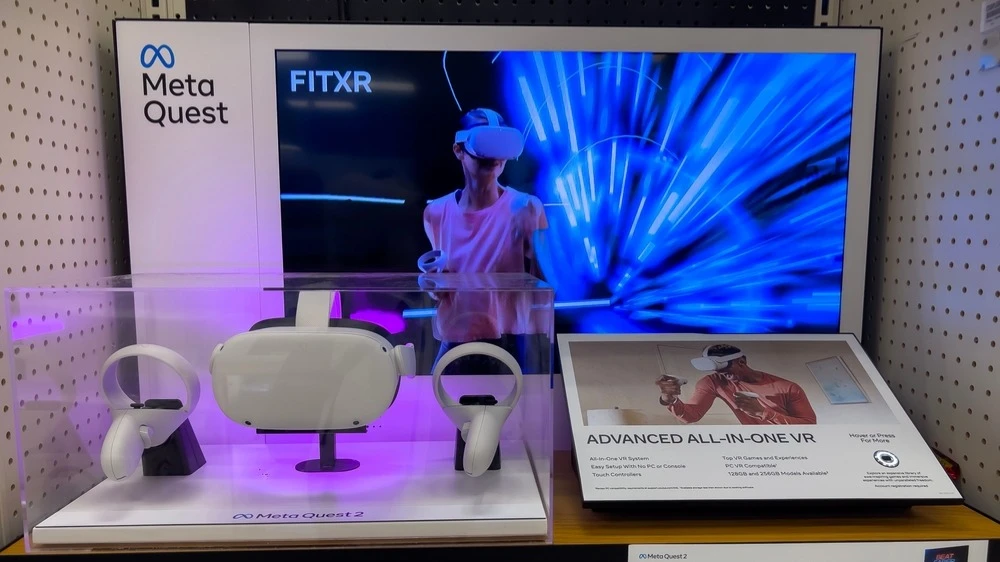
Demand for Meta VR headsets remains subdued / Photo: Shutterstock.com
The staff of the Reality Labs division of Meta Platforms will be reduced by about 10% in the near future, with layoffs affecting mainly employees involved in the development of meta-universe, The New York Times (NYT) reports, citing sources. The Verge attributes these cuts to Meta's reorientation from virtual reality to artificial intelligence.
Details
According to NYT interlocutors, Meta management may announce layoffs as early as January 13. Reality Labs employs about 15 thousand people. However, the cuts will disproportionately affect teams working on virtual reality (VR) headsets and a VR-based social network, the sources said. Meta CTO and Reality Labs head Andrew Bosworth has scheduled a meeting for Jan. 14 that he "strongly encouraged employees to attend in person," calling it the "most important" meeting of the year, according to a memo seen by the NYT.
The cuts will barely affect the augmented reality (AR) division, which develops glasses and bracelets for controlling interfaces, the newspaper's interlocutors said. This division is responsible for Ray-Ban smart glasses with a built-in AI assistant.
Context
The decision to make cuts at Meta comes amid a shift in the company's priorities toward building next-generation AI. Last year, Meta founder Mark Zuckerberg instructed the company's management to cut budgets for 2026, while increasing funding for AI research to compete with OpenAI and Google. In particular, the budget for the company's experimental division TBD Lab, aimed at building superintelligence, was expanded. Meta plans to invest hundreds of billions of dollars in AI, Reuters wrote, and is poaching top developers from competitors.
Meta wants to reallocate some of the funds allocated for virtual reality products to its wearable devices division, which develops smart glasses. The move effectively slows down the realization of the meta-universe concept that Zuckerberg has been pushing since buying startup Oculus in 2014, the NYT notes. Despite the multi-billion dollar investment, consumer demand for VR headsets remains subdued.
In December 2025, analysts of leading investment banks positively perceived the reports about Meta's plans to reduce costs for the development of the meta-universe. Experts from Citi, JPMorgan Chase, Wells Fargo and Bank of America then confirmed their recommendations to "buy" the company's securities with target prices from $800 to $1117 per share. Citi said that the reallocation of resources will support Meta's growth, JPMorgan welcomed the strengthening of financial discipline, and BofA pointed to cost flexibility to protect profits. Analysts of Rosenblatt were the most optimistic about Meta securities: they expect growth of quotations by 66% due to reduction of operating losses of Reality Labs.
What about the stock
Quotes of Meta Platforms in over-the-counter trading on January 13 rose by 0.2%, correcting after a slump of 1.7% at the end of the last session on January 12 on Nasdaq. A day earlier, Wells Fargo reaffirmed its Overweight rating ("above market", consistent with the recommendation to buy) for Meta shares, but lowered their target price from $802 to $795.
According to FactSet, over the past three months, the Meta bullish camp on Wall Street has grown - the number of "Buy" and "above market" recommendations increased from 61 to 65. The number of analysts with neutral rating (Hold) decreased from nine to six, and the only expert who advised to sell Meta securities (Sell) withdrew his recommendation. The average target price of $836 per share calculated by the service implies a 30% upside potential over the next year.
This article was AI-translated and verified by a human editor