Microsoft has released a new AI chip. It will help reduce dependence on Nvidia
Maia 200 is the highest performing chip among hyperscaler solutions, claims Microsoft

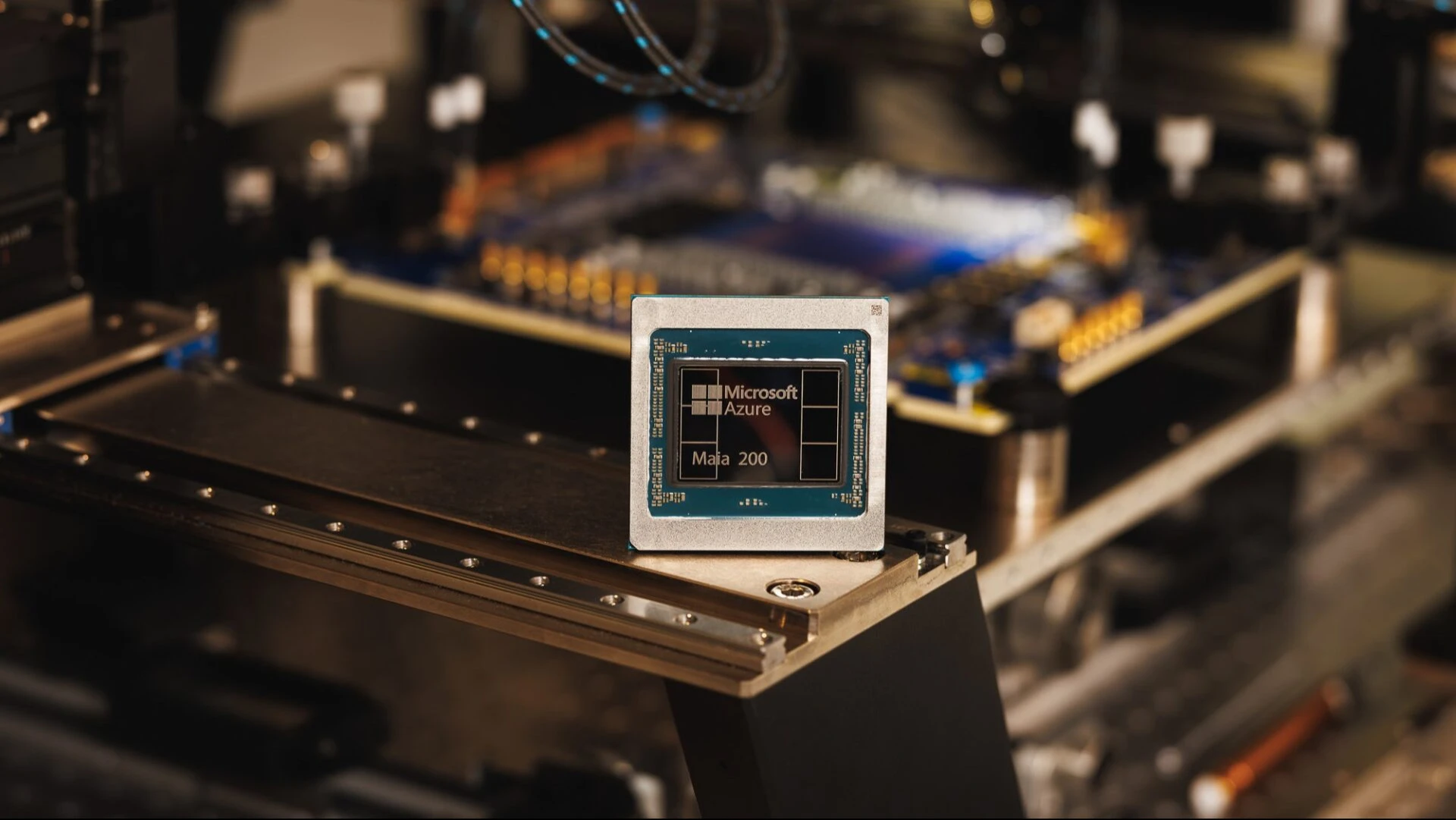
Microsoft's custom Maia 200 chips outperform similar solutions from Google and Amazon in a number of AI tasks, the company claims / Photo: Microsoft
IT giant Microsoft has unveiled the second generation of its own Maia 200 artificial intelligence chip. This is a key element in the company's strategy to reduce costs for AI services and create an alternative to Nvidia solutions, Bloomberg notes.
Details
The Maia 200 processor is the "highest-performing proprietary processor" among all solutions from hyperscalers that own the largest cloud capacity, Scott Guthrie, the company's executive vice president of cloud and AI, said in a blog post on Microsoft's website. He said the processor performs better (sometimes by a factor of two) in some metrics compared to Amazon's third-generation Trainium and Google's seventh-generation TPU chips.
"The Maia 200 is also the most power-efficient system for inferencing (outputting data in response to a user request." - Oninvest) that Microsoft has ever deployed," Guthrie noted. The goal of the new processor is to "significantly improve the economics of AI token generation," he said in a statement.
Maia 200 processors are made by the world leader in this field - Taiwan's TSMC. On Monday, January 26, Microsoft invited developers to try out software to control the new chip, but it is not clear when its customers will be able to use servers based on the new processor, Bloomberg noted.
Investors took the news of Microsoft's new AI chips positively: the company's shares rose by 1.8% during trading on Monday, while Nvidia's securities fell by 0.9%.
What does that mean
Microsoft started developing its own chips much later than Amazon and Google, which have been building their own processors for several years, Bloomberg writes. The goal is similar for all of them: to create cost-effective computing solutions that can be seamlessly deployed in data centers and offer better value propositions to cloud customers. High infrastructure costs and a shortage of Nvidia's flagship chips have only intensified the race for alternative power sources, the agency explains.
The growing energy needs of data centers and the lack of new energy sources in many parts of the world makes efficiency-focused projects like Maia more important, said Gartner analyst Chirag Dekate in a Bloomberg statement. "You don't get involved in these kinds of investments for the sake of one or two one-off projects. These are investments for generations to come, strategic investments," the analyst said.
Microsoft is already designing the next generation of the chip, the Maia 300. That said, if Microsoft fails on that front, it has other options: through a partnership with OpenAI, it has access to early-stage chip designs from developer ChatGPT, Bloomberg added.
What analysts recommend
Analysts are almost unanimously advising to buy Microsoft shares: out of 64 ratings, only two are Hold (recommendation to hold), the rest are Buy and Overweight, MarketWatch shows. There is no advice to sell the stock. The Wall Street consensus target price is $622.5, up more than 33% from the close of trading on Friday, January 23rd.
This article was AI-translated and verified by a human editor