Money loves silence: How Claude beat ChatGPT in the corporate segment
Artificial intelligence is no longer a game for startups. In early December, it was reported that Anthropic, which created the Claude AI, had started preparing for an IPO. This is the third signal of this kind - in November, the leader of the AI race OpenAI and the startup Cohere indicated their intention to become public companies. It looks like the AI market is gradually maturing into a public offering, which will give retail investors a chance to directly participate in the AI boom, or bubble, which has been simmering for three years. To be prepared, let's take a closer look at Anthropic - this company is making much less media noise than OpenAI, but is steadily gaining momentum, remaining one of the favorites in the AI race.
They didn't want to go to bigtech
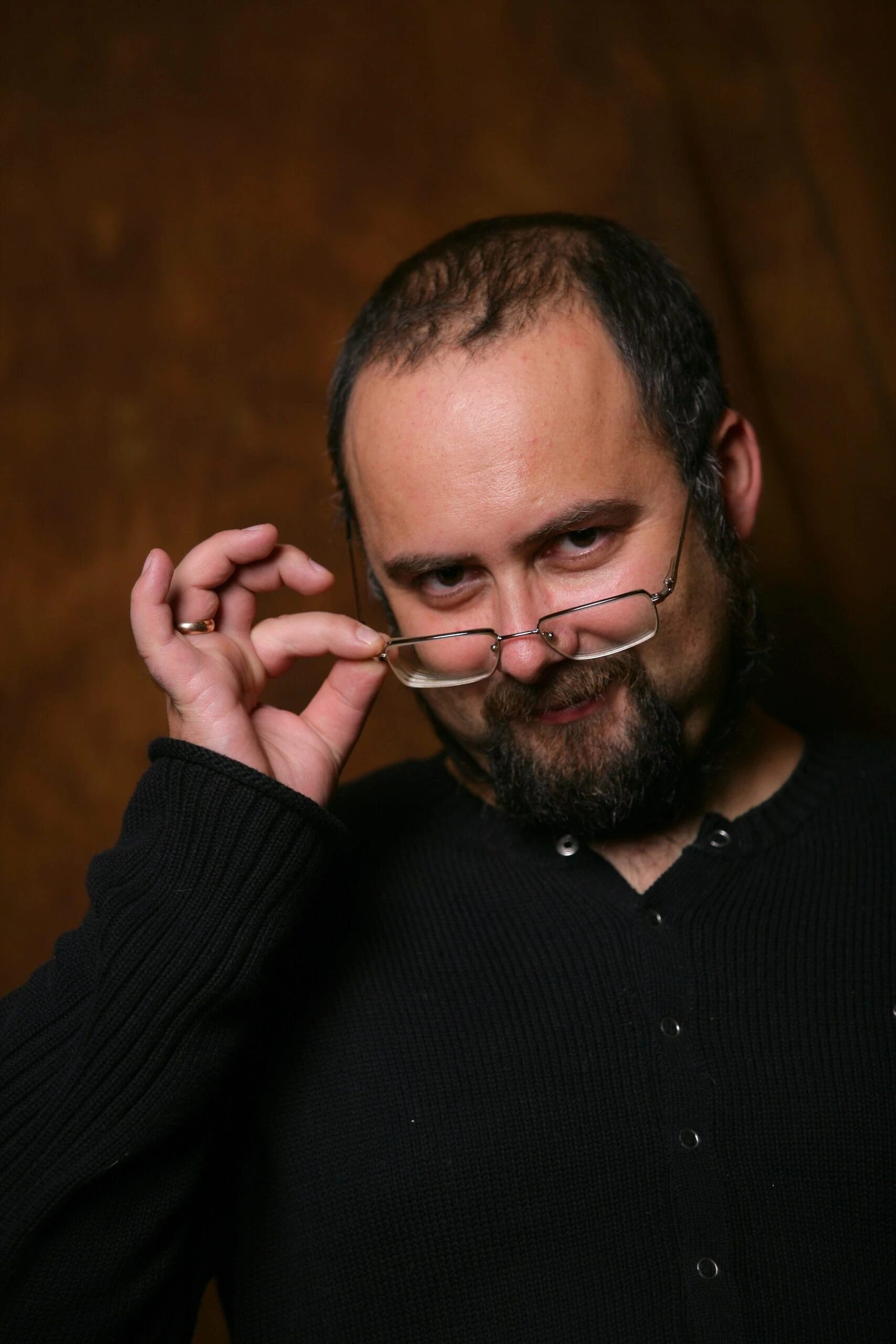
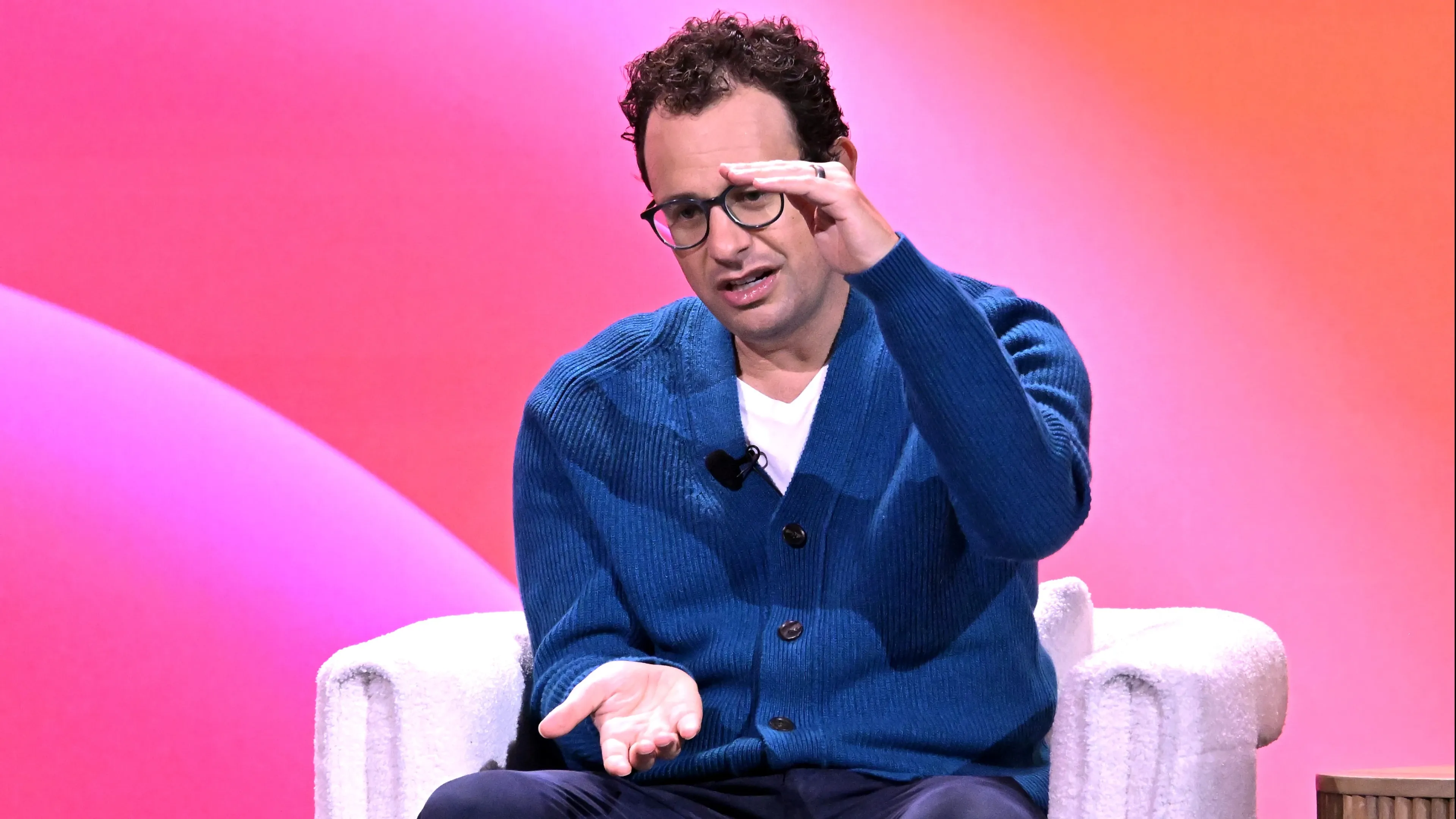
Anthropic co-founder Dario Amodei and his sister Daniela were born very close to Silicon Valley - in the city of San Francisco. In a podcast with Alex Kantorowitz Amodei said that the technology boom began when he was still in high school, but it did not interest him at all.
I, you know, totally wouldn't dream of writing some website there or starting a tech company
Dario loved physics and math and wanted to become a scientist, to study the Universe, for which he entered the physics department at Stanford University. But in 2006 his father died of a serious illness, and this dramatically changed his scientific trajectory - he became interested in biology and neuroscience, moved to Princeton University and defended his thesis on computational biology, then returned to Stanford as a biomathematician, and worked there until 2014. During his scientific career, he realized two things - first, computational biology deals with incredibly huge amounts of data that are simply impossible for the human mind to grasp. And secondly, you have to find a way to do it to make life-saving scientific breakthroughs. Like the one that discovered a new treatment for the disease that killed his father. It increased patient survival from 50% to 95%. But the drug was invented a couple of years after the death of Dario and Daniela Amodei's father. If the human mind can't do it, then a non-human mind is needed. That reasoning led Amodei to the U.S. research lab of Chinese search company Baidu, where he began studying AI models under one of the industry's pioneers, Andrew Ng. Then he spent another year at Google Brain, and in 2016 Sam Altman, CEO of the newly founded OpenAI, invited Dario to join him. That's where he joined forces with his sister.
Daniela is four years younger than her brother and at first had even less to do with the world of technology than he did - she is a humanitarian and graduated from the University of California at Santa Cruz with a degree in English literature. She tried her hand at charity work and politics, even briefly working in Washington for Congressman Matt Cartwright, whom she helped get elected. But the world of technology eventually won, and, unlike her brother, Daniela's decision was rather pragmatic.
We grew up in San Francisco in the 1990s, saw... lots of well-dressed people walking into swanky offices, and wondered: what are all these people doing? What are they working on? They were all young people with good jobs, and it was attractive
Daniela got a job as a recruiter at the fintech startup Stripe, where she quickly changed career tracks and advanced to risk manager. In this position, she was responsible for monitoring and preventing various financial irregularities, where she had to work with engineering teams and deep machine learning systems.
And in 2018, Dario, who by then had risen from team leader to research director, lured his sister to join him at OpenAI because he was very concerned about the risks that the new technology could create.
The birth of Claude: How an ethical AI was created with money from a convicted cryptomagnate
There is a lot of irony in the history of Anthropic's creation. For example, it was Dario Amodei who was one of the main authors of the scaling theory, which established that the more computer power and data invested in AI, the smarter it becomes, writes Wired. It inevitably followed that OpenAI needed a lot of money to create a really powerful AI, and Sam Altman found a way out, signing an agreement with Microsoft in 2019 for the first investment (before that, the company lived on sponsorship contributions) in the amount of $1 billion.
However, Amodei and many of his associates were dissatisfied - they felt that from that moment on Altman began to focus too much on the commercial side of OpenAI's work to the detriment of model safety. In late 2020, Dario Amodei and six other employees, including Daniela , left OpenAI to start their own company, Anthropic, with a mission to "develop and support cutting-edge AI for the long-term benefit of humanity.
The paradox is obvious - in order to learn how to control AI, we had to first create it, and no less powerful than OpenAI, Meta, and Google, otherwise what was the point of developing control methods for a model that was already outdated and lagging behind its competitors? And this (surprise!) again required money.
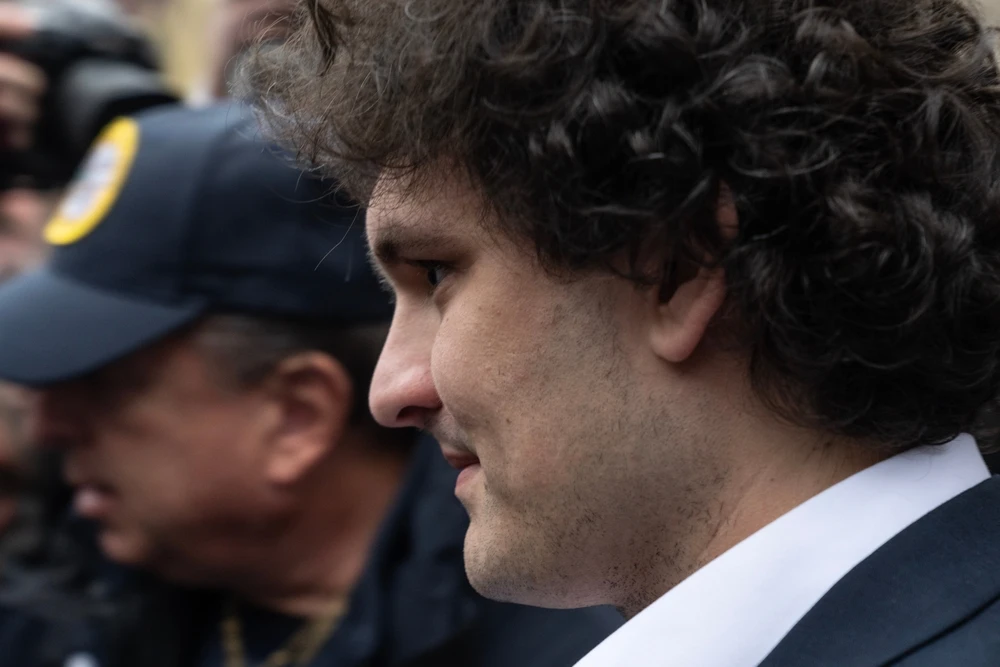
Anthropic received its first investments for the creation of "ethical AI" Anthropic received money from proponents of the theory of effective altruism, including FTX crypto exchange founder Sam Bankman-Fried, who was later sentenced to 25 years for embezzling customer funds. With that money, Anthropic used it to create its own AI, called Claude.
According to Anthropic, they had a great version of Claude ready to launch back in the summer of 2022, but decided not to release it to the world, which likely "cost the company billions of dollars," Time believes. "Amodei realized that releasing Claude could bring fame and fortune to Anthropic, a startup with about 50 employees that had launched just a year earlier. But he worried about the potential consequences of introducing AI to the world - so much so that he ultimately decided not to do it, and to continue with internal security testing," the magazine writes. In the end, we know what happened - in November 2022, OpenAI reaped the pioneering laurels by making public its version of the ChatGPT AI, which instantly became super-popular and gave the company undisputed leadership for a while. Competitors such as Google's Gemini and Claude found themselves in a position of catching up. But things change very quickly in the world of AI. Anthropic seems to be successfully turning its increased caution from a disadvantage into a market advantage.
Quiet revolution
In late November, Sam Altman declared a "code red" at OpenAI due to the very successful launch of Google's new version of Gemini 3. However, the danger now threatens him from the other side as well. Articles with headlines like "OpenAI's less visible competitor may have a better business model" are increasingly common. What they're talking about is that Anthropic's predictability- and security-oriented Claude is a better fit for enterprise AI users. They become a more reliable source of revenue than ChatGPT's very large, but not so inclined to pay, audience of private users.
According to a report by Menlo Ventures, Anthropic's investors, the company has taken the lead in the enterprise sector by July 2025, increasing its share from 12% in 2023 to 32%, while OpenAI's share has halved from 50% to 25%, with Google following on its heels with 20%. In AI coding applications, Anthropic's advantage is even more pronounced - the company has 42% of the market against OpenAI's 21% and Google's 16%.
In addition, according to the Financial Times, Dario Amodei's company may try to go public as early as next year. "The company's investors are enthusiastic about an IPO, arguing that Anthropic could seize the initiative from its larger rival OpenAI by listing first," the newspaper says.
Who is in the best position to do this, given that OpenAI has also hinted at a possible public offering?
According to The Information's sources, Anthropic is forecasting revenue of about $5 billion this year with a capitalization of $300-$400 billion, less than OpenAI, which expects revenue of $13 billion with a capitalization of $500 billion.
However, if you look at profitability, things change radically. According to Anthropic's updated forecast, thanks to its corporate customers, the company expects to be cash flow positive $3 billion as early as 2027 and $17 billion in 2028, while OpenAI will continue to burn through investors' money at a staggering rate of $35 billion and $47 billion, respectively, in the meantime, and doesn't promise to become profitable until 2030 at the earliest, The Information writes. That said, OpenAI has already committed more than $1 trillion to build data centers and buy AI chips. According to Dario Amodei, Anthropic is taking a more cautious approach and buying computing capacity "for growth," but with such a calculation so as not to go bankrupt even if the revenue turns out to be less than expected. This also carries its own risks - if demand is higher than forecast, the company will not be able to cope with it and customers will leave to competitors, so there is a constant need to find a balance in a highly uncertain environment, he admits.
The first public listing of an AI company may cause a noticeable stir, as the topic is quite popular, believes Alem Bektemirov, an analyst at Freedom Broker. But in the long run, it is not so important who will list first - there is enough liquidity on the market for several large companies to list, the main thing is that it should not be at the same time and at any price.
The main role in the placement will be played by the quality of the business, i.e. its financial components and the readiness of the business for the IPO - revenue growth, profitability, contracts and customers. These factors will directly affect the quality of valuation at placement, the volume of placement and demand for this IPO. The marketing component will also play an important role in the offering, as it can also affect the demand for the IPO among retail investors
In terms of marketing, OpenAI is certainly much more visible in the public space than the relatively quiet Anthropic. However, the latter is building its business on the assumption that it will be corporate, regulated and boring - but more sustainable. That doesn't guarantee Amodea will win the AI race, but it does increase its chances of surviving the moment when the hype is replaced by questions about profitability, liability, and data center bills.
This article was AI-translated and verified by a human editor