Musk's SpaceX and Bezos's Blue Origin begin race for orbital data centers - WSJ
Billionaires want to move trillion-dollar capacity boom for artificial intelligence into space

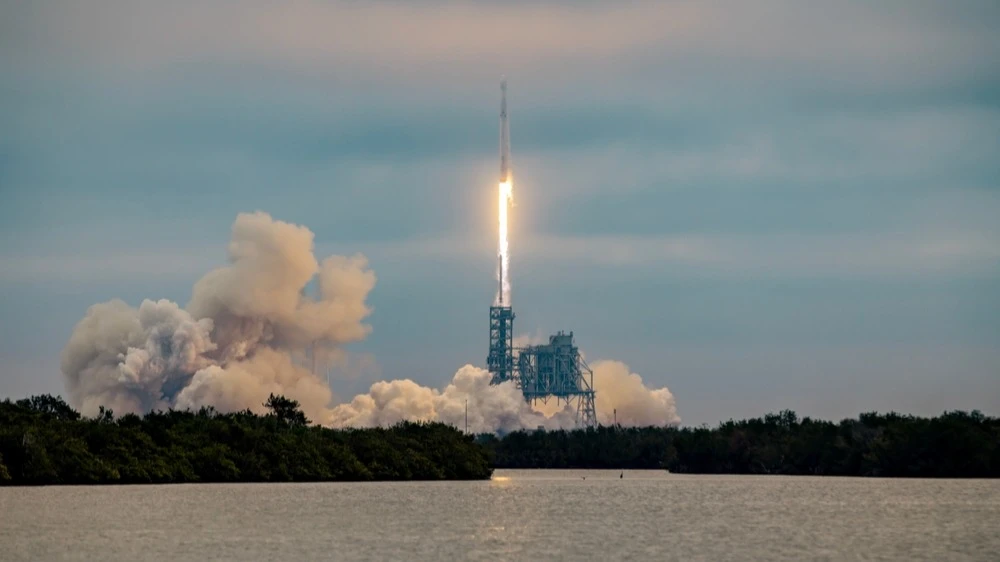
Elon Musk and Jeff Bezos's space companies have taken up the idea of creating data centers for artificial intelligence in space, The Wall Street Journal reported. These projects have major technical and financial challenges, but their prospects are improving as space launches, which SpaceX is actively promoting, become more advanced and cheaper.
Details
The aerospace companies of billionaires Elon Musk and Jeff Bezos - SpaceX and Blue Origin - are developing technologies in parallel to transfer artificial intelligence computing power to Earth orbit, The Wall Street Journal writes, citing sources familiar with the discussions.
Blue Origin has a team that has been working on space data center technology for more than a year, a source told the newspaper. SpaceX, in turn, plans to use modernized Starlink satellites for AI computing and is promoting this idea as part of the organization of a deal to sell part of its shares, as a result of which the company may receive a valuation of $800 billion, said the newspaper's interlocutors involved in the discussions.
SpaceX did not respond to WSJ's request for comment, a Blue Origin spokesman declined to comment.
How realistic is that?
Putting satellites capable of taking on computational tasks into orbit on a massive scale comes with significant engineering challenges and high costs, the WSJ noted. Nevertheless, the idea has captured the imagination of many industry leaders working on AI and space technologies, the newspaper added.
The creation of satellites - data centers will allow the AI-industry to solve, for example, the problem of energy supply: satellites in orbit will be able to use the Sun's energy for computing, WSJ writes. At the same time, supporters of this approach admit that to create orbital AI-data centers it is necessary to overcome serious technical barriers, including achieving performance comparable to large ground-based data processing centers, the newspaper reports.
Skeptics believe the risks are underestimated and that space data centers are unlikely to be able to compete on cost with terrestrial solutions, especially if constraints on energy and other resources on Earth loosen over time, WSJ noted. Jeff Bezos said in October that it could take about 20 years for such solutions to become cheaper than ground-based AI infrastructure.
One of the challenges is the number of satellites that might be needed for this purpose. To replicate a 1 GW ground-based data center, about 10,000 satellites of 100 kW each are needed, WSJ quoted Google executive Travis Beals as saying.
"Moving resource-intensive infrastructure off Earth has been discussed for years, but it needed the cost of launching and manufacturing satellites to come down. We're getting closer to that point," Will Marshall, CEO of satellite manufacturer and operator Planet Labs, told the WSJ.
In addition, using satellites as data centers poses many technical challenges, including managing the temperature of AI chips in orbit, protecting them from radiation, and transmitting data back to Earth without significant delays, WSJ notes.
"There are a number of engineering challenges, but I think they're all solvable. Ultimately it all comes down to launch," Muon Space CEO Johnny Dyer told WSJ.
What's next?
The prospect of launching potentially thousands of datacenter satellites could revitalize business across the aerospace supply chain, including rocket companies, says WSJ. Rocket development is expensive and complex, but frequent launches allow operators to offset costs and improve margins.
Musk's SpaceX is already following this logic, launching the partially reusable Falcon 9 fleet at a record pace and putting Starlink satellites into orbit . The company is also betting on further cheapening launches with Starship, a next-generation heavy reusable rocket. According to WSJ sources, SpaceX intends to place AI computing systems on modernized satellites specially designed for Starship launches.
Bezos' Blue Origin has made significant progress this year in preparing to demonstrate its New Glenn rocket, which has been in development for years, the WSJ notes. The rocket is partially reusable and features a large fairing designed to deliver a significant number of satellites into orbit.
Google and Planet Labs plan to launch two test satellites equipped with Google's proprietary AI chips, TPUs, into orbit in early 2027. The company calls the project a "moon mission" because of the massive technological challenges associated with building a network of orbital data centers, WSJ noted.
This article was AI-translated and verified by a human editor