Nasdaq Composite has its worst month in a year: market sell-offs hit due to AI threat

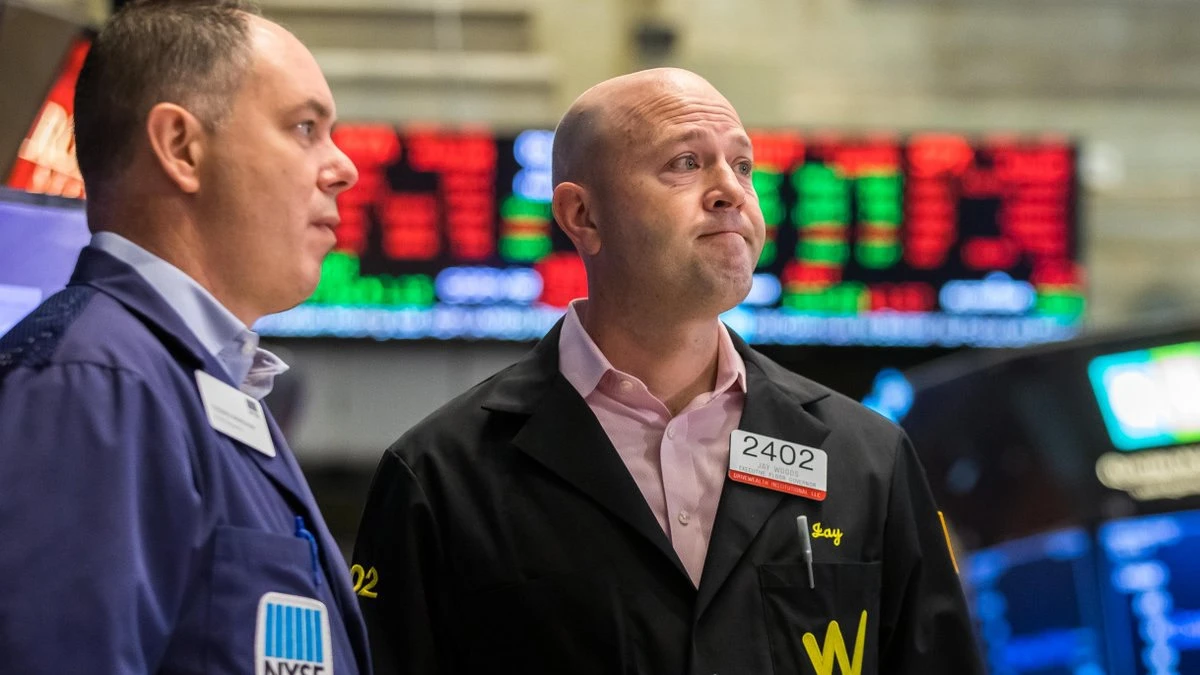
Technology sector index lost more than 3% in February / Photo: X / NYSE
Two key US indices out of three were down at the end of the month: in February, the market experienced several waves of software apocalypse due to fears that the AI boom would lead to the destruction of software developers' business models and increased unemployment. The state of the labor market should clarify the employment report, whose release is scheduled for next week. At the same time, its importance has grown sharply after the unexpectedly high wholesale inflation rate published on Friday, CNBC notes . It increased investors' fears, and they sold off stocks on the last trading day of the month.
Details
- The Nasdaq Composite Technology Sector Index fell 0.92% on Friday. For February, the index lost 3.3%, which was the worst monthly result since March last year, notes CNBC.
- The S&P 500 broad market index fell 0.43% on February 27, and was down 0.86% for the month, Yahoo Finance wrote.
- The Dow Jones Industrial Average index of blue chips lost 1% during the day. In February, it was up 0.2%.
- The VIX volatility index, known as the Wall Street fear gauge, climbed 16% during the day and broke the psychologically important 20-point mark, but fell just below that level by the close of trading.
What influenced the stock
The stock market in February was pressured by growing concerns about the impact of artificial intelligence on certain industries and the economy as a whole. For the technology sector, February was the worst month since March 2025, CNBC notes. The iShares Expanded Tech-Software ETF, which tracks the securities of software developers, was down nearly 10% for the month and down nearly 23% since the beginning of the year.
Investors' fears of AI strengthened on Friday after fintech platform Block announced it was laying off more than 4,000 employees because of the bet on automation brought by AI tools. That's nearly half of the company's workforce.
Shares of cloud services provider Zscaler fell 12% on Feb. 27 after deferred revenue and billing figures for its fiscal second quarter fell short of expectations. Shares of cloud infrastructure owner CoreWeave collapsed 18% amid a weak outlook for the current quarter. Quotes of chipmaker Nvidia continued to decline after the report, losing another 4% on Friday. The company lost more than 5% of its value on Thursday.
Shares of the financial sector on Friday experienced the biggest fall since April. Securities of companies associated with private lending, came under pressure amid fears of the consequences of the collapse of the British mortgage provider Market Financial Solutions. Apollo and Jefferies shares fell more than 8% and 9% respectively. Blue Owl's shares fell about 6% after recent liquidity constraints and asset sales.
Shares of airlines collapsed amid high fuel prices, MarketWatch writes. United Airlines became the main outsider in the S&P 500 on Friday, losing 8.7% for the day. Shares of Delta Air Lines and American Airlines ended trading down 6.8% and 6.2%, respectively. Oil prices hit their highest since the summer on Feb. 27 amid geopolitical uncertainty. US President Donald Trump said on Friday that he "would like not to have to resort" to using US military forces to strike Iran, "but sometimes you have to." He added, however, that he had "not yet made a final decision" on whether to strike Iran.
The indices were also pressured by stronger-than-expected wholesale inflation: the January PPI rose 0.5% against a forecast of 0.3%. Core PPI, which excludes food and energy, added 0.8% against an estimate of 0.3%. This has heightened investors' concerns about sustained inflation, CNBC notes. They are also concerned about the labor market: despite strong employment data, layoffs are on the rise. Challenger, Gray & Christmas reported in early February that layoffs in January reached the highest for that month since the global financial crisis.
What the analysts are saying
- "The most pressing concern for markets right now is the situation in the Middle East," Matt Maley of Miller Tabak told Bloomberg. - But concerns about the technology sector and credit markets also remain among the key concerns."
- The PPI report added uncertainty to already existing worries, from doubts about the sustainability and justification of multi-billion-dollar capital expenditures on AI to tensions in the private credit market, Integrated Partners Chief Investment Officer Stephen Colano noted in an interview with CNBC. He said inflation is largely shaped by the services sector, which could be indicative of companies shifting fees to end consumers. "Inflation has not been defeated yet," he said, adding that this creates a dilemma for the Fed: cut rates to support market growth or hold them to fight inflation.
- "Given such a high wall of worry - volatility around AI, hesitation over Nvidia, duties, geopolitics and persistent inflation - one would expect a sharper fall," Nationwide's Mark Hackett told Bloomberg. - That resilience suggests this is a pause rather than a tipping point, and once the situation clears up, all things being equal, it will be easier for the market to rise than fall."
This article was AI-translated and verified by a human editor
