"Not a single cause for concern": three major US indices closed at highs
The long-awaited inflation report showed that consumer prices rose at a lower rate than expected in September

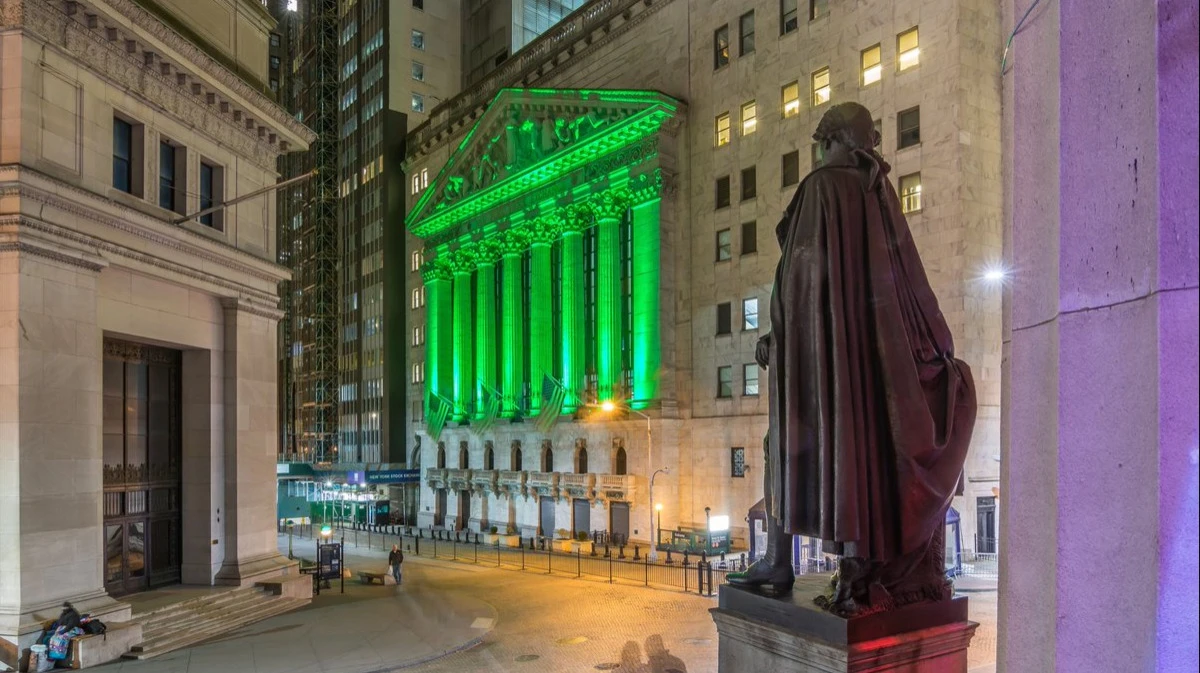
U.S. stock indices ended Friday, October 24, at new all-time highs. Moderate inflation data reinforced investors' expectations that the U.S. Federal Reserve will be able to continue the cycle of rate cuts as early as next week's meeting, supporting the economy and justifying high stock valuations, CNBC said.
Details
- In trading on October 24, the broad market index S&P 500 rose by 0.8% and closed at 6,791.7 points, which was a new record. At the end of the week, the index added about 2%, and since the beginning of the year - 15%.
- The tech-heavy Nasdaq Composite climbed 1.15% to 23,204.9 points, also its highest level. The index was up about 2.2% for the week and 20% overall this year.
- The Dow Jones Industrial Average index added 1%, closing above the 47,000-point level for the first time ever - at 47,207.12 points. At the end of the week, the Dow is up 2%.
- The Russel 2000 index of small-cap stocks rose 1.2% to 2,513.5 points. Its weekly growth is about the same.
- The yield on two-year Treasuries fell one basis point to 3.48%.
What brought optimism back to investors
The Consumer Price Index (CPI), whose publication was delayed due to the U.S. government shutdown, rose 0.3% in September and annual inflation was 3%, according to the Bureau of Labor Statistics. That was slightly below the forecasts of analysts surveyed by Dow Jones. They were expecting 0.4% and 3.1%, respectively. Core inflation, which excludes volatile food and energy prices, was 0.2% for the month and 3% annualized - also below expectations. Nevertheless, annual CPI still showed a slight acceleration from the previous month, CNBC emphasizes.
Following the release of the statistics, traders stepped up bets that the Fed will cut rates at both of its remaining meetings this year. According to CME's FedWatch tool, the probability of a December rate cut jumped from about 91% to 97%. The odds of a cut next week are also estimated at 97%.
Hopes that further easing of the Fed's policy will stimulate the economy pushed up bank shares: JPMorgan, Wells Fargo and Citigroup rose by 2%. Goldman Sachs and Bank of America also gained in price.
What the analysts are saying
- "The neutral inflation report didn't give the Fed any cause for concern," Lindsay Rosner, head of multi-sector fixed income at Goldman Sachs Asset Management, told CNBC. - We still expect policy easing at the Fed's next meeting. A rate cut in December also remains likely, especially amid the lack of new macroeconomic information that could change the course outlined in the [Fed's] dot-com outlook."
- As long as incoming data points to more risk to employment than inflation, the Fed's policy trajectory is likely to be toward further easing, said Jason Pride, director of investment strategy at Glenmede, a view cited by Bloomberg.
- "The Fed has made it clear that it is paying more attention to the weakening labor market and will continue to defend its full-employment mandate even as inflation remains above target," B. Riley Wealth chief market strategist Art Hogan told Bloomberg. Riley Wealth's Art Hogan.
- It would take a truly shocking report to derail a rate cut in October - but with a dearth of economic data, investors will cling to any certainty, according to eToro's Brett Kenwell. He also noted that while investors may see two more rate cuts this year, it will be hard for the Fed to justify a more aggressive approach to policy easing amid stubbornly high inflation - unless there is a sustained and significant weakening in the labor market. "In any case, stocks are capable of performing well in a moderate inflation environment, as we have seen in recent years. For that trend to continue, you need strong corporate reports - and so far this reporting season is living up to expectations," Kenwell told Bloomberg.
Context
Markets generally ignored President Donald Trump's announcement that he is ending trade talks with Canada, CNBC notes. Trump was reacting to Ontario officials using a video against duties that criticized former President Ronald Reagan's 1987 speech in an anti-duty video. Trump called the video a "fake." Ontario Premier Doug Ford promised Friday that the province would suspend airing the commercial after the weekend to allow trade talks with the U.S. to resume.
Next week, investors' attention will be focused on Trump's upcoming meeting with Chinese President Xi Jinping, scheduled for October 30. Markets are waiting for progress on the duty talks amid the escalating trade crisis between the two largest economies. On Friday, the U.S. administration launched an investigation to determine whether China is complying with the terms of a limited trade agreement reached in 2020 during Trump's first term, Bloomberg reported . This could open the way for new duties on Chinese goods, the agency said. Another factor of pressure on Beijing is the White House's plans to sign economic agreements and deals on critical minerals with Asian countries, Bloomberg sources said .
This article was AI-translated and verified by a human editor