Nvidia CEO won't go to China with Trump. What does that tell investors?

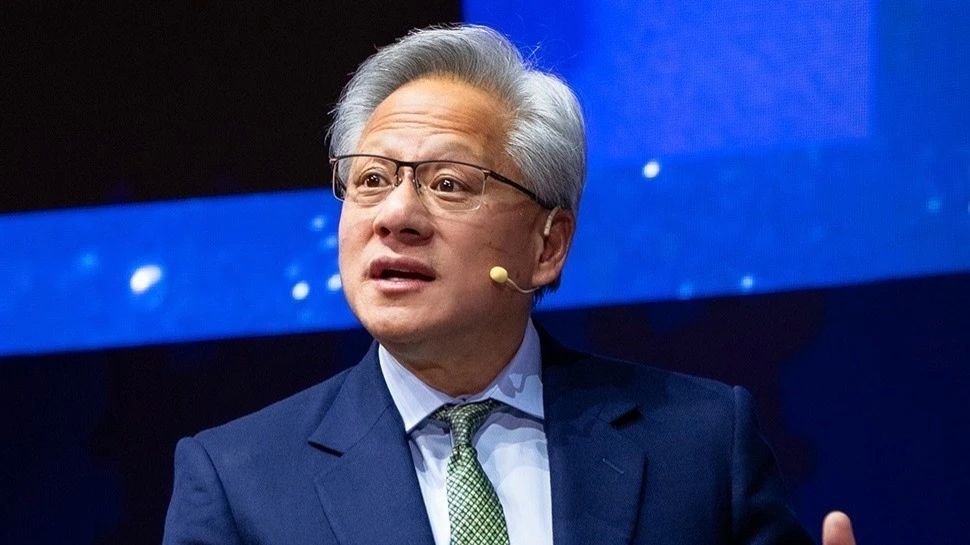
Nvidia CEO Jensen Huang is absent from the business delegation for the US-China summit / Photo: x.com/Nvidia
Nvidia CEO Jensen Huang was not part of the business delegation that will accompany US President Donald Trump on a visit to China this week. Huang's absence could undermine Nvidia's hopes for large-scale sales of H200 chips in China, Barron's writes.
Details
The U.S. delegation's guest list includes more than a dozen CEOs of major U.S. corporations, including Apple CEO Tim Cook and Tesla founder Elon Musk, Barron's notes. The absence of Nvidia CEO Huang is notable especially because the company makes some of the world's most sought-after AI chips. And China has historically been a key market for the company; it once accounted for at least a fifth of data center revenue, CNBC notes.
"If I were invited [to participate in this trip], it would be a privilege. I would be honored to represent the U.S.," the Nvidia CEO told CNBC last week. That Huang will be part of the U.S. delegation that is expected to travel with Trump to China was reported earlier this week by Yahoo Finance and Semafor.
What it means for investors
Huang's absence from the summit could negatively impact the company's hopes for large-scale sales of H200 chips in China, Barron's writes.
Huang himself has traveled to China several times in the past 18 months, including a trip last summer, and has openly pushed for the company to expand its access to that market, CNBC recalls. In March 2026, Nvidia resumed production of its H200 chips, which were created with U.S. export restrictions in mind: Nvidia is prohibited from selling its most powerful processors to China. Nevertheless, Nvidia claimed that the H200 reduces the cost of generation per request by a factor of 10 compared to the company's previous Blackwell chip.
Following the US government's authorization to export the H200 to China in January and a similar authorization from the Chinese government, Nvidia was allowed to conclude H200 supply deals with Chinese companies ByteDance, AliBaba and Tencent. The Nvidia chief estimates the potential of the Chinese AI infrastructure market at $50 billion a year with a growth rate of 50% annually. Huang has actively advocated for Nvidia to be allowed to sell its products to Chinese companies.
However, according to analysts, Huang's participation in the U.S. delegation would still be unlikely to seriously affect anything. For Nvidia, Huang's participation in Trump's delegation would bring "very little" practical benefit, Hao Hong, chief investment officer at Lotus Asset Management, told CNBC. The Trump administration - in all likelihood - would not be willing to approve shipments of more powerful versions of Nvidia chips to China, and the technological "disconnect" between the two countries will only grow, he said. "China has realized that technological rivalry will become one of the key factors determining the balance of power in global geopolitics," Hong stressed.
Before that, the last meeting between Donald Trump and Chinese President Xi Jinping took place in October in South Korea, where the parties agreed to suspend the trade war. In the course of the war, the United States imposed high duties on Chinese goods, and Beijing in response threatened to limit global supplies of rare earth metals, recalls Seeking Alpha.
What about the stock
At the trading on Ma 12, Nvidia shares fell by almost 2%. The day before, they reached a record high at the market close, rising to $219.44 per share. At the same time, the company's market capitalization reached $5.4 trillion - that's more than the entire S&P 500 healthcare sector, which includes 59 companies. Since the beginning of the year, Nvidia shares are up 18.1%.
The vast majority of analysts tracking Nvidia stock recommend buying it: 65 out of 70 analysts give a Buy and Overweight rating, while another four take a neutral stance and one analyst advises the stock to sell.
Now the main benchmark for Nvidia investors will be the company's earnings report scheduled for Ma. 20. Wall Street expects revenue of more than $78.6 billion for the first fiscal quarter of 2026, an estimate that implies Nvidia's year-over-year growth of 78%, according to Barron's.
This article was AI-translated and verified by a human editor