Nvidia predicted $1 trillion in AI chip revenue through 2027. The stock jumped briefly
The figure does not suggest a "stunning" acceleration in sales growth, according to Bloomberg
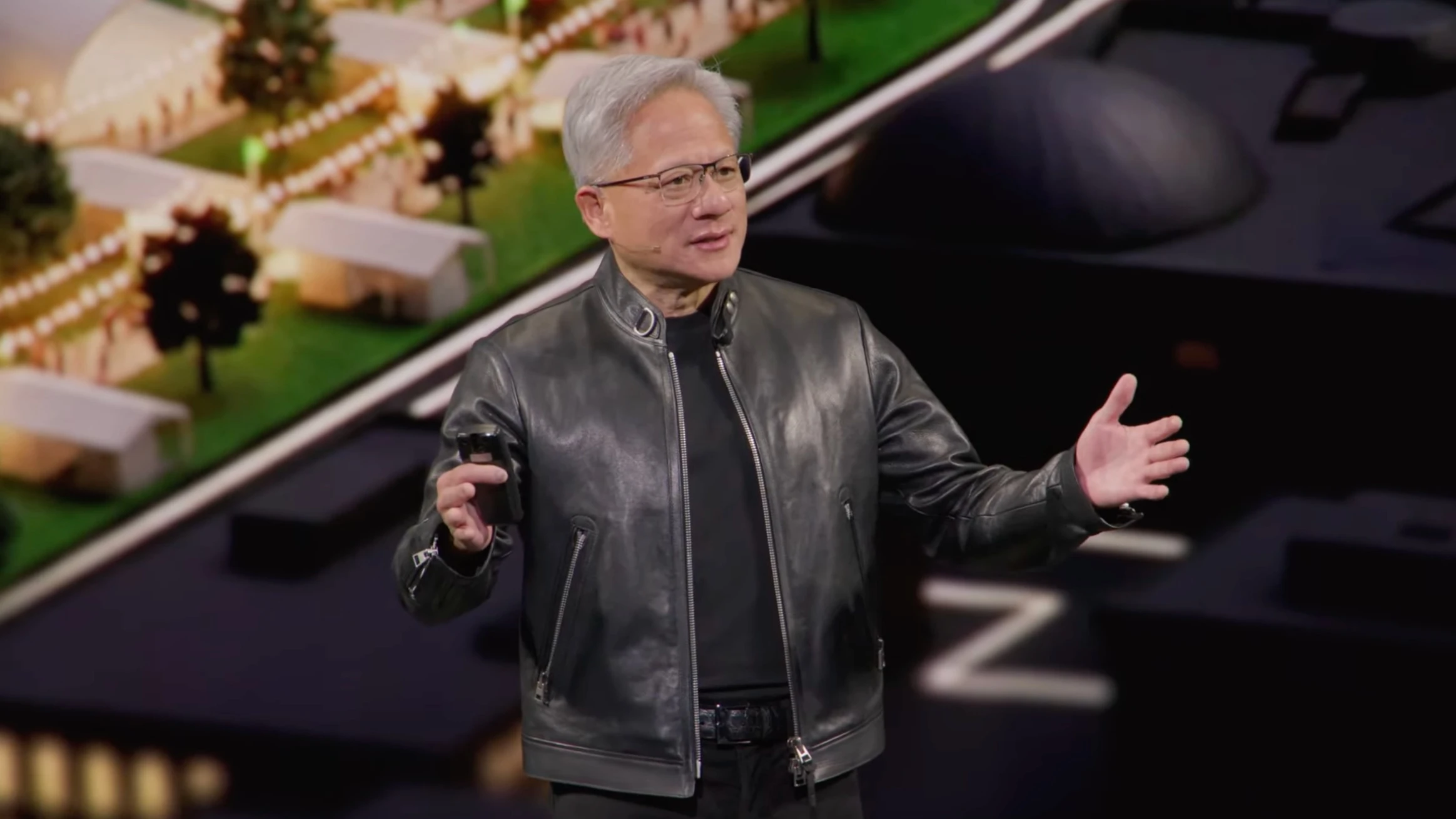
Nvidia CEO Jensen Huang at the GTC conference / Photo: Nvidia
Nvidia expects its total revenue from chips for artificial intelligence Blackwell and Vera Rubin to reach at least $1 trillion by the end of 2027. This was announced by the company's CEO Jensen Huang during the GTC developer conference. Huang's speech was broadcast on Nvidia's website.
This is about the volume of purchase orders for these chips that the company expects to receive, CNBC clarifies. In November 2025, the company predicted that these chips would bring it $500 billion in revenue between now and the end of 2026. The new figure underscores the scale of Nvidia's business, which has been sharply boosted by demand for chips to develop and power artificial intelligence, Bloomberg noted. However, $1 trillion in revenue through the end of 2027 does not suggest a "stunning" acceleration in the company's sales growth, the agency emphasized.
Nvidia shares jumped 4.8% immediately after Huang's announcement, sharply accelerating from about 2.8% before. However, the stock slowed very quickly, rising only 0.6% before resuming its climb again.
Context
Nvidia is the world's most valuable company by market capitalization: it's worth just under $4.5 trillion. The GTC conference is Nvidia's main annual event, which it typically uses to announce new products, as well as to support partnerships and present its vision for the future of computing, TechCrunch noted.
Nvidia's conference this year is particularly important: investors want to see proof that Nvidia's strategy of funneling its profits into the AI ecosystem is really paying off, Reuters wrote.
The Nvidia GTC typically "stokes people's imagination about what AI can accomplish," but that alone won't be enough to lift the shares of Nvidia or other AI players, Seaport Research analyst Joe Goldberg said before Huang's speech.
"As exciting as all this is, the outlook for semiconductors this year needs to be more than just a vision," Goldberg noted(quoted in MarketWatch). One problem is supply chain constraints, he argued.
The news is complemented by...
This article was AI-translated and verified by a human editor