Nvidia responds to investor criticism from 'Downgrade Game' investor
The company and Michael Burry argued in absentia about whether investments in its AI processors could pay off


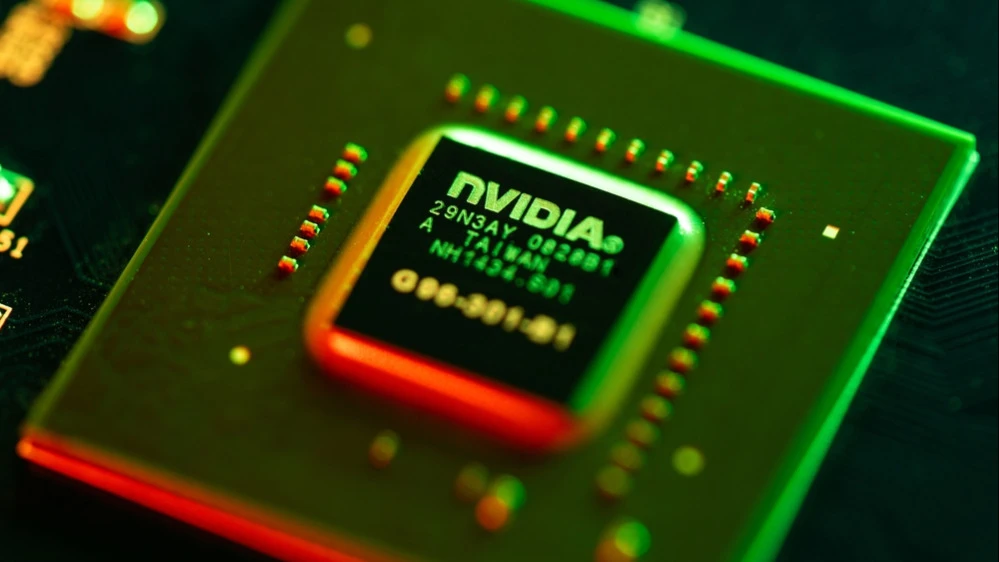
Nvidia has defended the economics of booming spending on artificial intelligence after investor Michael Burry, known as the prototypical prototypical protagonist of the movie "The Down Game," questioned the lifecycle of its chips and the ability to recoup its investment in them, CNBC writes. The company said it is extending the life of its AI processors through special software that allows new versions of custom programs to run on older chips.
Details
Nvidia CFO Colette Kress said in a conference call following the release of its quarterly report that the chipmaker's hardware is staying productive longer. She said the AI chip's lifespan is helped by a software system called CUDA-GPU, which gives the company a significant advantage in total cost of ownership of processors over its competitors. "Thanks to CUDA, the A100 GPUs we shipped six years ago are still running at full utilization," Kress said.
She specifically emphasized that the CUDA platform actually extends the economic life of chips: customers get more long-term value even as newer generations of chips deliver strong efficiency gains.
What Burry blamed AI companies for.
Earlier this month, Michael Burry issued a warning on social network X that tech giants buying Nvidia hardware were artificially inflating their financials by underestimating the reported depreciation on AI chips. They are unlikely to be able to last more than five years, Burry estimates, and are written off at six-year terms. The longer the term, the lower the annual costs and the higher the profit - which is what the financier believes is distorting the results.
Following the release of Nvidia's statements, Burry published a new post in which he noted: the fact that the company's customers continue to use older chips does not at all imply that their "useful life" from an accounting perspective is increasing, as this "confuses physical exploitation with value creation." "Just because something is in use doesn't mean it's generating revenue," Burry wrote, meaning that once newer, more powerful and less power-hungry GPUs are released, the economic viability of keeping older chips becomes questionable. Thus, earlier hardware loses value before tech giants have even had a chance to recoup the cost of it, and it's already necessary to invest again, CNBC explains.
Burry also criticized Nvidia for circular deals in which the company finances tech giants that buy equipment from it or leases computing power from companies that in turn buy its equipment. "In the future, this will be looked at as a picture of fraud rather than a working flywheel. The real end demand is laughably small. Almost all customers are funded by their own suppliers," he wrote on Nov. 20.
Earlier this month, disclosure documents revealed that Scion Asset Management, a hedge fund run by Burry, bought put options in the third quarter that generate income when the securities get cheaper. It added such contracts on Palantir and Nvidia to its portfolio. Whether the investor made a profit on those puts is unknown. On Nov. 10, Burry canceled the fund's registration with the SEC.
What the analysts are saying
"Nvidia did a pretty good job of explaining that depreciation schedules at large customers match reality, as software updates do extend the life of older chips," Melius Research analyst Ben Reitzes said after the conference call, his note quoted by CNBC.
Bernstein's Stacey Rasgon also disagrees with Burry's assessment. "The amortization at most major cloud providers looks reasonable," he wrote earlier this week, emphasizing that AI chips can be profitable for six years. Even Nvidia's A100s - graphics gas pedals released about five years ago and in service for about the same amount of time - still offer good margins, the analyst said.
Bloomberg columnist Chris Bryant warns that while Wall Street has long been accustomed to financing rapidly depreciating assets like airplanes and cars, it is alarming that private lending funds are increasingly using AI chips as collateral for loans. It's also about loans to riskier startups - so-called neocloud platforms that lease AI chips. Microsoft alone has more than $60 billion in such neocloud agreements, Bryant points out. And the question of the residual value of an AI chip after a year of use remains open, the analyst notes.
This article was AI-translated and verified by a human editor