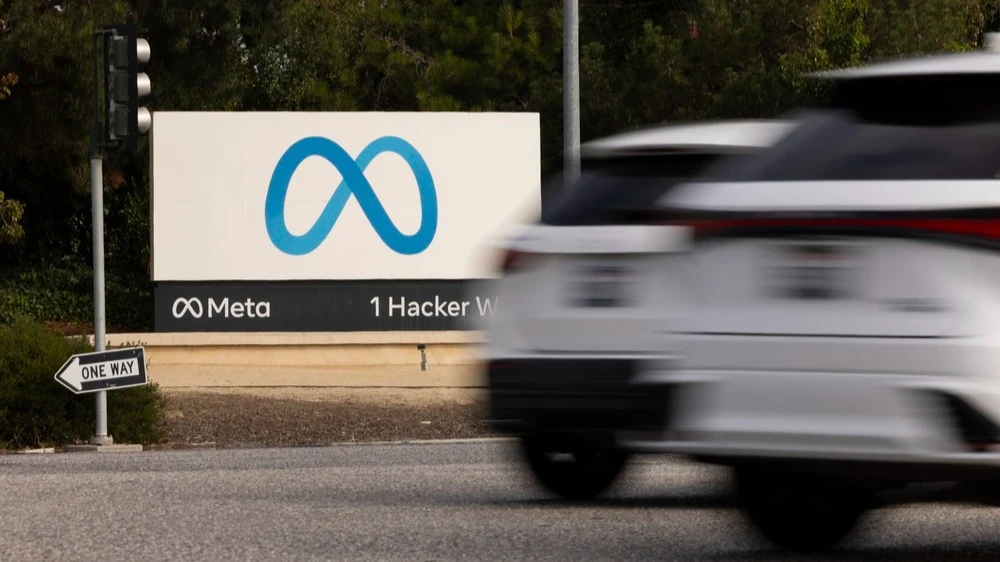
Only one analyst advises selling Meta. Why doesn't he believe in the stock's growth?
Meta securities have been the worst performers in the Magnificent Seven this year. According to the BNP analyst, they will continue to lag behind their competitors


Meta Platforms shares, which are performing the worst in the Magnificent Seven after the recent collapse, will continue to underperform, according to an analyst at BNP Paribas. He is the only one on Wall Street recommending investors sell shares of the owner of Facebook and Instagram because of high AI costs. His forecast suggests Meta's stock will get cheaper.
Details
BNP Paribas analyst Stefan Slowinski has been recommending investors to sell Ma shares since last May. According to FactSet, he remains the only analyst with a negative view on the securities of the owner of Facebook. Slowinski expects Meta stock to continue to underperform the market as the company's growth rate slows. In a note published after Meta's third-quarter report, Slowinski lowered his target price on the securities from $616 to $580. That's nearly 7% below the closing price on Nov. 7.
Meta Platforms securities were up 2% to $634.4 in Monday trading.
Why BNP Paribas expects the stock to fall
"Right now, the risks we pointed out earlier are starting to materialize," MarketWatch quoted Slowinski as saying.
According to the analyst, Meta's third-quarter results and the subsequent decline in quotations only confirms that the company's aggressive investments in artificial intelligence are putting pressure on profitability and preventing it from creating value for shareholders.
"The company is making massive investments - not just capex but operating expenses - to grow the Meta Superintelligence Labs division," Slowinski told MarketWatch in a commentary. - This will impact margins and the rate of earnings growth." Slowinski cautions: margins in the business have already started to decline as capex rises. In the most recent quarter, Meta's costs rose 32.1% and its operating margin shrank from 42.7% to 40.1%.
Meta has said it intends to double its investment in infrastructure and AI specialists, which Slowinski estimates will lead to negative earnings in 2026.
Of particular concern, according to the analyst, is the fact that Meta prefers to finance its AI investments by placing bonds and taking out private loans rather than using its own funds.
Why Meta is lagging behind the competition
The reason Meta has invested so heavily is in an effort to catch up with the leaders of the AI race, explains Slowinski. Previously, the company focused on creating a meta-universe and this distracted it from investing in generative artificial intelligence. Meanwhile, competitors have spent years developing their AI technology and chips to train their own AI.
"The company has also been among the laggards in developing its own semiconductors," Slowinski noted. While Google is actively using TPU, and Amazon is using Trainium and Inferentia chips, Meta's custom chips for AI training are still in the testing phase, causing the company to continue to depend on expensive Nvidia solutions, the analyst noted.
That said, Meta's business model is less profitable for AI monetization than its competitors: Amazon and Google have cloud services, which have become the main channel for AI commercialization, while Meta still earns mostly from advertising.
Slowinski does not consider Meta a failure in the field of artificial intelligence as such, but is convinced that other companies have a better risk/return ratio. The analyst recommends to buy securities of cloud service providers Amazon, Oracle and Microsoft, while Alphabet shares are advised to keep in the portfolio.
"Essentially, I think all five of these hyperscalers, including Meta, will benefit long-term from AI," Slowinski said.
What other analysts are saying
The stock fell 17.3% after its quarterly report released on Oct. 29, where the company announced plans to increase spending on AI. Investors were alarmed by Meta's plans to significantly increase future capex, MarketWatch notes. As a result of the collapse, Meta was the worst performing stock of the Magnificent Seven in 2025.
At the same time, other analysts, unlike Slowinski, continue to look at the company mostly positively. Freedom Broker analyst Saken Ismailov on Nov. 10 upgraded Meta's stock from Neutral to Buy and maintained his $800 target, expecting the stock to grow 28.7%. He noted that the current market price does not reflect the prospects of using the company's AI tools in attracting new users and promoting advertising.
Deutsche Bank analyst Benjamin Black, who recommended buying Meta shares with a $880 target on Oct. 30, said the company is spending money "ahead of the curve," but it's necessary to achieve leadership in AI, MarketWatch writes. Black recommends investors consider the "long-term payback horizon" of such investments.
According to MarketWatch, of the 72 analysts tracking the Facebook and Instagram owner's securities, 61 recommend buying them, 10 recommend holding them, and only one advises selling them.
This article was AI-translated and verified by a human editor