Palantir posted its fastest revenue growth rate in 6 years. That's not enough for investors
HSBC believes AI agents from Anthropic and OpenAI are catching up with Palantir in its software market segment

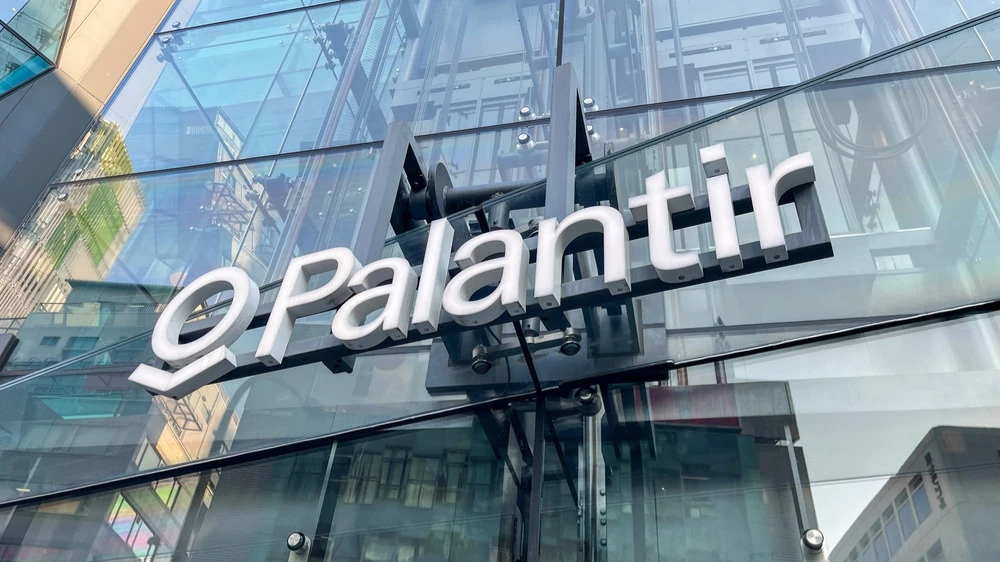
Palantir disappointed the market with results in the U.S. commercial sales segment in the first quarter / Photo: slyellow/ Shutterstock.com
Palantir Technologies, a developer of AI solutions for the U.S. Department of Defense and commercial companies, reported a year-over-year revenue growth of 85% in the first quarter. This is the fastest rate hike since the company went public in 2020, CNBC notes. The company's stock first rose a little more than 1% in the postmarket after the reports were released, but then began to fall more than 2%.
Details
Revenue at AI developer Palantir rose 85% year-on-year to $1.63 billion in the first quarter. Analysts polled by LSEG expected $1.54 billion, CNBC reported. Adjusted earnings per share came in at $0.33 versus forecasts of $0.28. Net income roughly quadrupled to $870.5 million.
"Our financial results now demonstrate a level of strength that eclipses the performance of virtually any software company in history at this scale," Palantir CEO Alex Karp wrote in a letter to shareholders. On a year-over-year basis, revenue per employee reached $1.5 million, Karp said.
Management forecast second-quarter revenue of $1.8 billion, with analysts predicting $1.68 billion, CNBC noted. Palantir also raised its full-year 2026 outlook. The company now expects adjusted free cash flow in the range of $4.2 billion to $4.4 billion. The StreetAccount consensus was for $4.05 billion, the channel writes. The company also expects full-year revenue in the range of $7.65 billion to $7.66 billion. This represents a 71% increase and exceeds the LSEG consensus of $7.27 billion, CNBC notes.
Shares of Palantir rose by 1.3% in extended trading on Monday, and then lost their gains and began to fall by more than 2%. The stock ended the main trading on Ma 4 with 1.4% growth.
What went wrong
The company disappointed the market with results in the segment of commercial sales in the U.S. for the first quarter, notes Bloomberg. Revenue in this segment increased year-over-year by 133% to $595 million, but analysts surveyed by StreetAccount expected $605 million, CNBC writes. During the quarter, Palantir announced deals with Airbus, Bain, GE Aerospace and Stellantis.
Revenue from U.S. government agencies rose 84% to $687 million in the first quarter, a marked acceleration from a 66% increase in the previous quarter. Last year, Palantir announced a contract with the U.S. Army worth up to $10 billion over 10 years.
Palantir said it had 1,007 commercial clients in the past 12 months, including March, up 31% from a year earlier. At the end of March, remaining performance obligations, i.e. revenue not yet recognized, totaled $4.45 billion, compared with $1.9 billion a year earlier.
In an interview with CNBC, Karp said he expects business growth in the U.S. - in both the government and commercial sectors - to double again in 2027.
While Palantir shares have risen about 23 times since the end of 2022, they have fallen 18% since the beginning of this year. The drop occurred amid a broader pullback in software developer securities due to the "software apocalypse," CNBC writes.
HSBC downgraded Palantir's rating
Prior to the publication of Palantir reports, HSBC analyst Stephen Bersey downgraded Palantir securities from "buy" to neutral and reduced their target price by a quarter - from $205 to $151, writes CNBC. That's only 3.4% above the closing price on Ma. 4. Competition is intensifying for Palantir, Bersey said, with AI agents eroding the barriers to entry in this segment of the software market, and that could hit the company's stock. Palantir has been successful, he said, by "embedding" its engineers into client teams to implement software and leverage the company's AI platform. But now that strategy is starting to look less attractive to customers, Bercy said.
"This success attracts competitors with similar approaches, such as OpenAI," HSBC said in a report cited by CNBC. - In addition, amid the proliferation of agent-based frameworks and MCP servers, we believe Palantir's traditional barriers to market entry are starting to erode. While the AI orchestration market is expanding rapidly, the prospect of other players starting to take away share could put pressure on Palantir's multiple."
For example, the growing revenue of AI startup Anthropic is cutting into Palantir's revenue, according to Bersi. Anthropic's announcements on various models this year have pressured software company stocks over concerns that AI will disrupt the sector's business model. Also before the report, Bersi noted that Palantir's "exceptional" results last quarter did not boost the stock, adding to his concerns about downside risk.
Most analysts tracking Palantir shares, however, don't share HSBC's concerns. The securities have 19 Buy and Overweight ratings versus 11 Hold (advice to hold) and two Sell (sell), MarketWatch shows.
This article was AI-translated and verified by a human editor