PayPay IPO: SoftBank's digital finance app shares become available
The company listed on the Nasdaq exchange at a price below its stated range amid market turbulence over the Iran war

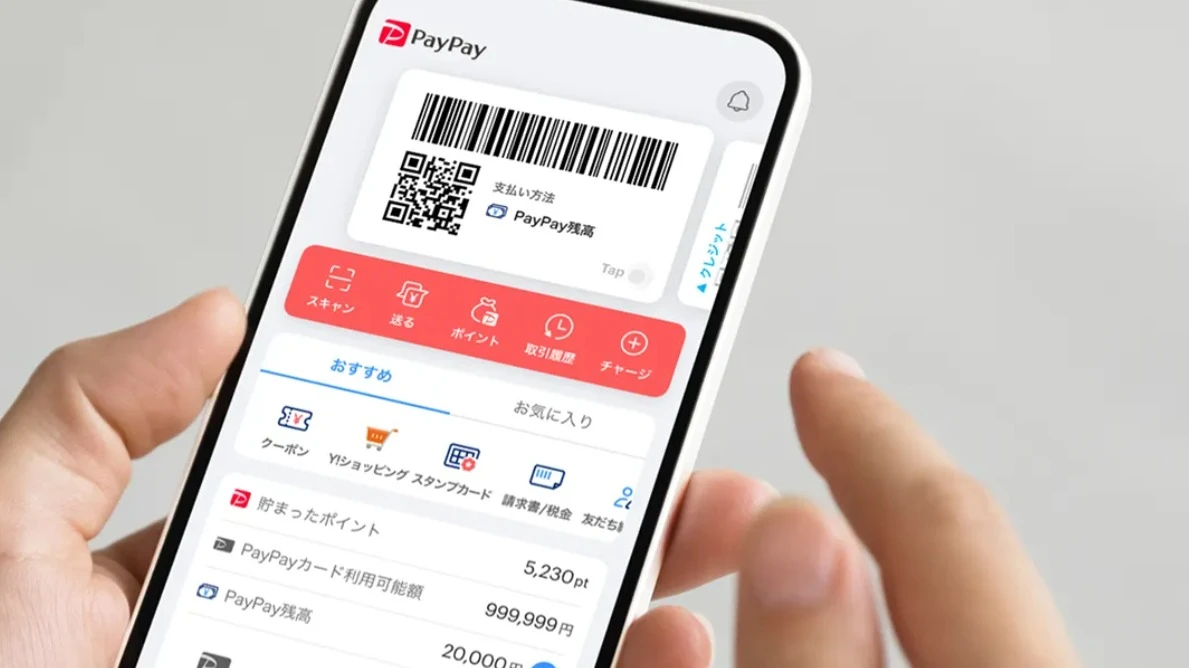
Payment app operator PayPay has gone public. Photo: PayPay
Preliminary trading in shares of PayPay, a Japanese developer of mobile payment application and digital wallet, began in the trading system for Freedom clients. The listing of almost $880 million became the largest IPO of a Japanese company on a U.S. exchange in the last ten years, specifies Bloomberg. The main owner of PayPay is the Japanese conglomerate SoftBank, which is actively investing in artificial intelligence, and the placement will bring him significant additional funds. Later on March 12, PayPay securities will appear on Nasdaq under the ticker PAYP.
Details
PayPay raised $879.8 million in an IPO on the Nasdaq exchange. The company offered 55 million American Depositary Shares (ADSs) at $16, while it initially stated a price range of $17 to $20. The lower listing price is due to geopolitical tensions and general market volatility, which reduce investor appetite, Investing.com points out. Nevertheless, it is the largest IPO of a Japanese company in the U.S. since 2016, Bloomberg reported.
Based on the results, the value of the entire company can be estimated at $10.7 billion, notes Reuters. In the run-up to the offering, PayPay focused on a valuation of more than $10 billion, although SoftBank founder Masaesi Son insisted on the amount of $20 billion, Bloomberg wrote.
SoftBank held this IPO amid a strong ramp-up of investments in AI, including support for OpenAI, recalls The Wall Street Journal. Its structures after the listing retained about 91.8% of voting shares in PayPay. At the same time quotations of the Japanese holding fell by 4% in trading on March 12, when it became clear that the offering price was below the announced.
It is noteworthy that PayPay has postponed the offering twice. In 2025, the listing failed due to the U.S. government shutdown, and in early March 2026, the company was forced to postpone the roadshow due to panic in the markets caused by the start of the military operation in Iran, Reuters adds.
Despite the delayed marketing period, demand from institutional investors exceeded the volume of available shares by several times, Bloomberg writes . The anchor investors were Abu Dhabi Investment Authority (ADIA), a unit of Qatar Investment Authority and Visa, which together agreed to buy securities worth up to $220 million. In addition, as part of the offering, Mizuho Financial Group offered Japanese investors a tranche of 8.7 million receipts at the same price as in the U.S., but without going through the listing procedure on the local exchange.
The IPO was organized by Goldman Sachs, JPMorgan, Mizuho, Morgan Stanley, Citigroup, Jefferies, BofA Securities, Societe Generale and Deutsche Bank.
What the company is notable for
Payment app operator PayPay has played a key role in Japan's shift to cashless payments, using cashback and other incentives to attract consumers, Reuters highlights. The company was founded in 2018 as a joint venture between SoftBank and Yahoo Japan. Its business is divided into two segments: payments and financial services. The payment one includes the PayPay mobile payment app and the PayPay Card credit card. The second segment is banking services through the PayPay Bank Corporation app, and investment and brokerage services through PayPay Securities Corporation. The company's customers can make payments, access credit, manage bank accounts and invest through an integrated mobile platform.
By the end of 2025, PayPay had about 72 million registered users, which is about 75% of all smartphone owners in Japan, the WSJ writes.
Before its IPO, PayPay stepped up overseas expansion, with the service becoming available in 2 million stores in South Korea for Japanese customers in 2025, and in February the company announced a partnership with Visa to explore opportunities in the U.S. market, Bloomberg reported.
PayPay's operating profit more than doubled to 61 billion yen ($387.2 million) in the nine months ended December, while revenue rose 26% to 278 billion yen ($1.77 billion), it said in a prospectus filed with the U.S. regulator ahead of listing.
What the market is saying
The U.S. IPO market started the year on unstable ground: sharp fluctuations forced some companies to postpone plans to go public, Reuters points out. Analysts note that the successful debut of PayPay may strengthen investor confidence despite the current turbulence.
"Demand is particularly strong for specialized firms operating in domestic markets in healthcare and fintech. They are relatively immune to geopolitical developments in the Middle East and the potential negative impact of AI," IPOX CEO Joseph Schuster told Reuters in a commentary.
"Most companies preparing for an IPO wait for ideal market conditions, but that wait has been prolonged," said Matt Kennedy, senior strategist at Renaissance Capital. "PayPay's business is deeply integrated into Japan's payments ecosystem, and I don't see AI threatening it in the near term. There are risks, of course, but investors have been willing to go for high valuations lately."
Financial reports show a dramatic acceleration in PayPay's business, with the company's free cash flow reaching $2.1 billion over the past 12 months and operating profit up significantly from last year, points out Donovan Jones, an analyst at investment firm IPO Edge. At the same time, PayPay maintains a very low debt load, he notes.
According to Freedom Finance analyst Alem Bektemirov, the growth potential of PayPay's quotations is about 64% of the offering price. The company's success after going public depends directly on its ability to retain its user base and expand its ecosystem of services in the face of stiff competition with Rakuten, SBI Securities, Monex and Mitsubishi UFJ structures, he believes. Any difficulties in attracting customers or monetizing traffic amid the current geopolitical volatility could have a negative impact on financial flows and business prospects.
_______________________
Freedom clients will be able to get access to PayPay shares before the opening of the main exchange session. Trading will begin in the early pre-market format 2-3 hours before the U.S. exchanges open (from 15:30-16:30 Astana time). To participate, click on the ticker PAYP.
This article was AI-translated and verified by a human editor